 Pin it
 I'll never forget the first time I saw a truly magnificent charcuterie board at a friend's dinner party in Barcelona. It wasn't just food arranged on a platter—it was edible art, a landscape of textures and colors that made everyone pause before eating. Years later, after countless boards and plenty of trial-and-error, I realized that what separated a simple spread from a show-stopping display was patience, intention, and a willingness to get a little precious with the details. This Advanced Artisan Array became my love letter to that moment, and now I get to share it with you.
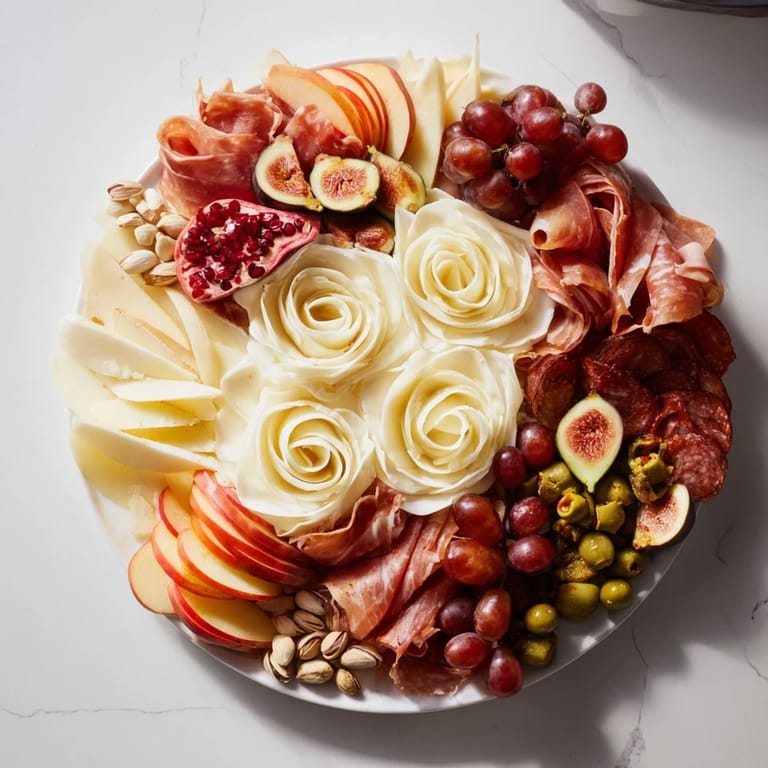
I remember the exact moment my approach to boards changed. I was preparing one for my partner's birthday celebration, and instead of just arranging things, I started thinking about each element as a brushstroke. The cheese roses took me forty minutes to perfect, my hands cramping slightly as I rolled each slice, but when I stepped back and saw them scattered across the board like edible flowers, I understood why some people call this an art form. Everyone at that party kept coming back not to eat more, but just to admire it.
Ingredients
- Prosciutto, soppressata, capicola, chorizo, and mortadella (500 g total): These are your color palette and flavor foundation. Buy them sliced thin from the deli counter—pre-packaged just won't give you the translucency you need for those dramatic folds. The key is variety in both flavor and appearance, so choose meats with different hues.
- Brie, manchego, aged cheddar, goat cheese, gouda, and provolone (750 g total): A mix of hard, semi-soft, and soft cheeses creates textural interest. The provolone is your sculpting cheese—it's pliable enough to roll into roses but holds its shape. Make sure everything is properly chilled before you start working with it.
- Red and green grapes, figs, pomegranate, apple, and pear (fresh fruits): These aren't just sweet notes—they're your jewels. The pomegranate seeds especially catch light like tiny garnets. Slice apples and pears just before serving and consider a light brush of lemon juice to prevent browning.
- Dried apricots, cherries, figs, Marcona almonds, and pistachios (275 g total): These add sophistication and the kind of nutty sweetness that surprises people. Marcona almonds especially feel luxurious because they're buttery and slightly sweet compared to regular almonds.
- Cornichons, mixed olives, roasted red peppers, and artichoke hearts: Your tangy and briny elements. These should be drained well and patted dry before placing on the board—excess moisture will make things look sloppy.
- Whole grain mustard, fig jam, and honey: Keep these in small bowls or ramekins. They're flavor bridges that make people realize how to eat the board. The honey especially transforms simple cheese into something memorable.
- Baguette, assorted crackers, and grissini: Your vehicles for tasting. Mix textures—some crispy, some soft, some unusual shapes. Grissini add vertical interest and that Italian elegance.
- Fresh rosemary, thyme, edible flowers, microgreens, and radish roses: These are your finale, applied last. They're what transforms a good board into one that stops conversations. The edible flowers especially shouldn't be rushed—place them with intention.
Tired of Takeout? 🥡
Get 10 meals you can make faster than delivery arrives. Seriously.
One email. No spam. Unsubscribe anytime.
Instructions
- Prepare Your Canvas:
- Start with a clean wooden or marble board—at least 18 by 24 inches. Wipe it with a slightly damp cloth and let it dry completely. This is your stage, and it should be pristine. Set out small bowls for your jams, honey, and pickles. This spacing matters because it gives the eye places to rest among all the richness.
- Sculpt Your Cheese Roses:
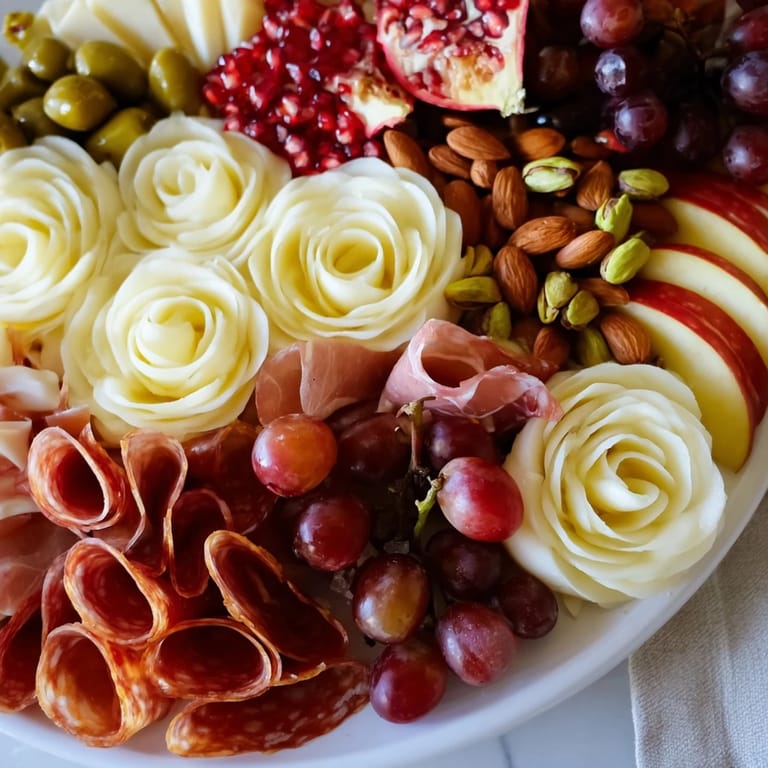
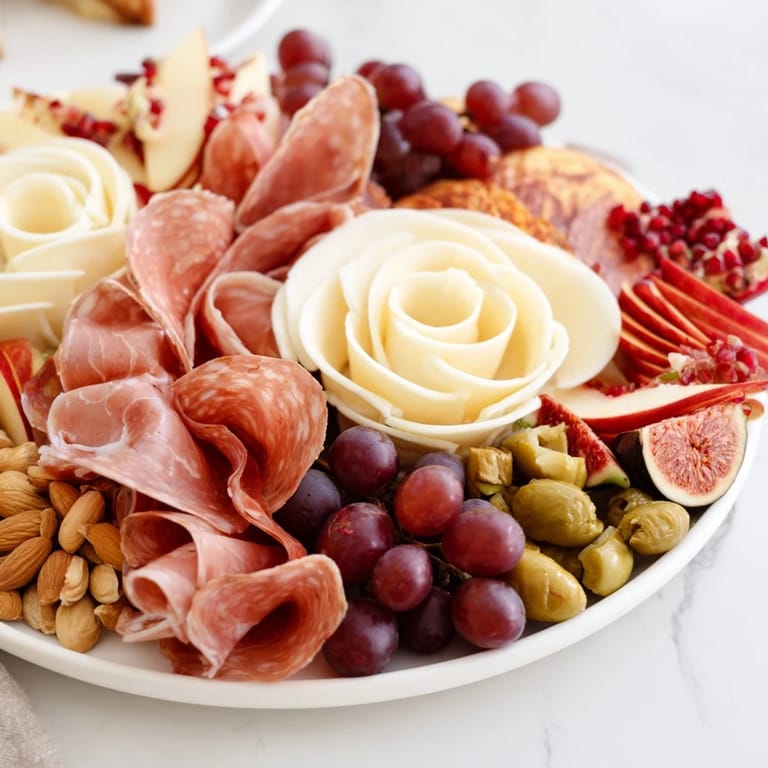
- Take your provolone slices and work on one at a time. This is meditative work—no rushing. Roll a slice tightly from one end, then gently fan out the edges to look like petals. You're creating a spiral that suggests a rose in full bloom. Make at least three to five roses. If you want meat roses too, try the same technique with prosciutto or soppressata, though they're slightly trickier because the slices are more delicate. The first one always feels impossible; by the third, you'll find your rhythm.
- Layer Your Meats:
- Now comes the dramatic part. Take your cured meats and fold them into loose waves and ribbons. Don't lay them flat like you're being neat—instead, create height and movement. Bunch a slice here, fold one in thirds there, let edges curl naturally. Fill gaps intentionally. The goal is a sense of abundance and casual elegance, like someone with refined taste just generously piled things on and trusted it would be beautiful. It will be.
- Position Your Cheeses:
- Cut wedges, cubes, and irregular shards from your harder cheeses. Place your rose sculptures strategically—maybe one near the center as a focal point, others scattered around. Cut brie into wedges and let a tiny bit of the creamy interior show. Arrange goat cheese in small quenelles if you're feeling fancy, or just in rustic chunks if that's more your speed. Distribute pieces so no corner feels empty but nothing feels crowded yet.
- Nestle Your Fruits:
- Fresh and dried fruits should live in small clusters rather than spread uniformly. Bunch red and green grapes together so their colors pop against each other. Scatter dried apricots and cherries in little piles. Arrange pomegranate seeds almost like you're painting—they're too beautiful to hide. The quartered figs show their gorgeous interior when placed cut-side up.
- Fill in the Details:
- Small piles of olives, nuts in their own corners, roasted peppers arranged in a little line, artichokes clustered together. This is where the board starts to feel abundant. Each element should have enough space to be identified, but edges should almost touch. Think of it like a still-life painting where every inch of canvas matters.
- Arrange Your Bread:
- Fan baguette slices gently in one section. Scatter crackers and breadsticks to fill remaining gaps. They're structural and functional, yes, but they're also the final puzzle pieces. Stand some grissini up vertically in little bunches to add height variation.
- Apply Your Garnishes:
- This is the moment where everything becomes magical. Tuck fresh rosemary sprigs between cheeses, scatter tiny thyme leaves, arrange edible flowers with the care they deserve. If you have microgreens, add them last—they're delicate and should feel almost accidental. Scatter radish roses among the elements. Step back frequently. These finishing touches aren't decoration; they're what make people lean in close and take photographs.
- Final Presentation:
- Serve immediately if you can, while cheeses are at their best temperature and everything is pristine. If you need to prepare ahead, cover loosely with plastic wrap and refrigerate, then bring to room temperature for 15 minutes before serving. This is the moment you've been working toward—let yourself feel proud of it.
 Pin it
 There was a moment during the first board I made using this exact technique when my mother came into the kitchen, stopped completely, and just stared. She didn't say anything for a moment, then she said, 'This is too beautiful to eat.' But of course it was meant to be eaten, and watching people bite into those cheese roses, tasting the interplay of textures and flavors—that's when I realized that the effort wasn't about creating something untouchable. It was about creating something that mattered enough to deserve the care.
The Art of Meat Folding
Once you understand that cured meats are more than just ingredients—they're sculptural elements—your whole approach to boards changes. The translucency of properly sliced prosciutto means light can pass through it, creating this almost ethereal quality when you bunch it together. Soppressata, with its deeper color and spicled notes, anchors a board visually while delivering bold flavor. The key insight I had after making dozens of boards is that you want visible movement in how you arrange the meats. Fold one piece in thirds, let another drape naturally, bunch some loosely in your hand and place them as a unit. This creates depth and suggests abundance without actually using more meat.
Cheese Selection as Flavor Storytelling
I learned that the real magic of a board happens in the sequence of tastes. When you move someone from a sharp aged cheddar to a creamy brie to a peppery goat cheese, you're taking them on a flavor journey. The manchego provides that slightly sweet, nutty bridge between experiences. Gouda's caramel notes make cured meats taste more interesting. The provolone isn't just for roses—it's a mild, creamy palate cleanser between bolder flavors. What I discovered the hard way is that having five different cheeses means five different textures and flavor profiles, which means every combination someone makes on a cracker tastes different. That's the secret to why people come back again and again to a board like this.
Timing, Temperature, and the Edible Flowers
There's a practical side to this that matters just as much as the artistic side. Cheese shows flavor best at room temperature, but soft cheeses start sweating if they get too warm. Hard cheeses like manchego and aged cheddar can handle being out longer, so front-load them if you're serving over a couple of hours. The edible flowers—those gorgeous pansies and nasturtiums—should go on within 30 minutes of serving. They bruise easily and they wilt if they're out too long. I learned this after preparing a board an hour early, thinking I was being organized, only to watch the flowers get sad and droopy. Now I plate them as close to serving time as possible, and if I'm delayed, I keep them in a damp paper towel in the fridge and add them at the last possible moment. It sounds like a small thing, but it's the difference between people saying it's beautiful and people actually believing it's beautiful enough to photograph.
- Bring everything to the proper temperature—it takes patience but transforms the whole experience
- Add garnishes as close to serving as possible, keeping delicate items in the fridge until the final moment
- Arrange the board so you can access each element easily; your guests will appreciate not having to perform complicated reaching
 Pin it
 This board is for those moments when you want to show someone they're worth the effort. It's not quick food; it's intentional food. And that's exactly the point.
Recipe FAQs
- → How do you sculpt cheese roses?
Use pliable cheeses like provolone, slice thinly, roll into tight spirals, and gently fan out the edges to mimic petals.
- → What meats are best for intricate folding?
Thinly sliced cured meats like prosciutto, soppressata, and capicola work well for creating elegant folds and ribbons.
- → Which garnishes enhance the board's presentation?
Fresh rosemary, thyme, edible flowers, microgreens, and radish roses add visual appeal and freshness.
- → How should dried fruits and nuts be arranged?
Scatter dried fruits and nuts in small piles or bowls to balance textures and colors throughout the board.
- → What breads and crackers complement this array?
Offer a mix of sliced baguette, assorted crackers, and grissini to provide variety and hold other elements.