 Pin it
 Last October, I was standing in my kitchen on a gray afternoon, holding a butternut squash that felt heavy with possibility. A friend had dropped off a basket of autumn vegetables, and I found myself drawn to the challenge of turning something so dense and orange into something warm and velvety. That first batch taught me something I hadn't expected: roasting the squash first changes everything, turning it golden and intensifying its natural sweetness in a way that makes the whole soup sing. Now, whenever the weather turns cool, this is the first thing I reach for.
I remember serving this to my neighbor on a cold evening when she'd just moved in next door. She came over hesitantly, and by the time she finished that first bowl, something shifted in how we talked to each other. Food does that sometimes—it opens a door that small talk can't quite manage. She asked for the recipe that night, and I realized then how much I loved this soup, not for what it was, but for what it could do.
Ingredients
- Butternut squash (1 medium, about 900 g / 2 lbs), peeled, seeded, and cubed: Roasting it first concentrates the sweetness and gives you a deeper, more interesting flavor than if you just threw it in raw.
- Red lentils (150 g / 3/4 cup), rinsed: These fall apart beautifully when cooked, creating that silky texture without needing cream or any tricks—just rinse them first so you don't get that cloudy starch.
- Carrots (2 medium), peeled and sliced: They add a gentle sweetness and body to the broth, and I like slicing them thin so they soften quickly.
- Onion (1 large), diced: The foundation of everything good, really—it becomes sweet and mellow as it cooks down.
- Garlic (2 cloves), minced: Just enough to add depth without overpowering the delicate squash flavor.
- Ground cumin (1 tsp): This is the spice that makes people pause and ask what they're tasting—it's warm and slightly earthy without being heavy.
- Ground coriander (1/2 tsp): A quieter spice that adds brightness and a touch of citrus without you knowing where it came from.
- Ground turmeric (1/2 tsp): More than just color—it brings an earthy warmth and a hint of bitterness that balances the sweetness of the squash.
- Ground cinnamon (1/4 tsp): Just a whisper of it, enough to remind you of autumn without tasting like dessert.
- Chili flakes (1/4 tsp, optional): I leave these out when I'm cooking for people who like things mild, but add them when I want a little heat creeping in at the end.
- Olive oil (2 tbsp total): One tablespoon for roasting the squash, one for the base—it's humble but essential.
- Vegetable broth (1.2 liters / 5 cups): Use something good here because it's the liquid backbone of everything that follows.
- Lemon juice (from 1/2 lemon): Squeeze this in at the end and watch how it suddenly brings the whole soup into focus.
- Fresh cilantro or parsley, chopped (for garnish): The final bright note that makes people lean in and take another spoonful.
Tired of Takeout? 🥡
Get 10 meals you can make faster than delivery arrives. Seriously.
One email. No spam. Unsubscribe anytime.
Instructions
- Get your oven ready and start roasting:
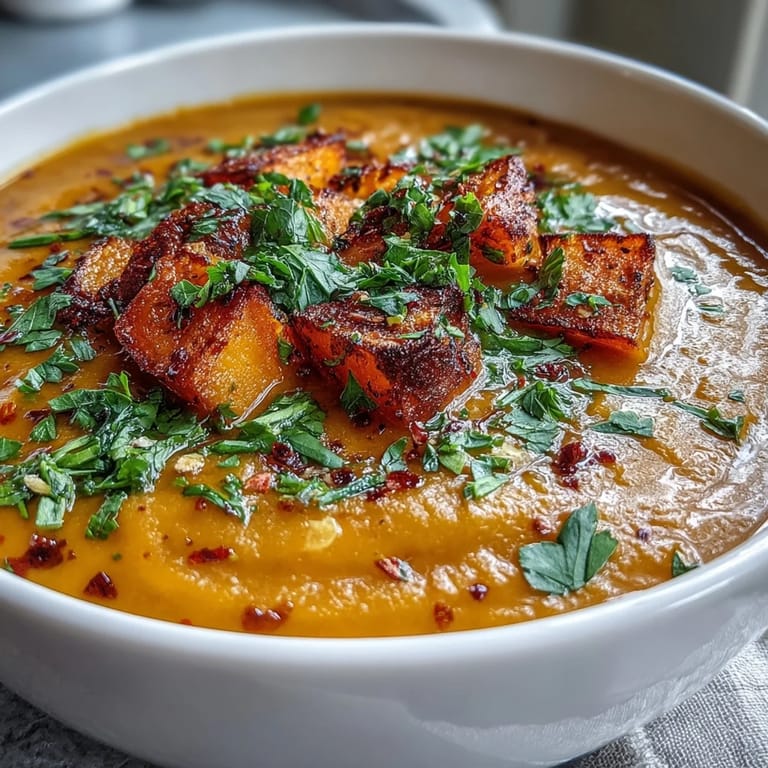
- Preheat your oven to 200°C (400°F). Toss your cubed butternut squash with 1 tablespoon of olive oil, a pinch of salt, and some pepper, then spread it on a baking sheet in a single layer. This part takes about 25 minutes, and you'll know it's done when the edges are golden and caramelized and the flesh is tender.
- Build your flavor base:
- While the squash roasts, heat your remaining tablespoon of olive oil in a large pot over medium heat. Add your diced onion and sliced carrots, letting them soften together for about 5 minutes—you want them to start releasing their sweetness and becoming translucent at the edges.
- Wake up the spices:
- Add your minced garlic to the pot along with the cumin, coriander, turmeric, cinnamon, and chili flakes if you're using them. Stir everything together and let it cook for just a minute until your kitchen smells like a warm embrace—that's how you know the spices have released their oils.
- Bring everything together:
- Add your rinsed red lentils to the pot and stir them around so they get coated in all those spices. Pour in your vegetable broth and bring it to a boil, then turn the heat down and let it simmer gently for about 15 minutes until the lentils have completely softened and started to break down.
- Add the roasted squash and blend:
- Once your lentils are tender and the squash is ready, stir it all together into the pot. Let it cook for another couple of minutes so the flavors marry, then use an immersion blender to blend the soup until it's smooth—or leave it a little chunky if that's what you prefer.
- Finish with brightness:
- Remove the pot from heat and stir in the fresh lemon juice. Taste it and adjust the seasoning with salt and pepper until it tastes just right to you.
- Serve with care:
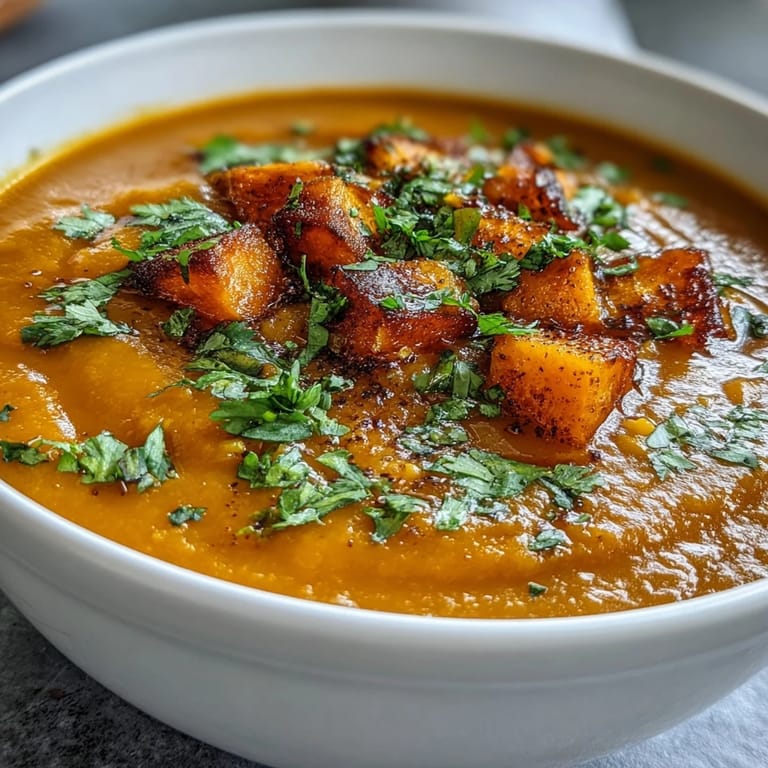
- Ladle the soup into bowls and top each one with a generous handful of chopped cilantro or parsley. The green on top makes it feel special and tastes just as good as it looks.
 Pin it
 There's a moment in this soup's life when it stops being just ingredients in a pot and becomes something with a personality. It happens somewhere between the blending and the garnish, when the steam rises up and carries all those spice-scented notes toward you, and you realize you've made something people will want more of.
The Roasting Step Changes Everything
I used to make this soup without roasting the squash first, throwing the raw cubes straight into the pot with everything else, and it was fine but forgettable. Then one day I roasted it by accident—I'd started the process and gotten distracted—and when I added those golden, caramelized pieces to the pot, the entire character of the soup shifted. The squash became sweet and deep instead of pale and thin, and suddenly people started asking for seconds. Roasting takes an extra 25 minutes, but it's the single most important thing you can do for this recipe.
Texture is a Personal Choice
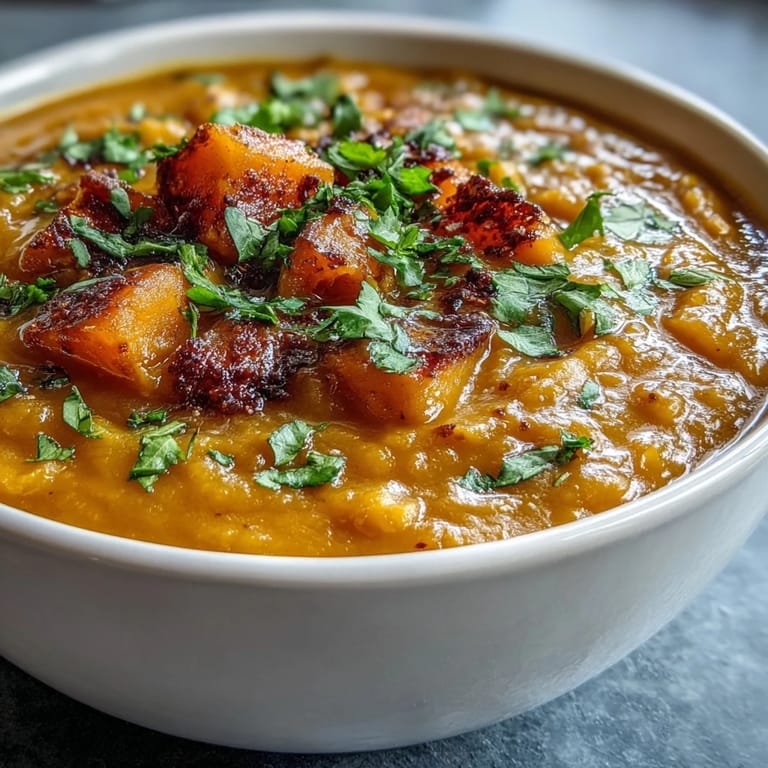
Some people love this soup completely smooth, almost velvety, and others prefer leaving it a little chunky so you can feel the lentils and squash as you eat. I find myself somewhere in the middle, usually blending it until it's mostly smooth but with little flecks of lentils visible. The beauty of using an immersion blender is that you can stop whenever it feels right to you—there's no judgment in soup-making, only preference.
Make It Your Own
This is a recipe that plays well with variations. I've added a splash of coconut milk when I wanted something richer, swapped the red lentils for yellow split peas when I was out of stock, and increased the chili flakes on nights when I wanted something with more bite. The skeleton of the recipe is strong enough to hold these changes without falling apart, which is the mark of something worth knowing.
- If you want extra creaminess, stir in a splash of coconut milk right after blending—it softens the spices and adds a subtle sweetness.
- Serve it with crusty bread or naan on the side, something you can tear and dip into the warmth of the bowl.
- Leftovers keep beautifully in the fridge for three or four days, and it often tastes even better the next day when the flavors have had time to settle and deepen.
 Pin it
 This soup has become one of those recipes I make without thinking, the kind that shows up on cold afternoons because my hands remember the steps and my heart knows what people need. It's simple enough to feel easy, interesting enough to feel special, and warm enough to solve almost any small sadness that comes with the changing seasons.
Recipe FAQs
- → Can I make this soup ahead of time?
Absolutely. This soup actually develops deeper flavors when refrigerated overnight. Store in an airtight container for up to 4 days. Reheat gently on the stovetop, adding a splash of broth or water if needed to adjust consistency.
- → Is it necessary to roast the squash first?
Roasting concentrates the natural sweetness and adds caramelized depth. However, you can simmer raw squash cubes directly in the pot for 20-25 minutes instead. The flavor will be slightly less complex but still delicious.
- → What can I substitute for red lentils?
Yellow lentils work beautifully with the same cooking time. Green or brown lentils hold their shape better and require 15-20 minutes longer to soften. For a lentil-free version, add an extra cup of squash or white beans.
- → How can I make this soup creamier?
Stir in 1/4 cup coconut milk, heavy cream, or full-fat yogurt before blending. A potato added during simmering also creates natural creaminess when blended. For nutty richness, try 2 tablespoons of cashew or almond butter.
- → Can I freeze this soup?
Yes, freeze cooled soup in airtight containers or freezer bags for up to 3 months. Leave space for expansion. Thaw overnight in the refrigerator, then reheat slowly. The texture may separate slightly but blends back together when stirred.
- → What bread pairs well with this soup?
Crusty sourdough, warm naan, or whole-grain toast are perfect for dunking. For extra protein, serve alongside grilled cheese or hummus-topped crostini. The soup's mild sweetness also complements cornbread or focaccia.