 Pin it
 I discovered the magic of a gluten-free tower while hosting a dinner party for my friend who'd just been diagnosed with celiac disease. Instead of feeling limited, I wanted to create something that made her feel celebrated—something that looked more impressive than any traditional appetizer on the table. That's when I stacked my first tower: crispy crackers, creamy spreads, and vibrant vegetables all balanced on top of each other. The moment she saw it, her face lit up. It wasn't just gluten-free; it was showstopping. Now, every time I make this, I'm reminded that the best meals are the ones that make everyone—regardless of dietary needs—feel special.
I'll never forget serving these towers at a brunch where my cousin brought her new partner for the first time. She'd mentioned he was gluten-free, and I watched her face relax when she realized she didn't need to apologize or explain anything—there was already something waiting for him that looked like it belonged at the most elegant table. That's when I realized this recipe isn't just about stacking food; it's about making people feel seen and included.
Ingredients
- Gluten-free crispbread crackers (12 pieces): These are your structural heroes—they need to be sturdy enough to hold weight but delicate enough to break cleanly with a bite. Seed or multigrain varieties add visual interest and a subtle crunch that regular crackers can't match.
- Gluten-free bread, lightly toasted and cut into rounds (8 slices): Toasting is non-negotiable here; it firms up the bread so it won't get soggy under the weight of all those toppings. I learned this the hard way after my first soft tower practically collapsed.
- Whipped cream cheese (150 g): The whipped version spreads like a dream and feels lighter than block cream cheese. It's your adhesive and your luxury layer.
- Hummus (100 g): This adds earthiness and a protein boost. It's also naturally vegan-friendly if you're adapting.
- Guacamole (100 g): Creamy, luxurious, and the secret to keeping everything moist without being wet. Make it fresh or use store-bought—honestly, either works perfectly here.
- Cucumber (1 small, thinly sliced): The crisp coolness is essential for balance. Those thin slices matter; they're delicate and elegant.
- Tomato (1 medium, thinly sliced): Ripe is everything here. A mealy tomato will throw off the entire tower's texture.
- Avocado (1 small, sliced): Slice it just before assembly so it doesn't brown and lose its visual appeal.
- Microgreens or baby arugula (1/2 cup): This is your sophistication layer. It makes the tower look restaurant-quality and adds a peppery freshness.
- Radish (1/4 cup, thinly sliced): The surprise element—those thin, crisp slices add a subtle bite and beautiful pink color.
- Roasted red peppers (1/4 cup, sliced): I use jarred for convenience, but roasting your own adds a homemade touch that guests notice.
- Toasted pumpkin seeds (2 tbsp): The final garnish that catches the light and adds a satisfying crunch in every bite.
- Chives, finely chopped (2 tbsp): Fresh, delicate, and they tie the whole flavor story together.
- Freshly cracked black pepper and sea salt: These finish the tower with intention, not afterthought.
Tired of Takeout? 🥡
Get 10 meals you can make faster than delivery arrives. Seriously.
One email. No spam. Unsubscribe anytime.
Instructions
- Set up your mise en place:
- Lay out all your spreads in small bowls and arrange your toppings on a cutting board, organized by component. This moment of organization is meditative and ensures you won't be frantically searching for ingredients mid-assembly. As you do this, you're already imagining how the colors will layer together.
- Toast your bread with intention:
- Lightly toast the gluten-free bread—you're looking for just enough color to firm it up, not so much that it becomes brittle. Cut each slice into rounds or rectangles that match your cracker size. This matching matters more than you'd think; it's what makes the tower feel intentional rather than haphazard.
- Start your tower base:
- Place a cracker on your work surface or serving plate. Spread a thin, even layer of cream cheese or hummus across it—think of it as a light kiss, not a heavy coat. You want the flavors to shine through, not be masked by spread.
- Lay down your first bread layer:
- Top the spread with a piece of toasted gluten-free bread. You should feel it settle slightly under its own weight. Spread another thin layer of your chosen spread—this time, maybe guacamole if you used cream cheese before. Variation in spreads throughout the tower keeps things interesting.
- Build with intention and color:
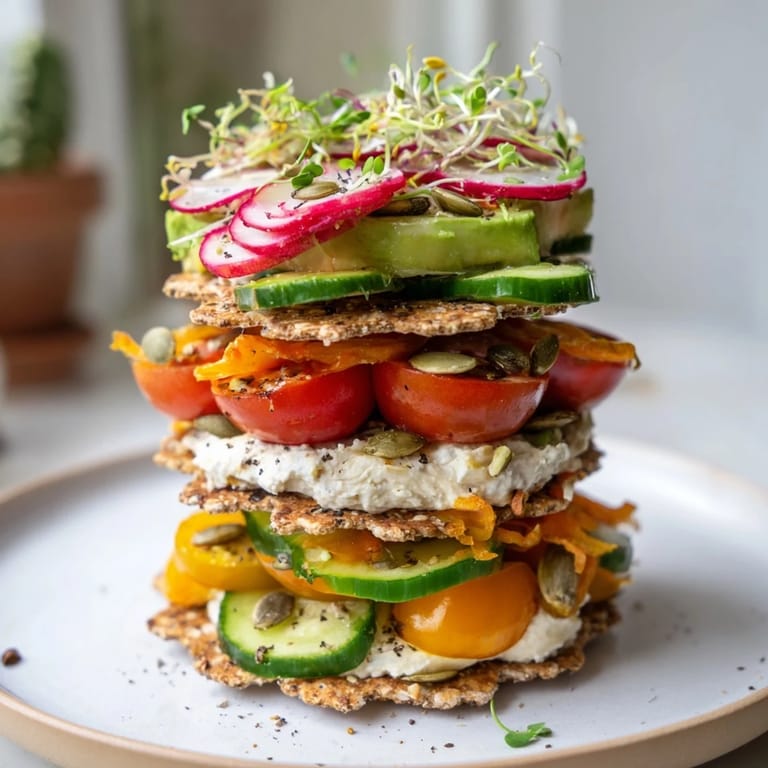
- Now comes the fun part: layering your toppings. Add a few slices of cucumber, tomato, avocado, radish, or roasted red pepper. Think about color contrast as you build—reds next to greens, creams next to bright vegetables. Each layer should feel like a deliberate choice, not just ingredients piled on.
- Stack and press gently:
- Continue alternating crackers, bread, and spreads, adding different toppings between each layer. After every two layers, press down very gently with your fingertips to ensure stability. You want it solid enough to hold together but light enough to feel delicate.
- Crown your tower:
- Finish with a cracker or bread slice on top. Add a small dollop of cream cheese, a small handful of microgreens, a sprinkle of pumpkin seeds, chives, and a crack of fresh black pepper. This is your moment to make it look like it came from somewhere fancy.
- Transfer with confidence:
- Using a wide spatula, carefully slide it underneath the entire tower and transfer it to a serving plate. This is the most nerve-wracking moment, but moving slowly and keeping your spatula completely flat will keep everything intact.
- Serve immediately:
- The best texture happens right after assembly. The crackers and bread are still crisp, the toppings are still fresh, and everything tastes like intention.
 Pin it
 There was one dinner party where a guest who avoided gluten due to sensitivity asked if she could have anything, and I watched her actual shock when I explained she could eat whatever was in the tower. The relief in her voice when she realized she wasn't going to be picking through something or eating plain vegetables haunts me in the best way. That's when I truly understood that this recipe is more than just food—it's an invitation to belong at the table without compromise.
Building Your Tower: A Personal Approach
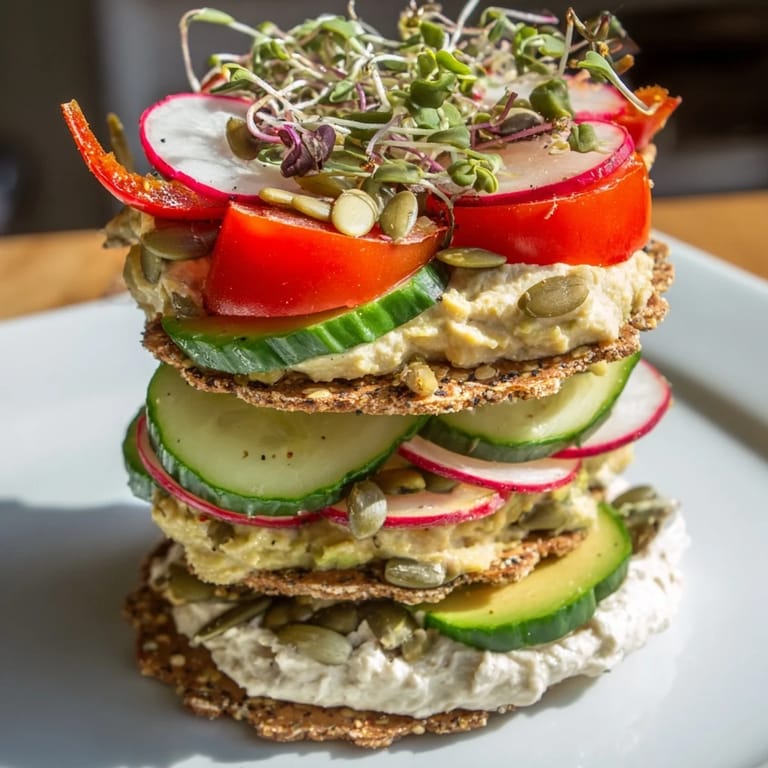
The beauty of this recipe is that it's not rigid. The first time I made it, I thought I had to follow the exact order I'd imagined, but halfway through, I realized I was actually creating based on what looked good and what felt right. Start with your heaviest, most stable element at the bottom (a cracker), and work your way up, thinking about which toppings will hold their own weight without sliding. I've learned that micro greens always go near the top because they're delicate and won't wilt from the moisture below. The avocado and radish go in the middle layers where they're protected but still visible. Every tower is different, and that's exactly the point. This is your chance to cook intuitively, not by rote.
Individual vs. Showstopping: Two Ways to Serve
I used to think I had to build one massive tower that screamed "look what I made," but I've discovered that individual mini towers are actually easier to eat and equally impressive. When you're serving at a cocktail party or a formal dinner, individual towers let guests pick them up and eat them without worry. When you're serving at a sit-down meal where everyone has a plate, one larger tower in the center that you slice into wedges feels theatrical and special. I now make the choice based on my guests and the moment, not on what feels more impressive from a distance.
Making It Your Own: Simple Variations That Work
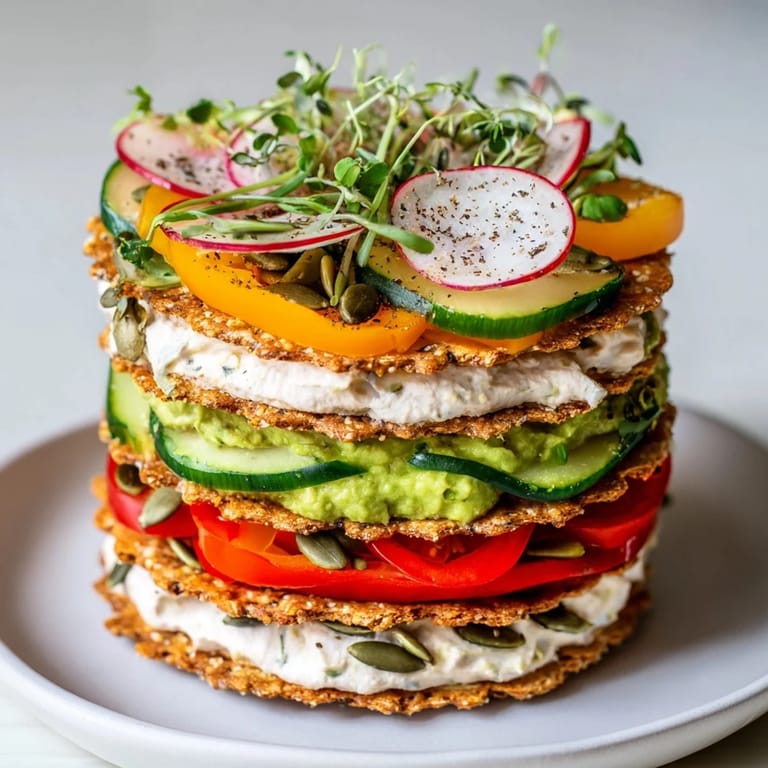
This tower is a canvas. I've added everything from smoked salmon (making it no longer vegetarian, but utterly luxurious) to grilled zucchini slices, roasted asparagus tips, and even a thin slice of prosciutto tucked between layers. The formula stays the same: alternating sturdy base layers with spread, fresh toppings for color and crunch, and a stunning finish. The magic is in the balance—you need enough structural elements to hold it up and enough fresh elements to make it sing. One time I added a paper-thin slice of roasted beet between the avocado and bread, and the pink bleed-through looked almost intentional, like I'd planned it.
- For a vegan version, swap cream cheese for cashew cream or dairy-free cream cheese, and it tastes almost identical while keeping the tower entirely plant-based.
- Add a thin slice of fresh mozzarella between the tomato and bread for a caprese-inspired layer that feels grown-up and seasonal.
- Keep everything at room temperature or slightly chilled, but not ice-cold; cold spreads are harder to layer smoothly.
 Pin it
 Every time I make this tower, I'm reminded that the most impressive dishes are often the ones that feel effortless—even though they're not. The real magic isn't in any single ingredient; it's in the intention you bring to the stacking.
Recipe FAQs
- → What types of bread work best for the layers?
Lightly toasted gluten-free bread cut into rounds or rectangles pairs perfectly with crispbread for a sturdy, flavorful stack.
- → Can I substitute the cream cheese in this tower?
Yes, plant-based cream cheese or extra hummus and guacamole make a great vegan alternative without sacrificing creaminess.
- → How should I prepare the fresh toppings?
Thinly slice vegetables like cucumber, tomato, avocado, radish, and roasted peppers to ensure even layering and balanced textures.
- → What is the best way to serve the tower?
Use a wide spatula to carefully transfer the stacked tower to serving plates and serve immediately for crisp textures.
- → Can I customize the tower with additional ingredients?
Absolutely. Adding smoked salmon, grilled vegetables, or turkey can boost protein but may affect dietary suitability.