 Pin it
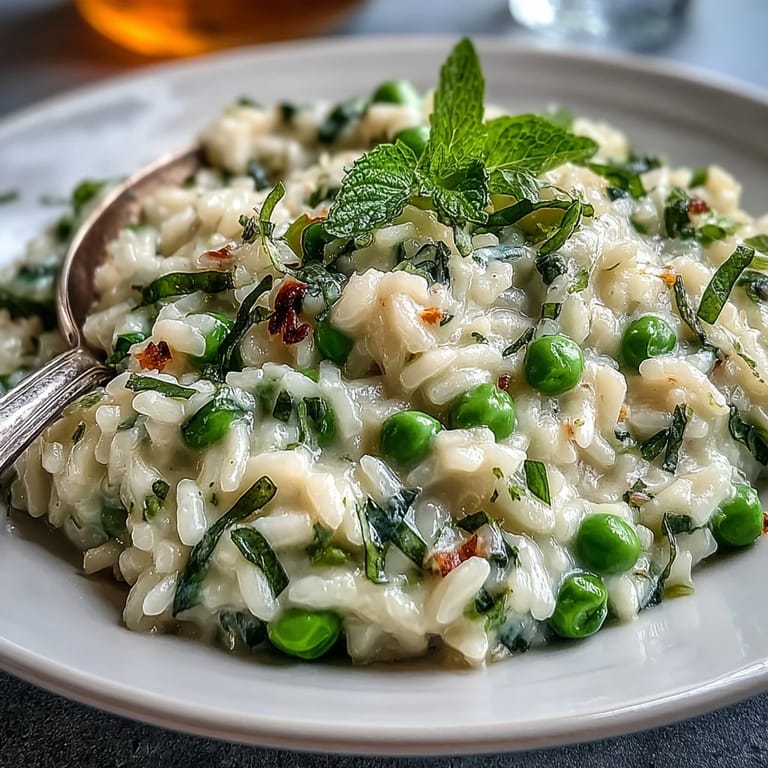
 The first signs of spring in my kitchen are always the tiniest shoots of mint peeking through the herb pot on my windowsill. One week, a hefty bag of just-picked peas landed in my lap thanks to a neighbor with an overzealous garden, and suddenly this breezy risotto came to life. The sound of peas hitting the cutting board, their bright green color, and the scent of fresh lemon zest made the process feel like a celebration. I rarely hold onto recipes for long, but this one somehow rooted itself in my weekly spring routine. The way the risotto glimmers with both sunshine and flavor has kept it close by ever since.
One Sunday, I cooked this for friends who had never tasted homemade risotto and we all huddled around the stove, taking turns stirring and releasing clouds of buttery, herby steam. Someone joked it felt more like making art than dinner, and honestly, I agreed. We ended up eating it right from the pot, each claiming our favorite, cheese-melted corner. The empty dish was almost an afterthought compared to the laughter and improvisation that swirled while we cooked together. Those are the kitchen days that stick with you.
Ingredients
- Fresh or frozen spring peas: Spring peas are the star—use fresh when available for a sweet burst, but frozen still pops a lovely green (never skip the quick taste test for tenderness).
- Shallot: Because it softly sweetens the base much better than onions in my experience—chop it fine so it melts into the rice.
- Garlic: Two cloves wakens all the flavors; be gentle when sautéing so it never goes golden, only fragrant.
- Fresh mint leaves: Mint lifts every bite; chop just before adding to keep the flavor bright and not grassy.
- Lemon zest: A microplane makes zesting effortless, and the lemon unites all the spring flavors.
- Arborio rice: Creaminess depends on using high-starch rice—never rinse it.
- Low-sodium vegetable broth: The warmth of the broth means the rice cooks evenly and doesn’t get shocked—season the broth upfront for best results.
- Dry white wine: Wine balances the richness; let it bubble away so it perfumes the risotto without harshness.
- Olive oil: A smooth start for sautéing—pick a fruity one if you have it.
- Unsalted butter: Butter at the end transforms the texture; always add off heat so it melds smoothly.
- Aged Parmesan cheese: Grate it fresh for the best melt and flavor—pre-grated never tastes quite as satisfying.
- Kosher salt and freshly ground black pepper: Season in layers and always taste just before serving, since the cheese can be salty too.
Tired of Takeout? 🥡
Get 10 meals you can make faster than delivery arrives. Seriously.
One email. No spam. Unsubscribe anytime.
Instructions
- Warm the broth:
- Pour vegetable broth into a saucepan and keep it at a gentle steam so it’s ready when needed.
- Sauté the aromatics:
- Heat olive oil in your largest skillet, then add shallot and garlic, stirring until they’re barely translucent and the kitchen smells inviting.
- Toast the rice:
- Stir in Arborio rice, coating each grain with oil, and listen for the faint crackle as they toast—don’t rush this part.
- Deglaze with wine:
- Pour in the white wine, scraping up any bits, and stir steadily until the liquid vanishes and you taste only brightness.
- Add broth gradually:
- Begin adding broth one ladle at a time, gently stirring as the grains absorb it and turn creamy—each addition should disappear before moving to the next.
- Incorporate peas:
- About halfway through, scatter in the peas; the color will go vivid and they’ll hold just a bit of bite if timed right.
- Finish with richness:
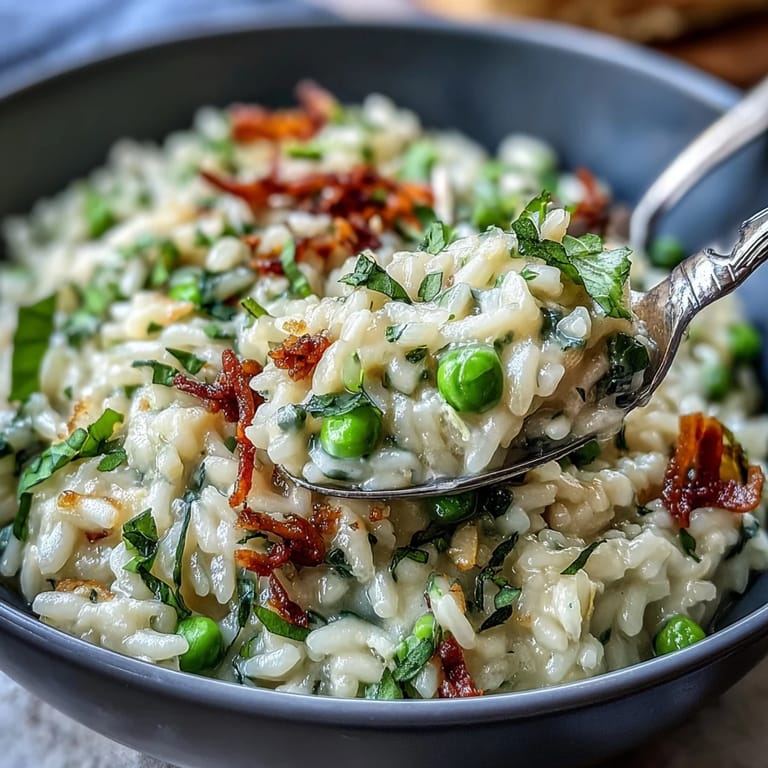
- After 20–25 minutes, when the risotto is saucy but not soupy, take it off heat and fold in butter, Parmesan, mint, and lemon zest—this is where the magic happens.
- Serve immediately:
- Ladle into bowls, add a frill of extra cheese or mint, and serve hot while the texture is perfect and creamy.
 Pin it
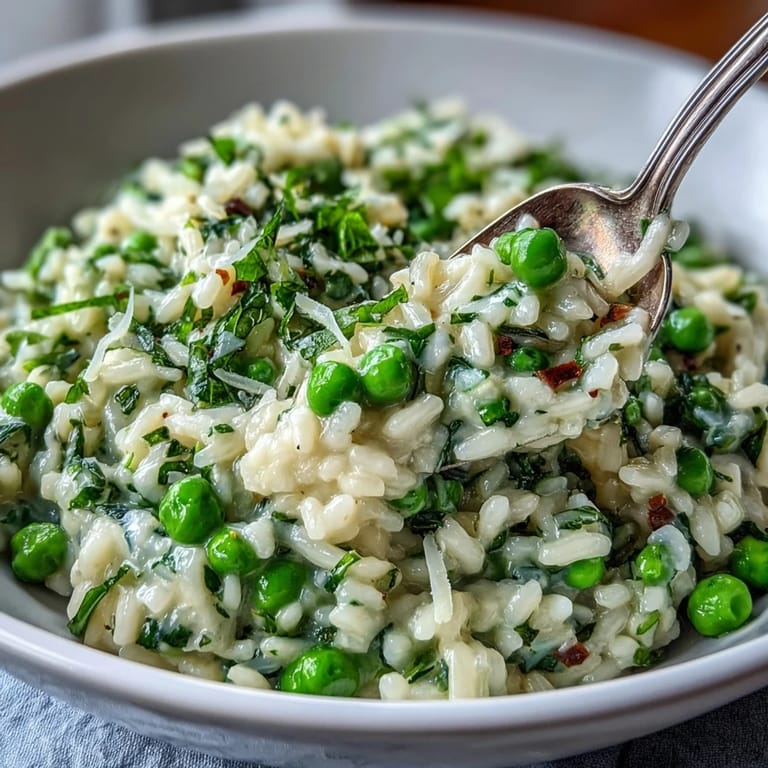
 Sometimes, when the windows are open and the breeze blows in spring petals, serving this risotto feels like hosting a little seasonal ritual more than just dinner. It’s one of those recipes that, just once, made everyone around the table pause for a happy, appreciative moment before diving in again.
All About Arborio: Why the Rice Matters
My first risotto attempt was with long-grain rice, and the result was undeniably forgettable. Arborio’s short, plump grains hold up to all the stirring and gentle broth additions, drawing out that dreamy, creamy texture you just can’t fake. Treating the rice kindly (never rinsing off the starch) really does make the difference. Now I reach for Arborio every time, knowing it’ll give me the tender bite I want. If you have Carnaroli or Vialone Nano, those also work beautifully—but don’t grab the plain stuff in a pinch.
Balancing Flavors for Spring
The trick to getting this risotto to truly sing is making sure the brightness from the lemon and mint doesn’t overpower the earthy pea sweetness. I’ve found that layering the zest in at the very end helps it stay vibrant without taking over the show. Parmesan can quickly tip things salty, so I always taste before the final sprinkle. Little tweaks like that helped me figure out how delicate a dish like this can be. Spring flavors play best when each note still has its own spotlight.
Risotto Timing: Staying Creamy From Stove to Table
Risotto waits for no one, so I always have bowls warm and ready before the final stir. If you wait too long, you risk losing that loose, flowing texture that feels so luxurious. Serving it right away makes for the best spoonful every time.
- If leftovers happen, they turn into spectacular arancini the next day.
- Heavy cream can be added before serving for an ultra-rich version, but I prefer to let the peas and mint shine.
- Keep some extra broth on hand for thinning, since risotto loves to thicken while it sits.
 Pin it
 May each bowl of this risotto bring a bit of sunshine to your kitchen, no matter the weather. Sharing it with friends makes it taste even finer.
Recipe FAQs
- → Can I use frozen peas?
Yes. Add frozen peas about 10-15 minutes into cooking so they thaw and heat through without becoming mushy. Fresh peas give a sweeter bite when available.
- → What can I use instead of white wine?
Substitute an equal amount of warm vegetable broth with a splash of lemon juice or a teaspoon of white wine vinegar for brightness. Use warmed liquid to keep cooking temperature steady.
- → How do I get a creamy texture without cream?
Constant stirring while gradually adding hot broth releases starch from the Arborio, creating a naturally creamy texture. Finishing with butter and grated Parmesan further enriches the risotto.
- → How do I know when the rice is done?
Rice should be tender with a slight core (al dente) and the overall dish should be loose and creamy, not dry. Taste a few grains toward the end of cooking to check doneness.
- → Can I make this ahead and reheat?
Risotto is best served immediately, but you can cool and refrigerate leftovers. Reheat gently with warm broth, stirring to restore creaminess. Add a knob of butter or a splash of cream if needed.
- → What cheese swaps work well?
Pecorino Romano can replace Parmesan for a saltier, tangier finish. Use finely grated cheese and fold in off heat to keep a smooth, silky texture.