 Pin it
 Last summer, my sister texted me a photo of a fruit display she'd seen at a wedding—nothing fancy, just a stunning arrangement of golden mangoes and bright pineapple spears that made everyone stop and stare before diving in. I realized then that the most impressive centerpiece doesn't require cooking or complicated techniques, just good fruit and the willingness to play with color and shape. This tropical spread became my go-to move for any gathering where I wanted to feel generous without spending hours in the kitchen. The beauty of it is that it looks like you've worked much harder than you actually have, and honestly, that's the best kind of recipe.
I made this for my nephew's birthday picnic on a scorching afternoon, and watching people's faces light up when they saw all those colors spread out on an old tiered cake stand—borrowed from my neighbor, no fancy equipment needed—reminded me that sometimes the simplest things feel the most celebratory. The kids didn't even notice there was no cake because they were too busy loading their plates with mango and strawberries, and honestly, the adults were right there with them.
Ingredients
- Ripe mangoes (2): Choose ones that yield slightly to gentle pressure and smell fragrant at the stem end; the flavor difference between a ripe and under-ripe mango is everything, so don't rush this.
- Large pineapple (1): Look for golden-yellow skin and a sweet smell, then cut away the core completely because those fibrous bits stuck between your teeth ruin the whole experience.
- Kiwis (2): The bright green flesh photographs beautifully and provides tartness that balances the sweeter fruits.
- Papaya (1): This one's delicate and creamy; handle it gently once sliced or it'll fall apart on you.
- Dragon fruit (1): The shocking pink skin and speckled white or magenta flesh make people ask what it is before tasting it.
- Seedless red grapes (1 cup): These little gems add pops of deep color and don't require any cutting, which is a small mercy when you're juggling multiple fruits.
- Fresh strawberries (1 cup): Halve them just before serving so they don't weep red juice all over the other fruits, and pick ones that smell sweet, not musty.
- Blueberries (1 cup): These roll around and hide in corners of the platter, which somehow makes them feel like tiny treasures to discover.
- Fresh mint leaves (1/4 cup): Tear or leave whole just before serving because mint bruises easily and turns brown when handled too far in advance.
- Lime (1): Cut into wedges for both garnish and a squeeze of brightness that wakes up the fruit flavors.
- Vanilla Greek yogurt or coconut yogurt (1 cup, optional): This becomes a creamy dipping sauce that turns the fruit into something more indulgent without feeling heavy.
- Honey or agave syrup (1 tablespoon): A touch of sweetness in the sauce balances any tartness from the lime.
Tired of Takeout? 🥡
Get 10 meals you can make faster than delivery arrives. Seriously.
One email. No spam. Unsubscribe anytime.
Instructions
- Prep your fruit station:
- Lay out everything you need on a clean counter—cutting board, sharp chef's knife, paring knife, and a large platter or tiered stand. Having this ready before you start means you're not searching for a bowl while mango juice drips on your sleeve.
- Slice and ready each fruit:
- Work through mangoes first (they take the most focus), then pineapple, papaya, and the rest in descending order of size. As you finish each fruit, place it on a clean plate so you're not mixing raw fruit with cutting board debris.
- Create your visual centerpiece:
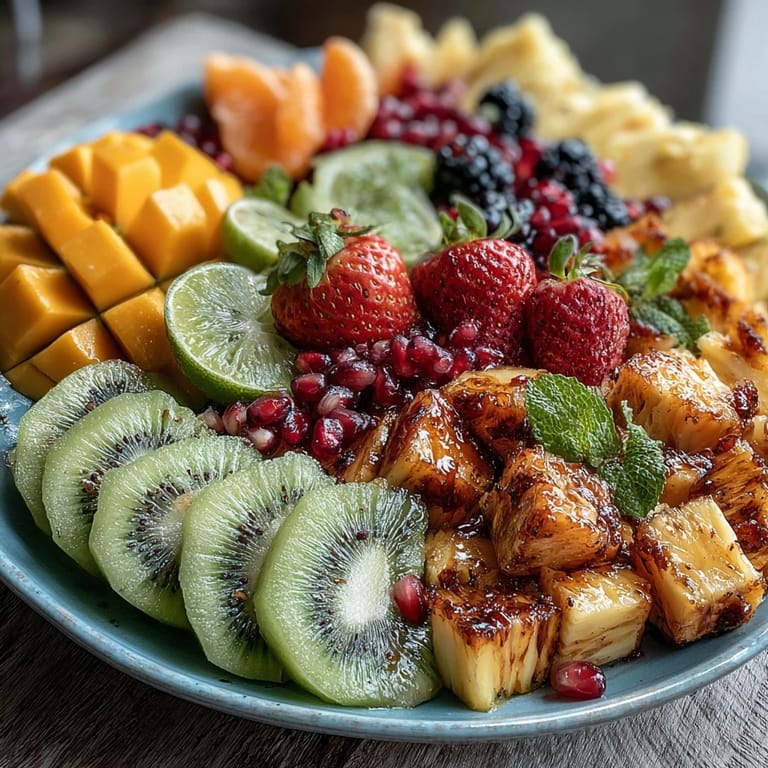
- Start with mango and pineapple at the center, fanning the slices slightly so they overlap like they're bowing to each other. This isn't about perfection; it's about creating depth and drawing the eye toward the middle.
- Layer in complementary colors:
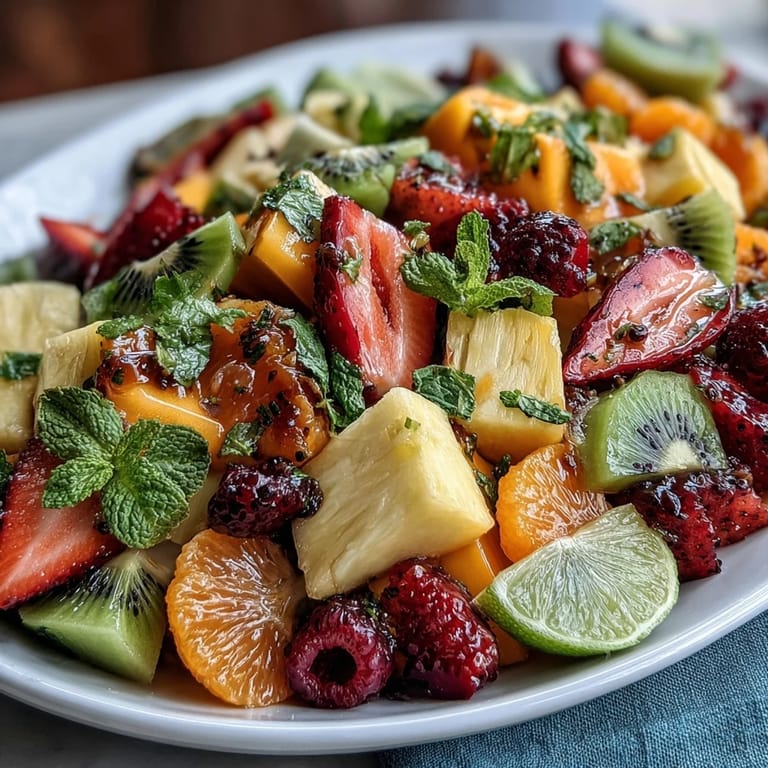
- Arrange papaya next, then dragon fruit, kiwis, grapes, strawberries, and blueberries around the perimeter, clustering similar colors together so the platter reads as one intentional composition rather than chaos. Stand back and adjust until it feels balanced to your eye.
- Add your finishing touches:
- Scatter mint leaves across the arrangement (it releases its aroma as people brush past) and tuck lime wedges into gaps for both visual pop and practical purpose. This is where your display transforms from nice into memorable.
- Make the optional dipping sauce:
- Whisk yogurt, honey, and lime zest together in a small bowl until smooth, then transfer to a pretty serving dish. This gives guests something creamy to dip into if they want that richness alongside the bright fruit.
- Keep everything chilled:
- Cover loosely with plastic wrap and refrigerate until serving time, pulling it out about ten minutes before guests arrive so the fruit isn't ice-cold and flavorless.
 Pin it
 My aunt brought one of these displays to Thanksgiving last year, and something shifted about how we gathered around the table—it felt less formal, more relaxed, like the fruit gave us permission to eat with our hands and talk over each other without someone glancing at the clock. Food that looks this good and requires this little effort somehow brings people closer together.
Why This Works for Any Occasion
The genius of a tropical fruit display is that it adapts to whatever you're doing—elegant enough for a brunch where people are dressed nicely, casual enough for a backyard afternoon, and practical enough that you can set it out early and let guests graze. It's also one of those rare dishes where there's no such thing as an accident; if you slice a mango unevenly, it somehow still looks intentional once you've arranged ten other fruits around it.
Seasonal Swaps and Variations
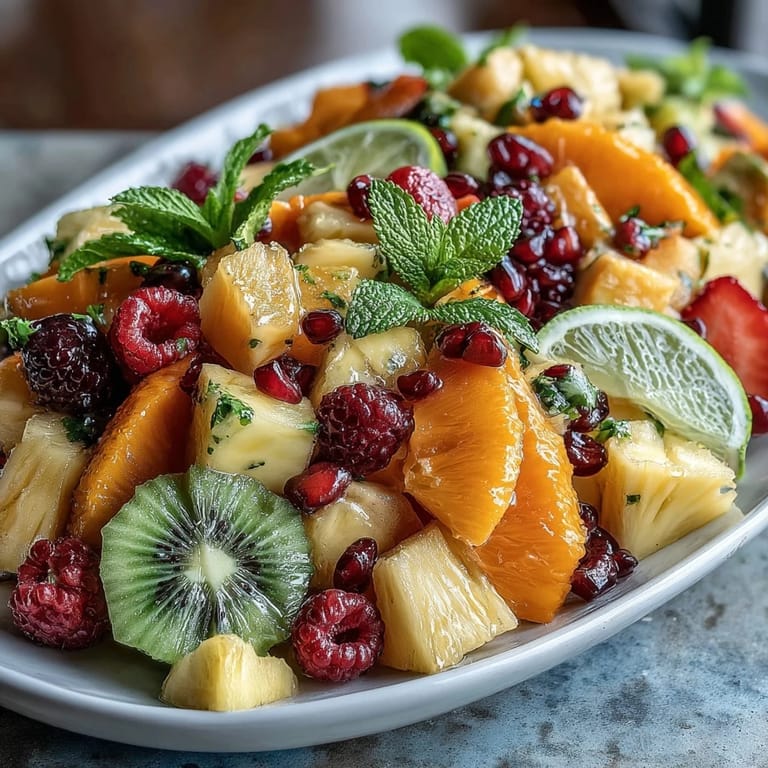
The beauty of this recipe is that it begs for improvisation based on what's ripe right now in your market—passion fruit halves add drama and tartness, star fruit slices create natural geometric patterns, melon cubes bring softness, and out-of-season additions like pomegranate arils add jewel-like color. One winter I added candied orange slices for warmth, and another summer I scattered toasted coconut flakes because I was feeling fancy. The recipe is flexible enough to work with whatever fruit is at its peak, which means you're never stuck making something that tastes under-ripe or disappointed.
Pairing and Presentation Tips
Serve this with chilled sparkling wine for brunch, tropical punch if kids are around, or even coconut water for something light and hydrating. The dipping sauce turns this from casual fruit into something more refined, so offer it in a separate bowl and let people decide if they want to dip or eat plain. I've also learned that putting small serving forks or toothpicks nearby prevents people from using their fingers and then touching the fruit everyone else will eat.
- If you're making this the night before, keep fruit in separate containers and assemble right before serving so nothing gets soggy or discolored.
- A tiered cake stand makes this feel restaurant-quality even though you've done absolutely nothing fancy, so borrow one if you don't own one.
- Take a photo before people descend because a beautiful fruit display gets dismantled quickly, and you'll want to remember how it looked.
 Pin it
 This display has become my favorite thing to bring anywhere because it never feels boring and it always makes people happy, which isn't something you can say about every recipe. The effort-to-impact ratio is so skewed in your favor that you'd be doing yourself a disservice not to make this soon.
Recipe FAQs
- → What fruits work best for this tropical display?
Ripe mangoes and pineapples form the centerpiece, complemented by kiwi, papaya, dragon fruit, grapes, strawberries, and blueberries for variety in color and taste.
- → How should the fruits be prepared?
Peel, core, and slice or chunk each fruit neatly to highlight their textures. Arrange them in layers or tiers on a large platter for visual appeal.
- → Can this display accommodate dietary restrictions?
Yes, it's naturally vegan and gluten-free. Substitute coconut yogurt in the optional dip to keep it dairy-free.
- → What garnishes enhance this tropical fruit arrangement?
Fresh mint leaves and lime wedges add aroma, color, and a refreshing touch to the display.
- → Is there a suggested dipping sauce?
An optional dip combines vanilla or coconut Greek yogurt with honey or agave syrup and lime zest for a sweet, tangy complement.
- → How can I add extra flair to the display?
Consider edible flowers or toasted coconut flakes as decorative garnishes to elevate the presentation.