 Pin it
 The first pot roast I ever made turned out tough as a boot, and I nearly swore off the whole thing. My neighbor knocked on my door mid-disaster, took one look at my watery broth and pale meat, and said, You skipped the sear, didnt you? She was right. That afternoon she taught me the magic of a dark, caramelized crust and low, patient heat. Now, every time I pull a fork-tender roast from the oven, I think of her standing in my kitchen, laughing at my impatience.
I made this for my sons birthday once, nothing fancy, just family around the table. He was home from college and asked for pot roast like I used to make. Watching him reach for seconds, soaking up gravy with bread, I realized comfort food isnt about complexity. Its about the ritual of waiting, the steam rising when you lift the lid, and the quiet satisfaction of a meal that holds everyone at the table a little longer.
Ingredients
- Beef chuck roast: Look for good marbling, those white streaks of fat melt into the meat during the long braise and keep everything moist and flavorful.
- Kosher salt and black pepper: Season generously before searing, this is your first layer of flavor and it matters more than you think.
- All-purpose flour: A light dusting helps create that golden crust and later thickens the sauce just enough to cling to your fork.
- Olive oil and butter: The combo gives you a high smoke point plus that nutty, rich flavor butter brings when it foams in the pan.
- Yellow onion: Cut into wedges so they hold their shape and turn sweet and silky as they simmer in the braising liquid.
- Garlic: Smash the cloves with the side of your knife, they release their oils faster and infuse the whole pot.
- Carrots and celery: Chunky cuts stand up to hours of cooking without turning to mush, and they soak up all that beefy goodness.
- Baby potatoes: Waxy varieties stay firm and creamy, not grainy, even after a long braise.
- Tomato paste: Cooking it down for a minute or two deepens its color and concentrates the sweetness, adding serious umami.
- Red wine: Use something youd actually drink, it doesnt have to be fancy but it should taste good because that flavor stays in the sauce.
- Beef broth: Low-sodium lets you control the salt, and homemade or good quality boxed broth makes a noticeable difference.
- Worcestershire sauce: Just a splash adds a savory depth you cant quite name but definitely miss if you leave it out.
- Rosemary, thyme, and bay leaves: Fresh herbs are ideal, but dried work fine, just use a lighter hand since dried flavors are more concentrated.
- Cornstarch slurry: Optional, but if you like a thicker gravy that coats the back of a spoon, this is your secret weapon.
- Fresh parsley: A sprinkle at the end brightens the whole dish and makes it look like you fussed more than you did.
Tired of Takeout? 🥡
Get 10 meals you can make faster than delivery arrives. Seriously.
One email. No spam. Unsubscribe anytime.
Instructions
- Preheat and prep the beef:
- Set your oven to 300°F if youre using it, then pat the roast completely dry with paper towels so it sears instead of steams. Season every side with salt and pepper, then dust lightly with flour and shake off the excess.
- Sear the roast:
- Heat the oil and butter in your heaviest pot over medium-high until shimmering, then lay the roast in gently and let it sit undisturbed for four to five minutes per side until deeply browned. Dont rush this, the crust is where the flavor lives.
- Cook the aromatics:
- Lower the heat to medium, toss in the onion wedges, and stir until they soften and turn golden at the edges. Add the garlic and let it cook just until fragrant, about a minute, watching so it doesnt burn.
- Build the base:
- Stir in the tomato paste and cook it down for a minute or two until it darkens a shade, then pour in the wine and scrape up all those brown bits stuck to the bottom. Let it bubble and reduce slightly, about three minutes.
- Add liquid and herbs:
- Pour in the beef broth and Worcestershire, stirring to combine, then toss in the rosemary, thyme, and bay leaves. Nestle the roast back into the pot so the liquid comes halfway up the sides.
- Braise low and slow:
- Bring everything to a gentle simmer, cover tightly, then either reduce the heat to low or slide the pot into the oven. Let it cook undisturbed for an hour and a half, the steam and time will do the work.
- Add vegetables:
- Carefully flip the roast, then tuck the carrots, celery, and potatoes around it, pushing them into the liquid. Cover again and cook for another hour and a half to two hours until the beef practically falls apart.
- Rest and finish the sauce:
- Move the roast and vegetables to a platter and tent with foil, then skim any excess fat from the surface of the liquid. If you want a thicker gravy, bring it to a simmer and stir in the cornstarch slurry, cooking until it coats a spoon.
- Serve:
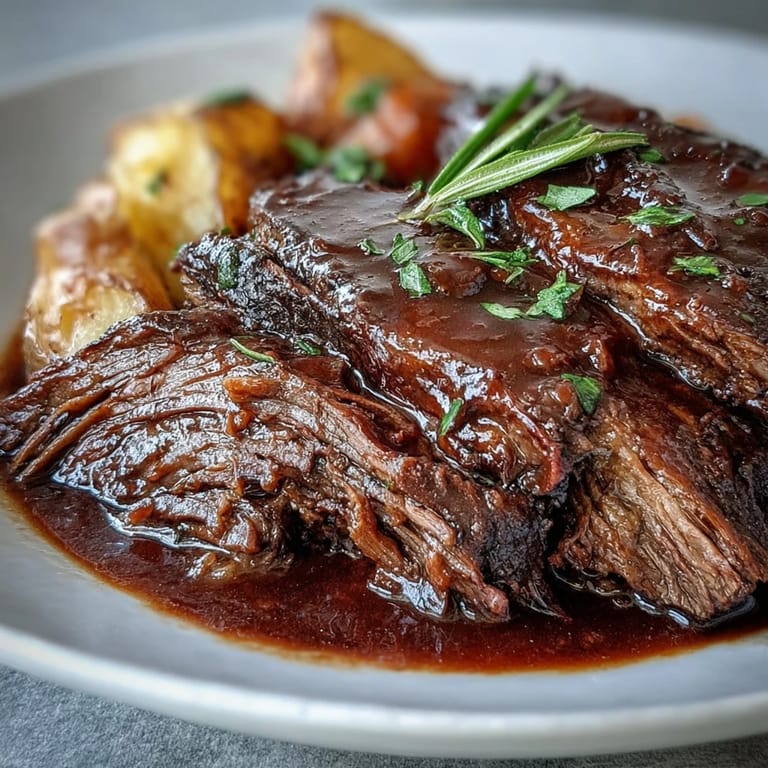
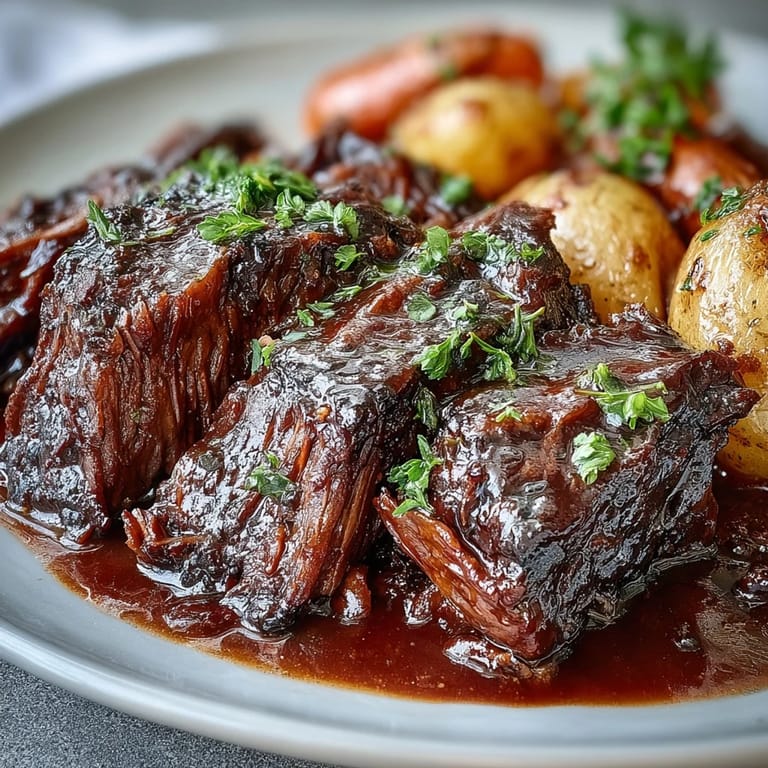
- Pull the beef into large chunks or slice it against the grain, then arrange it over the vegetables and spoon the rich sauce on top. Finish with a sprinkle of fresh parsley and serve hot with crusty bread or buttery noodles.
 Pin it
 One winter evening, I made this for a friend going through a rough patch. We sat at my kitchen table with bowls of pot roast, no small talk, just the sound of spoons scraping plates and the hum of the heater. She looked up after her second helping and said, This tastes like being taken care of. I didnt know what to say, so I just ladled her more gravy.
Making It Your Own
You can swap the red wine for extra beef broth if you want to keep it alcohol-free, or try a splash of balsamic vinegar for a subtle tang. Root vegetables like parsnips or turnips fit right in, and a handful of mushrooms added with the onions brings an earthy richness. Sometimes I toss in a pinch of smoked paprika or a dried chili for warmth, it depends on the mood or what I find in the pantry.
Slow Cooker Option
After you sear the beef and cook down the aromatics, transfer everything to your slow cooker and set it on low for eight to ten hours or high for five to six. I like to add the vegetables halfway through if I want them to hold their shape, but if youre gone all day, toss them in at the start and theyll be soft and sweet. The slow cooker makes the whole process even more hands-off, and you come home to a house that smells like a hug.
Storing and Reheating
Leftovers keep in the fridge for up to four days in an airtight container, and they taste even better after the flavors have mingled overnight. Reheat gently on the stovetop with a splash of broth to loosen the sauce, or microwave in short bursts so the meat doesnt dry out. You can also freeze portions for up to three months, thaw in the fridge overnight, and reheat slowly for a quick weeknight dinner that feels like you spent all day cooking.
- Shred leftover beef and pile it on toasted rolls with melted provolone for French dip-style sandwiches.
- Toss chunks of meat and vegetables with cooked rice or polenta for a hearty grain bowl.
- Use the gravy as a base for soup by adding extra broth, beans, and a handful of greens.
 Pin it
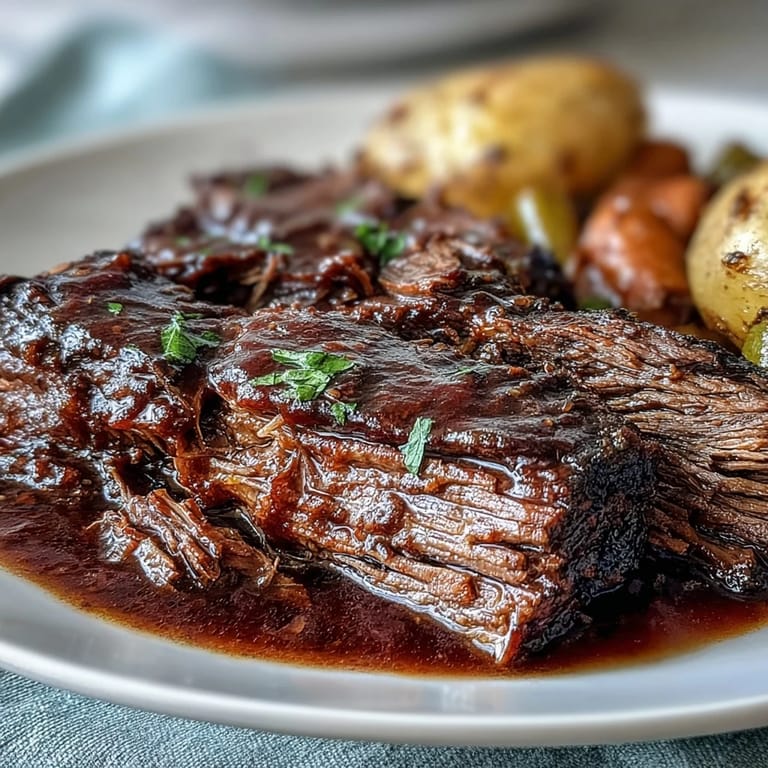
 This pot roast has gotten me through Sunday dinners, surprise guests, and nights when I just needed something warm and familiar. Its the kind of dish that asks nothing of you but a little patience, and gives back a table full of people reaching for seconds.
Recipe FAQs
- → What cut of beef works best for pot roast?
Chuck roast or blade roast are ideal choices because they have excellent marbling and connective tissue that breaks down during slow cooking, resulting in tender, flavorful meat. Avoid lean cuts as they will dry out.
- → Can I make this in a slow cooker instead?
Yes, after searing the beef and sautéing the aromatics, transfer everything to your slow cooker. Cook on low for 8-10 hours or high for 5-6 hours. Add vegetables halfway through cooking if you prefer them firmer.
- → How do I know when the pot roast is done?
The beef should be fork-tender and easily pull apart when tested. Internal temperature should reach at least 190-205°F for proper breakdown of connective tissue. Vegetables should be soft but still hold their shape.
- → Can I substitute the red wine?
Absolutely. Use additional beef broth for a non-alcoholic version, or try using balsamic vinegar mixed with broth for added depth. The wine adds richness but isn't essential to the dish's success.
- → How should I store and reheat leftovers?
Store in an airtight container in the refrigerator for up to 4 days. Reheat gently on the stovetop or in the oven at 300°F, adding a splash of broth if needed. The flavors actually improve after a day, making it perfect for meal prep.
- → Why is searing the meat important?
Searing creates a deep brown crust through the Maillard reaction, which adds complex savory flavors and color to both the meat and the braising liquid. This step is crucial for developing rich, deep flavor in the final dish.