 Pin it
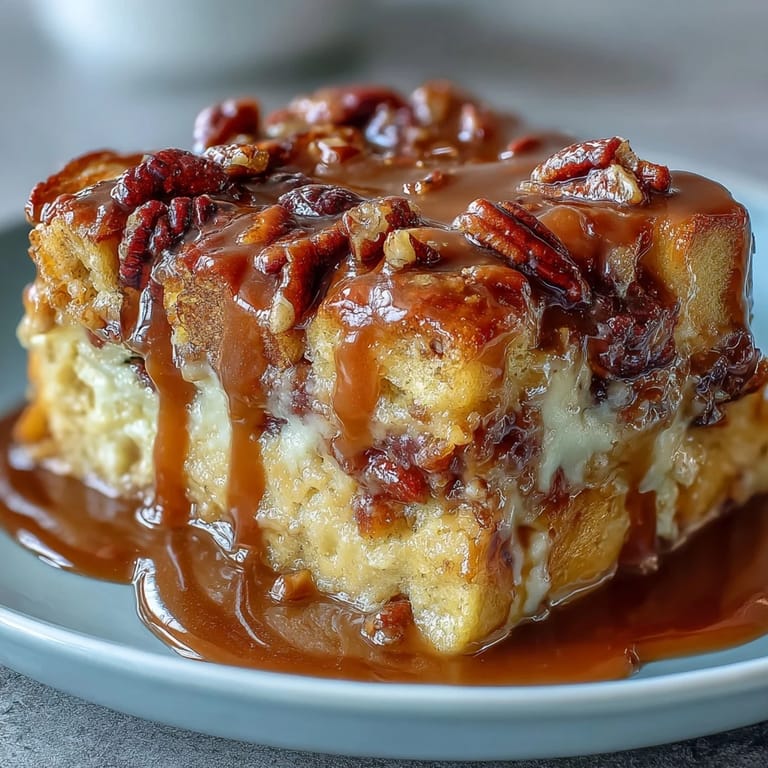
 My neighbor brought over a jar of homemade guava paste last autumn, the kind she'd made with her grandmother's recipe, and I had no idea what to do with it until that moment I pulled a slightly stale brioche from the bread box. What if I treated it like a bread pudding, I thought, but made it tropical? The guava kept calling out for caramel, and pecans seemed like the obvious companion to anchor everything together. That first attempt was messy and imperfect, but it tasted like a secret worth keeping.
I made this for a small dinner party on a cold November evening, and watching people's faces when they tasted that first spoonful was genuinely rewarding. One guest thought I'd layered multiple desserts together until I told her it was all one dish. By the time we finished, three people asked for the recipe, and I realized I'd stumbled onto something that felt both comforting and unexpectedly sophisticated.
Ingredients
- Day-old brioche or challah, cubed: Use bread that's a day or two old, not fresh—the slightly stale texture soaks up custard perfectly without turning to mush like fresh bread would.
- Whole milk and heavy cream: The combination matters because milk alone makes the custard lean and thin, but this mix creates that luxurious, spoonable texture that makes bread pudding worth eating.
- Eggs: These bind everything together and give the pudding structure so it doesn't collapse into a soggy mess.
- Granulated sugar: A half cup sweetens the custard base without overpowering the guava's natural tartness.
- Vanilla extract: Two teaspoons feels like a whisper of flavor, one that lets other ingredients shine instead of dominating.
- Salt: A quarter teaspoon seems tiny, but it wakes up all the other flavors and makes the sweetness feel intentional rather than flat.
- Guava paste: Cut it into small cubes so it distributes evenly and creates little pockets of tropical flavor throughout the pudding.
- Caramel sauce: Use a good quality version or make your own—the difference between mediocre and memorable lives here.
- Chopped pecans: Toast them lightly if you have time, though even raw they add a crucial contrast to the soft, custardy bread.
- Unsalted butter: For greasing and finishing, so you control the salt content in the final dish.
Tired of Takeout? 🥡
Get 10 meals you can make faster than delivery arrives. Seriously.
One email. No spam. Unsubscribe anytime.
Instructions
- Prepare your stage:
- Heat your oven to 350°F and butter a 9x13-inch baking dish thoroughly, getting into the corners so nothing sticks later. This small step saves heartbreak when you're trying to serve something beautiful.
- Build the custard:
- Whisk together milk, cream, eggs, sugar, vanilla, and salt in a large bowl until everything looks smooth and unified. You'll notice how the mixture goes from looking separated to silky once the eggs fully incorporate.
- Soak the bread:
- Add your cubed bread to the custard and stir gently for a minute or two, then let it sit undisturbed for 10 minutes so every piece gets properly saturated. This patience matters—rushing past it leaves dry pockets that disappoint.
- Add the treasure:
- Fold in the guava paste cubes and half the pecans using a gentle hand, trying to distribute them so every spoonful gets a piece of tropical sweetness. The folding motion keeps air in the mixture rather than crushing it down.
- Layer with intention:
- Spread half the soaked bread mixture into your prepared dish, drizzle with half the caramel sauce, then add the remaining bread and caramel on top. This layering means you get caramel in more than just the bottom bites.
- Top it off:
- Scatter the remaining pecans across the surface and drizzle melted butter all over—this creates a golden, nutty crust as it bakes.
- Bake with attention:
- Slide it into the oven for 40 to 45 minutes until the top turns golden brown and the center feels set when you gently shake the dish. If the top starts browning too quickly, tent it loosely with foil to prevent burning while the inside finishes cooking.
- Rest and serve:
- Let it cool for at least 10 minutes before serving so the custard can set up properly and won't slide around on the plate. A final drizzle of caramel on individual servings feels like a small luxury.
 Pin it
 There's something deeply satisfying about turning humble, slightly-past-their-prime ingredients into something that feels celebratory and special. This dessert taught me that the best dishes often come from what you have on hand rather than what you set out to make.
Why Guava and Caramel Found Each Other
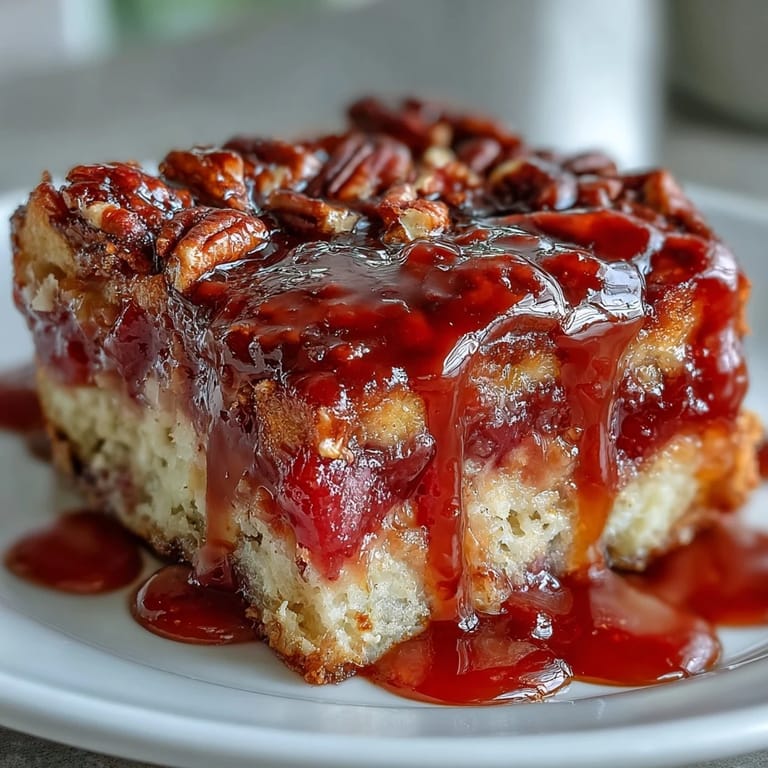
Guava paste brings a natural tartness and tropical brightness that would make almost any dessert feel one-dimensional on its own, but caramel is like the perfect conversation partner—it fills in the gaps with richness and sweetness without arguing about who gets to taste better. Together, they create a complexity that makes your palate keep working, keep tasting, keep wanting more. The pecans arrive as a peacemaker, offering crunch and earthiness that lets both stars shine without overshadowing each other.
The Bread Matters More Than You Think
I've made this with generic white sandwich bread, and it turns into sad mush because the crumb structure can't hold the custard. Brioche works beautifully because its slightly sweet, buttery nature already hints at dessert, and its structure stays firm enough to absorb liquid without falling apart. Challah is equally wonderful if that's what you have—the key is choosing bread substantial enough to stand up to soaking but tender enough to become silky rather than tough.
Serving and Storage Secrets
This dessert tastes incredible warm from the oven, but it also reheats beautifully the next day at 300°F for about 15 minutes, covered loosely with foil so it doesn't dry out. The flavors actually seem to meld and deepen overnight, making it worth making a day ahead for company. A scoop of vanilla ice cream or dollop of whipped cream transforms each serving into something that feels impossibly luxurious for such a simple assembly.
- Make this up to 24 hours ahead and reheat gently—the flavors improve as they sit together overnight.
- If pecans are a problem for your guests, substitute toasted walnuts or hazelnuts without apology.
- A pinch of cinnamon or nutmeg in the custard adds warmth without announcing itself loudly.
 Pin it
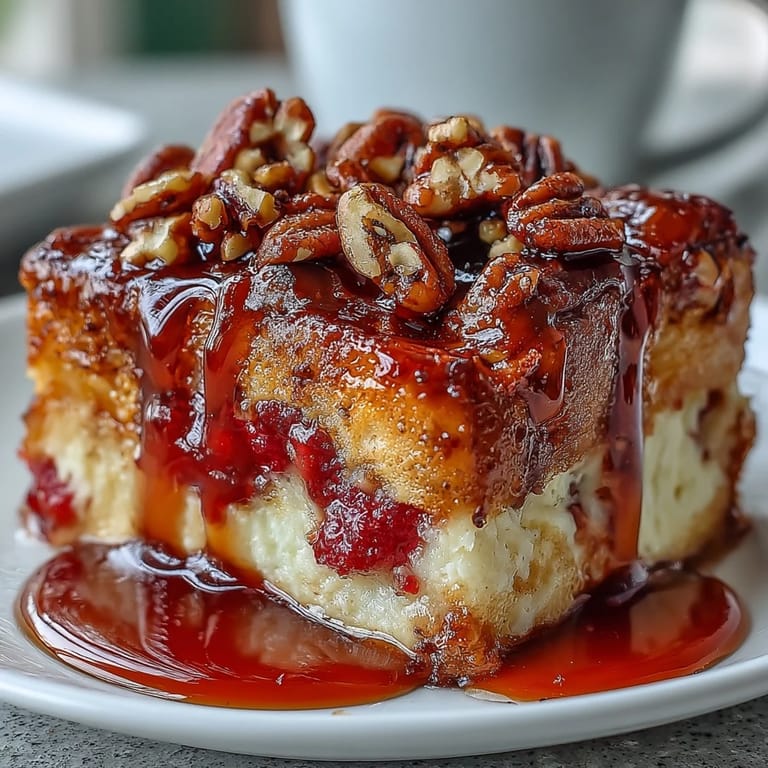
 This bread pudding sits at that perfect intersection where comfort food meets unexpected sophistication, making it equally at home at a potluck or a dinner party. Once you master the basic technique, you'll find yourself inventing variations long after this particular combination becomes familiar.
Recipe FAQs
- → Can I use fresh guava instead of guava paste?
Guava paste works best because it's concentrated and holds its shape during baking. Fresh guava would release too much liquid and make the custard soggy.
- → What type of bread is ideal?
Brioche or challah are excellent choices due to their rich, eggy texture and ability to absorb custard without becoming mushy. Day-old bread works perfectly.
- → Can I prepare this ahead of time?
Assemble everything the night before and refrigerate unbaked. Let it sit at room temperature for 30 minutes before baking. Add an extra 5-10 minutes to the baking time if baking from cold.
- → How do I know when it's done?
The center should be set with no liquid custard visible when gently shaken. A knife inserted in the middle should come out clean, and the top should be golden brown.
- → Can I make this dairy-free?
Substitute whole milk with oat or almond milk, use coconut cream instead of heavy cream, and replace butter with coconut oil. The texture will be slightly different but still delicious.
- → What can I serve with this?
Warm with vanilla ice cream, whipped cream, or a drizzle of extra caramel sauce. Fresh berries or a dusting of powdered sugar also make lovely additions.