 Pin it
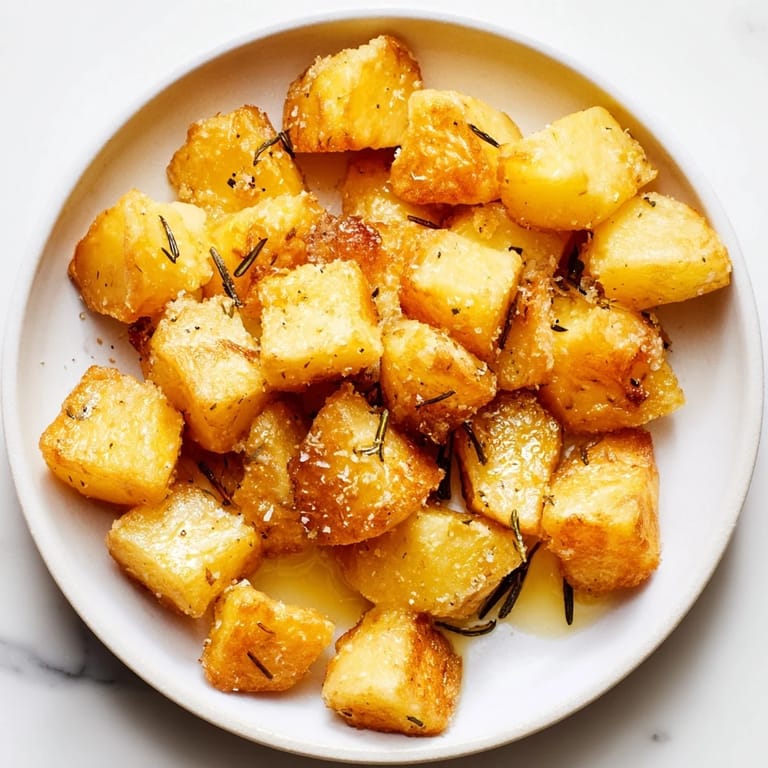
 My grandmother kept a jar of beef tallow in her pantry like other people kept olive oil, and I didn't understand why until the first time I roasted potatoes in it. The smell alone—rich, meaty, almost beefy—filled the kitchen and made everything feel like Sunday dinner. I was skeptical at first, honestly; roasting potatoes in rendered fat felt old-fashioned in a way that made me wonder if I was cooking or time-traveling. But the moment I pulled that tray from the oven and saw those burnished, crackling edges, I got it. This is what potatoes were meant to taste like.
I made these for a dinner party once and watched my friend Sarah—who's usually pretty quiet about food—get noticeably emotional over a potato. She kept asking what I'd done differently, convinced I'd somehow fundamentally changed the vegetable. When I told her it was the tallow, she laughed and said it tasted like her childhood before her family moved away from their farm. That moment stuck with me: food memory is powerful, and sometimes it's hiding in a jar of rendered fat.
Ingredients
- Yukon Gold or Russet potatoes (2 pounds, cut into 2-inch chunks): Yukon Golds are waxy and hold their shape beautifully, while Russets get fluffier inside—pick based on whether you want more uniformity or more contrast in texture.
- Beef tallow (1/3 cup): This is rendered beef fat, and it's worth seeking out from a butcher or online; it's what creates that impossible crispy exterior and savory depth that vegetable oils just can't match.
- Kosher salt (1 1/2 teaspoons, plus more to taste): Salt matters more here than you'd think because it seasons the outside during roasting and helps draw out moisture for crispiness.
- Freshly ground black pepper (1/2 teaspoon): Grind it fresh if you can; pre-ground pepper tastes dusty by comparison, and these potatoes deserve better.
- Fresh rosemary or thyme (2 tablespoons, finely chopped, optional): These herbs infuse the tallow beautifully and add a hint of brightness that cuts through the richness—don't skip them if you have them.
- Garlic cloves (2, smashed, optional): Use these to flavor the tallow itself, then remove them before roasting so they don't burn and turn bitter.
Tired of Takeout? 🥡
Get 10 meals you can make faster than delivery arrives. Seriously.
One email. No spam. Unsubscribe anytime.
Instructions
- Heat your oven and baking sheet:
- Set the oven to 425°F and slide a large rimmed baking sheet inside to get screaming hot. This step is non-negotiable; the heat is what creates the crust.
- Parboil the potatoes:
- Cut your potatoes into roughly 2-inch chunks, drop them into cold salted water, and bring it to a boil. Simmer for 8-10 minutes until the edges are just starting to soften but the centers still resist the knife slightly. You're looking for that sweet spot where they're par-cooked but not mushy.
- Drain and roughen the edges:
- Drain them thoroughly in a colander, then return them to the empty pot and shake gently—this fluffs up the outside and creates little rough edges that'll turn gloriously crispy in the tallow. If you have time, let them air-dry for 5-10 minutes.
- Infuse the tallow:
- Pour the beef tallow into a small saucepan and warm it gently over low heat. If you're using garlic and herbs, add them now and let them flavor the fat for 1-2 minutes, then fish them out before they scorch.
- Coat the hot baking sheet:
- Carefully pull that screaming hot baking sheet from the oven and pour about half the melted tallow onto it, tilting and tilting until it coats the surface. The sizzle you hear is the sound of success.
- Add potatoes and season:
- Scatter the potatoes across the sheet in a single layer, drizzle with the remaining tallow, and season generously with salt and pepper. Don't be shy; these need proper seasoning on the outside to develop that savory crust.
- Roast, flip, roast again:
- Roast for 20 minutes, then carefully flip each piece with tongs and roast for another 20-25 minutes until every side is golden and crispy. The flipping matters because it helps them brown evenly.
- Finish and serve:
- Pull them from the oven, taste one (carefully—they're hot), and add a sprinkle of fresh herbs if you'd like. Serve immediately while the outside is still shattering and the inside is still steaming.
 Pin it
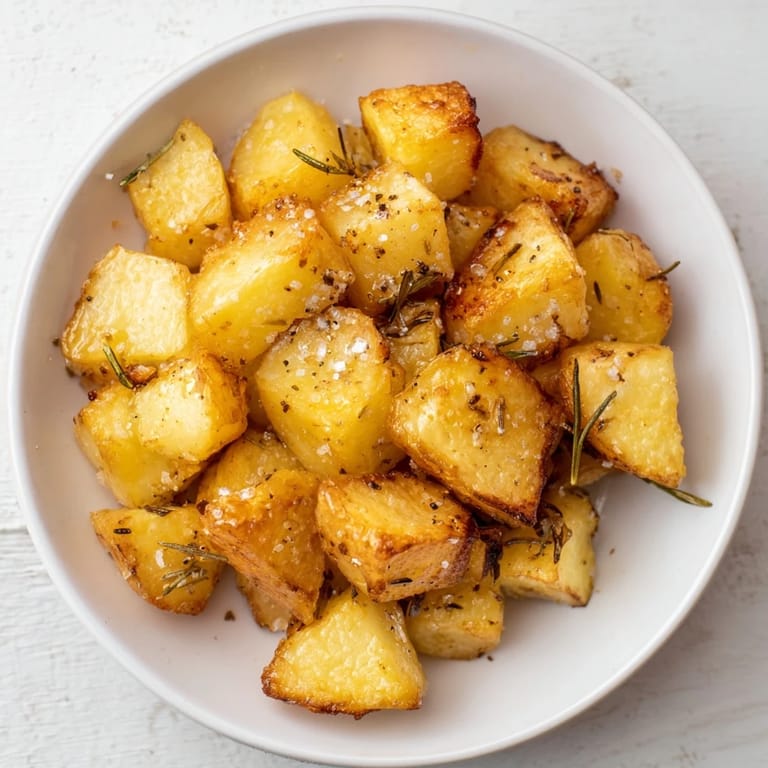
 There's a moment when you pull roasted potatoes from a hot oven and the kitchen fills with that smell—beefy, buttery, crackling—and suddenly the dish becomes more than just a side. It becomes the reason people will remember the meal. That's the power of cooking with real fat and patience.
Why Beef Tallow Is Worth Finding
Beef tallow has been used for centuries because it does something nothing else can: it creates a crust that's savory, shatteringly crisp, and deeply flavorful all at once. Olive oil will brown potatoes, sure, but it won't give you that same richness or that satisfying textural contrast. If you can't find beef tallow, duck fat or goose fat are excellent substitutes and will give you similarly gorgeous results, though with their own distinctive flavors. Pork lard works too if you're in a pinch. Once you taste potatoes done this way, the vegetable oil method starts feeling a little flat.
The Secret to Maximum Crispiness
The magic really happens in two places: the parboil and the hot pan. The parboil gets the inside tender while keeping the outside still-firm so it can crisp up beautifully. The screaming hot baking sheet creates an immediate crust the moment the potatoes hit it, sealing in flavor. There's also something called the Maillard reaction happening here—that chemical process where proteins and sugars brown and create complex, savory flavors. Beef tallow encourages this reaction better than most fats, which is why these taste so deeply meaty and satisfying.
Ways to Build on the Recipe
Once you master the basic method, you can play with what you're infusing the tallow with or what you're sprinkling on top. Try adding smoked paprika or a pinch of chili flakes for heat, or finish them with fleur de sel and fresh thyme. Some people toss them with a little grated Parmesan and fresh parsley right out of the oven. You could also try this method with other root vegetables—turnips, rutabagas, parsnips—they all benefit from the tallow and the hot pan treatment. The formula is simple: hot fat, hot pan, good timing, and let the Maillard reaction do the heavy lifting.
- Smoked paprika or cayenne adds a subtle heat that complements the savory beef flavor beautifully.
- A sprinkle of Parmesan cheese and fresh parsley right out of the oven creates a whole new texture experience.
- Don't be afraid to experiment with other roots vegetables like parsnips or turnips using exactly the same method.
 Pin it
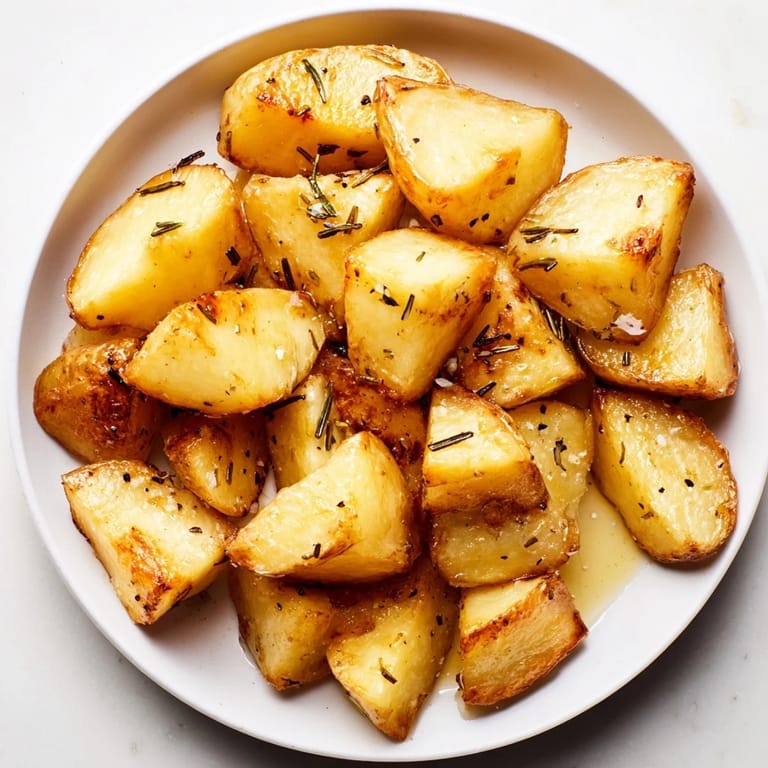
 These potatoes are the kind of dish that reminds you why cooking from scratch matters. Once you taste them, you'll understand why people kept tallow jars in their kitchens for generations.
Recipe FAQs
- → Why boil the potatoes before roasting?
Boiling softens the potatoes slightly and roughening their edges helps create a crisp crust during roasting.
- → Can I substitute beef tallow with other fats?
Yes, duck or goose fat can be used for a different but equally rich flavor profile.
- → How do herbs enhance roasted potatoes?
Fresh rosemary or thyme added during roasting impart aromatic, earthy notes that complement the potatoes and fat.
- → What oven temperature is best for roasting?
Roasting at 425°F (220°C) ensures a crispy exterior and fluffy interior in about 45 minutes.
- → How to achieve extra crispiness?
Allow drained potatoes to air-dry for 5–10 minutes before roasting to remove moisture and enhance crunch.