 Pin it
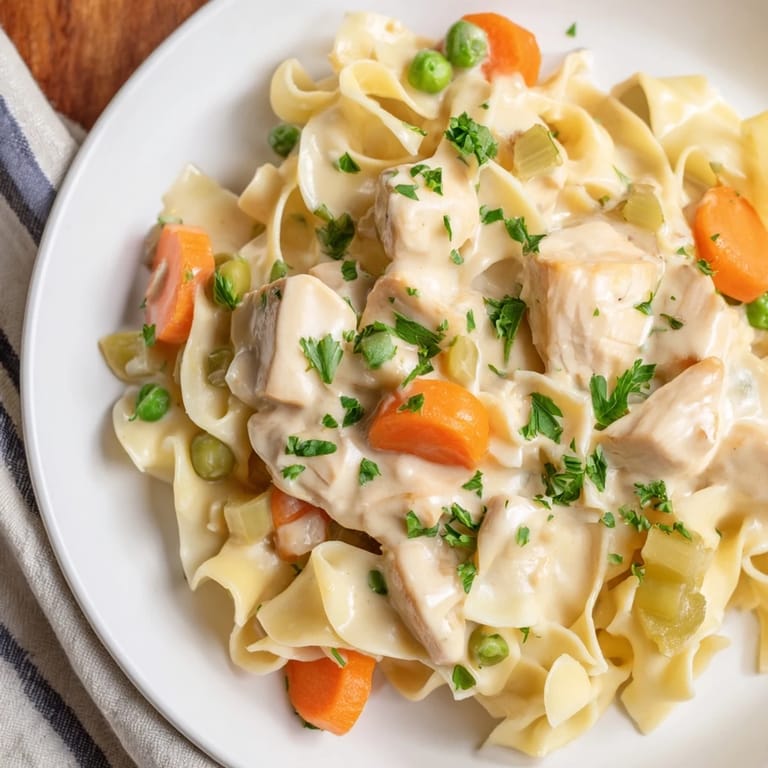
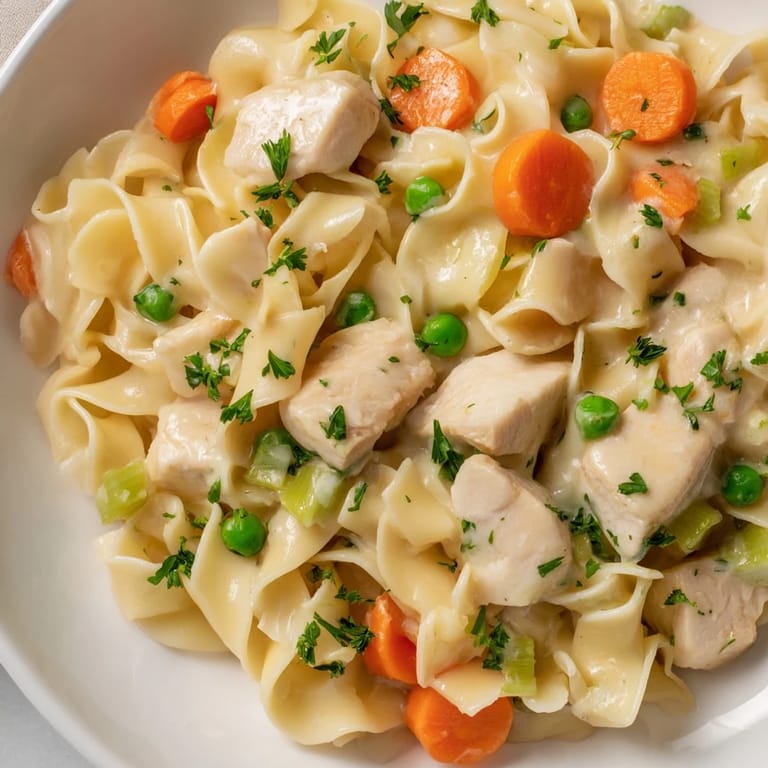
 Rainy Tuesday evenings were made for dishes like this. I stumbled onto the combination while trying to use up leftover cream and a package of egg noodles that had been sitting in the pantry for months. Something about the way the sauce clings to those wide noodles just works—it is the kind of dinner that makes people pause and actually sit down at the table instead of eating standing up.
My youngest brother came over unexpectedly the first time I made this. He walked through the door while the noodles were tossing in the sauce and asked what smelled so good. He ended up staying for dinner and took the leftover portion home, which is pretty much the highest compliment he can pay a meal.
Ingredients
- 500 g boneless skinless chicken breasts or thighs: Cutting the chicken into bite sized pieces before cooking helps it cook evenly and makes every spoonful easier to eat
- 1/2 tsp salt and 1/4 tsp black pepper: Season the chicken generously before searing—it is the only chance you get to season the meat itself
- 2 tbsp unsalted butter and 1 tbsp olive oil: The combination prevents the butter from burning while still giving you that rich buttery flavor
- 1 medium yellow onion finely chopped: Yellow onions have a milder sweetness than white onions and melt into the sauce beautifully
- 2 garlic cloves minced: Add the garlic after the vegetables have softened so it does not burn and turn bitter
- 2 medium carrots and 2 celery stalks: These give the sauce body and a subtle sweetness that balances the cream
- 2 tbsp all purpose flour: This forms the roux that thickens the sauce—make sure to cook it for a full minute to lose the raw flour taste
- 480 ml low sodium chicken broth: Low sodium broth lets you control the salt level since the sauce reduces as it simmers
- 240 ml whole milk and 120 ml heavy cream: The milk adds body while the heavy cream gives that luxurious restaurant style finish
- 1 tsp Dijon mustard: This sounds odd but it adds a subtle depth that makes people ask what is in the sauce
- 1 tsp dried thyme 1/2 tsp dried parsley and 1/2 tsp paprika: Dried herbs work better than fresh here since they are cooking in the sauce
- 250 g wide egg noodles: Wide noodles catch more sauce than thin ones—avoid using angel hair or spaghetti
- 60 g frozen peas and 2 tbsp fresh parsley: The peas add little pops of sweetness and color while fresh parsley brightens the whole dish
Tired of Takeout? 🥡
Get 10 meals you can make faster than delivery arrives. Seriously.
One email. No spam. Unsubscribe anytime.
Instructions
- Season and Sear the Chicken:
- Sprinkle the chicken pieces with salt and pepper then cook them in butter and olive oil over medium high heat until browned and cooked through about 5 to 6 minutes. The chicken will finish cooking in the sauce later so do not worry about getting it perfectly done now.
- Build the Vegetable Base:
- In the same pot cook the onion carrots and celery for 4 to 5 minutes until softened then add the garlic for just 1 minute. You want the vegetables tender but not mushy—they will continue cooking in the sauce.
- Create the Roux:
- Stir the flour into the vegetables and cook for 1 to 2 minutes stirring constantly. The mixture should look pasty and smell slightly nutty which means the raw flour flavor has cooked off.
- Add the Liquids and Seasonings:
- Whisk in the chicken broth milk and heavy cream a little at a time to prevent lumps then stir in the Dijon mustard thyme parsley and paprika. Take your time with the whisking—it is easier to prevent lumps now than to fix them later.
- Simmer and Thicken:
- Bring the sauce to a gentle simmer and cook for about 5 minutes until it coats the back of a spoon. The sauce will thicken more as it stands so do not reduce it too much on the stove.
- Cook the Egg Noodles:
- While the sauce simmers cook the egg noodles in a separate pot of salted water according to package directions then drain them well. Rinse the noodles with warm water if they seem sticky.
- Combine Everything:
- Return the chicken to the sauce along with the frozen peas and simmer for 2 to 3 minutes until everything is heated through. Then add the cooked noodles and toss until every strand is coated in sauce.
- Finish and Serve:
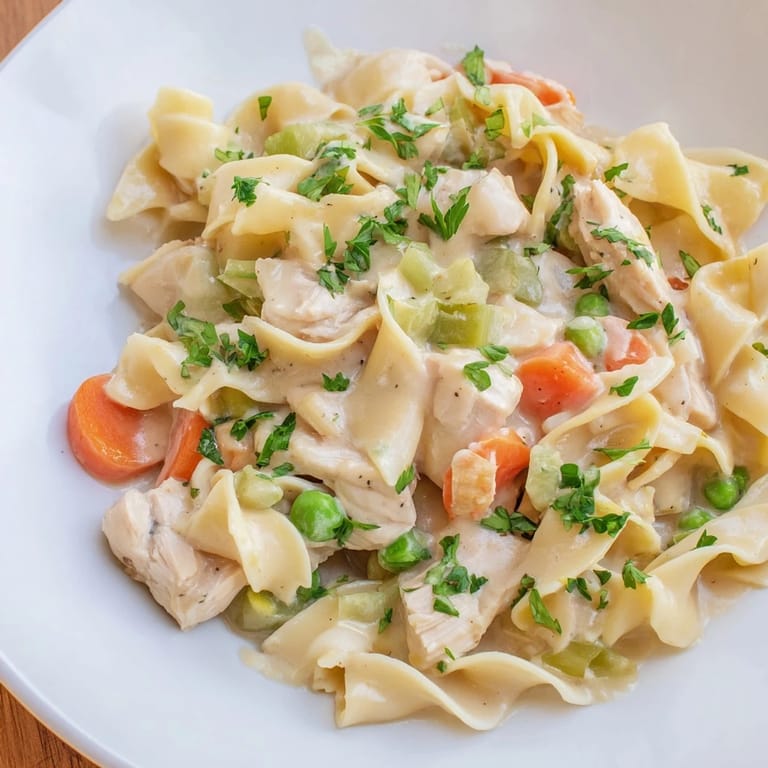
- Sprinkle fresh parsley over the top right before serving. Serve it while it is steaming hot with crusty bread on the side to soak up any extra sauce.
 Pin it
 This recipe became my go to when friends need comfort food. One neighbor was going through a rough patch and I dropped off a container of this—she texted me the next morning saying it was the first thing she had actually wanted to eat in weeks.
Make It Your Own
Mushrooms work beautifully in this—add them with the vegetables and let them brown slightly before proceeding. Sometimes I toss in spinach right at the end just to wilt it into the noodles.
Shortcut Options
A rotisserie chicken from the store works perfectly if you want to skip the searing step. Just add the shredded chicken in the last few minutes to warm through. The sauce will still have plenty of flavor from the roux and aromatics.
Serving Ideas
This is substantial enough to stand alone as a meal but a crisp green salad with a tangy vinaigrette cuts through the richness nicely. Steamed broccoli or roasted asparagus also work on the side.
- Crusty bread for soaking up extra sauce
- A simple green salad with vinaigrette
- Steamed vegetables for balance
 Pin it
 Some dishes are just meant for sharing. This is one of them.
Recipe FAQs
- → What type of chicken works best for this dish?
Boneless, skinless chicken breasts or thighs cut into bite-sized pieces work well, ensuring tender, evenly cooked bites.
- → Can I use a different type of noodle?
Wide egg noodles are recommended for their texture, but similar pasta like fettuccine or pappardelle can be substituted.
- → How do I thicken the creamy sauce properly?
Cooking all-purpose flour with butter forms a roux, which when combined with broth and cream, creates a smooth, thickened sauce.
- → Are there any good vegetable additions?
Mushrooms can add earthiness, and frozen peas offer a sweet pop; fresh herbs like parsley brighten the flavors.
- → What is a helpful tip for extra flavor?
Add a splash of white wine when sautéing the vegetables to deepen the overall flavor of the sauce.