 Pin it
 There was this rainy Tuesday when my neighbor showed up with a basket of overripe tomatoes from her garden, apologizing because they weren't perfect. I'd been meaning to make a proper soup for weeks, so I threw them on a baking sheet with some garlic and onions, barely thinking about it. When that roasted garlic started caramelizing in the oven, the smell stopped me mid-scroll through my phone—suddenly the kitchen felt like somewhere I actually wanted to be. That's when I knew this soup was going to be one of those dishes that turns an ordinary evening into something worth remembering.
I made this for my parents last month when they were visiting, and my dad—who claims he doesn't like tomato soup because it's always too thin or too bitter—had three bowls. He even scraped the bottom of his bowl with bread, which I'd never seen him do. My mom kept whispering that whatever I'd done differently was magic, but it was really just patience and heat, letting the oven do the work while I sat at the table with them.
Ingredients
- Ripe tomatoes (1.5 lbs): Look for ones that smell like tomatoes even before you cut them; color alone won't tell you if they're flavorful. Halving them cut-side up lets them caramelize instead of steam.
- Garlic bulb (1 whole): Roasting transforms garlic from pungent to sweet and creamy; this is the ingredient that makes people ask what your secret is.
- Yellow onion (1 large): Wedges caramelize alongside the tomatoes, adding depth without overpowering the tomato flavor.
- Olive oil (2 tbsp): This is your medium for roasting; don't skimp or use low-quality oil.
- Heavy cream (1/2 cup): The final flourish that transforms roasted vegetables into velvet; add it off heat to keep it from breaking.
- Vegetable broth (2 cups): Use something flavorful here; bland broth makes bland soup, no matter what else you do.
- Salt (1 tsp, plus more): Taste as you go—roasted vegetables release their own flavors, so you might need less than you'd expect.
- Black pepper (1/2 tsp): Freshly cracked makes a difference; pre-ground tastes like sawdust by comparison.
- Sugar (1/2 tsp): Optional but worth keeping nearby; sometimes tomatoes are too acidic and one pinch of sugar changes everything.
- Smoked paprika (1/4 tsp): A whisper of this adds complexity and color without being obvious about it.
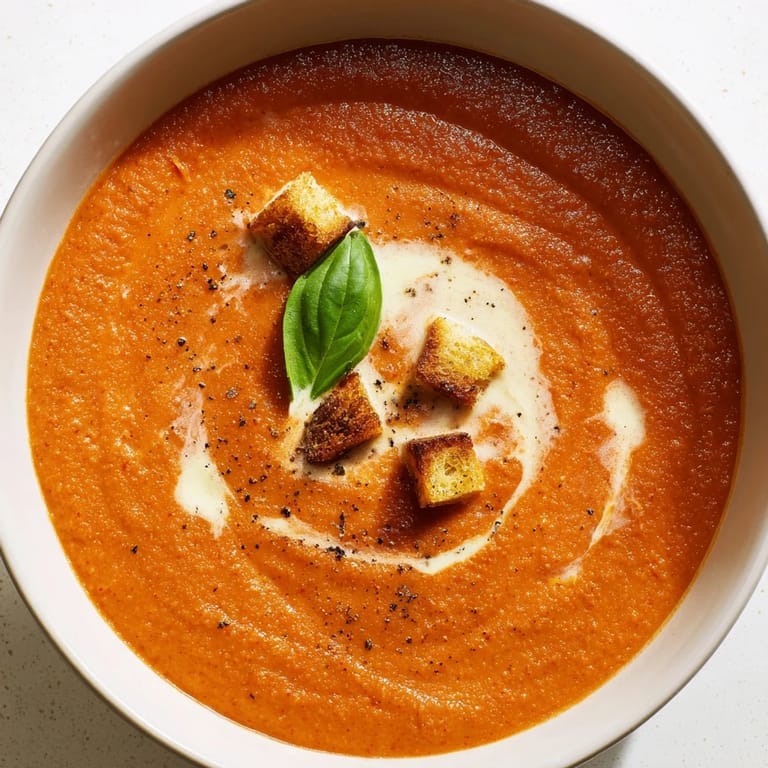
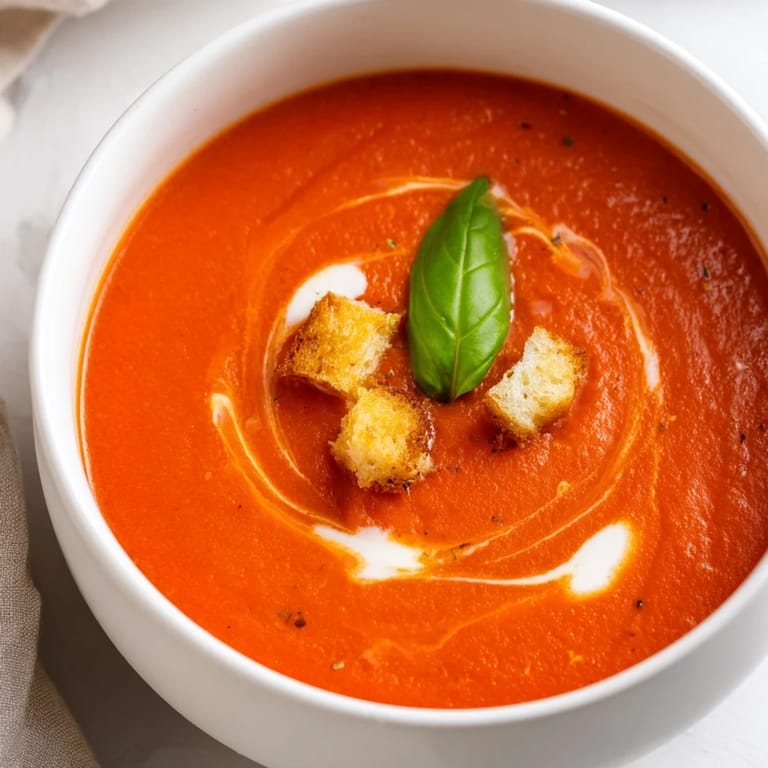
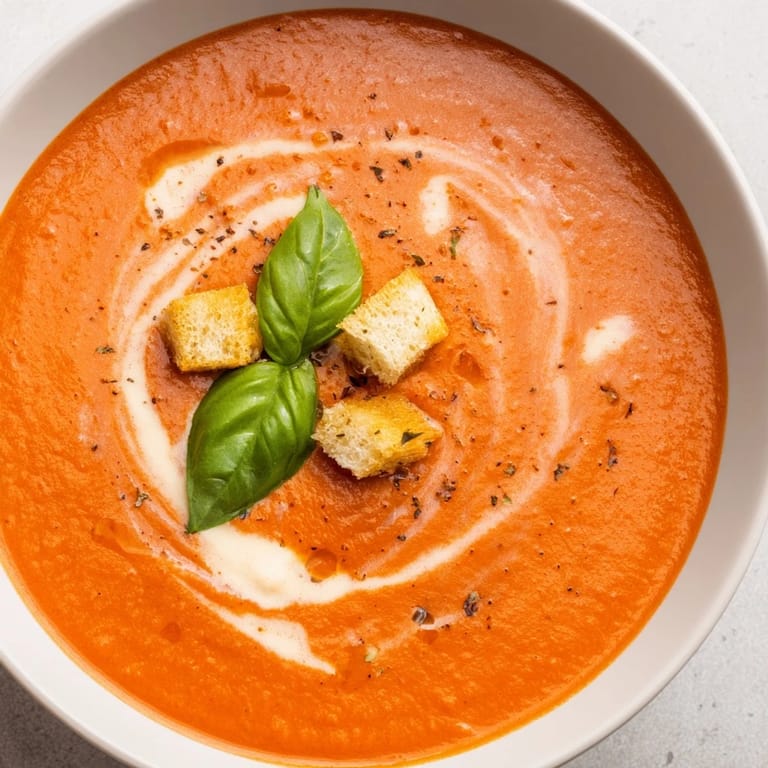
- Fresh basil and croutons: Garnish with what makes you happy; I've used everything from cilantro to a drizzle of good olive oil.
Tired of Takeout? 🥡
Get 10 meals you can make faster than delivery arrives. Seriously.
One email. No spam. Unsubscribe anytime.
Instructions
- Get your oven ready:
- Preheat to 400°F. This temperature is hot enough to caramelize the vegetables without burning them, which matters more than you'd think.
- Prep your vegetables:
- Cut tomatoes in half lengthwise and leave them cut-side up on your baking sheet. Wedge your onion and slice off the top of your garlic bulb to expose the cloves, then wrap it loosely in foil with a drizzle of olive oil—you want the garlic to steam inside its own skin.
- Season and roast:
- Drizzle your tomato halves and onion wedges with olive oil, then scatter salt and pepper over them like you're seasoning something you actually want to eat. Roast everything for 35 to 40 minutes until the tomato edges are dark and caramelized and the garlic cloves squeeze out of their skins like butter.
- Cool and extract:
- Let everything sit for a few minutes so you don't burn your hands, then squeeze the soft garlic cloves out of their skins into a bowl. This is oddly satisfying and takes about thirty seconds.
- Blend everything:
- Transfer your roasted tomatoes, onions, and garlic to a blender with the vegetable broth. If your blender is small, work in batches—hot liquid needs room to move. Blend until completely smooth, which should take about one minute on high.
- Combine and cream:
- Pour the blended soup into a large pot over medium heat, then stir in the heavy cream and smoked paprika if you're using it. The soup should look luxurious and smell like caramelized tomatoes.
- Taste and adjust:
- Simmer for about 10 minutes, stirring now and then. Taste it, and if it feels acidic, add a tiny pinch of sugar. Keep tasting and adjusting salt until it's exactly what you want.
- Serve with joy:
- Ladle into bowls and top with fresh basil, croutons, or crusty bread. This soup is best eaten while it's steaming, with someone you enjoy talking to.
 Pin it
 My daughter asked me why this soup tasted different from the canned version she'd had at school, and I realized I couldn't explain it with words—I just handed her a spoonful and watched her face change. Food like this reminds you why cooking matters.
The Magic of Roasted Vegetables
Roasting is one of those cooking techniques that feels like a cheat code once you understand it. The heat draws out water from the tomatoes and onions, concentrating their natural sugars until they caramelize into something deeper and more complex than their raw selves. It's the same principle behind why caramel exists at all—heat and patience turn simple ingredients into something that tastes like it took hours but really only took 40 minutes in an oven.
Customizing Your Soup
I've made this recipe at least a dozen times now, and it's never the same twice. Sometimes I add a splash of balsamic vinegar at the end, sometimes I roast a red pepper alongside everything else, and once I added a pinch of cayenne for my sister who likes heat. The base is flexible enough to handle your preferences, which is why I keep coming back to it.
Pairing and Serving Ideas
This soup wants to be part of a meal, not the whole meal. I've served it with grilled cheese so many times I've lost count, but it's also beautiful with a simple green salad on the side or even alongside roasted chicken. On cold nights, I make a double batch and eat it for lunch the next day, which is when the flavors have settled and deepened even further.
- A grilled cheese sandwich made with good bread and melting cheese is the classic pairing, but don't be afraid to experiment.
- Leftover soup keeps for three days in the fridge and freezes beautifully for up to two months.
- If you're reheating from frozen, thaw it overnight and warm it gently over low heat so the cream doesn't separate.
 Pin it
 This soup has become my answer to almost every question about comfort food. It's the kind of recipe that makes your kitchen smell like somewhere important, and that's reason enough to make it again.
Recipe FAQs
- → How does roasting affect the flavor?
Roasting concentrates sweetness in tomatoes and softens garlic, adding a deep, caramelized richness.
- → Can I use other types of cream?
Yes, alternatives like coconut or cashew cream can be used for dairy-free variations.
- → What are good garnish options?
Fresh basil leaves and toasted bread or croutons complement the smooth texture with freshness and crunch.
- → Is it possible to add spice?
Adding a pinch of chili flakes will introduce a pleasant hint of heat without overpowering flavors.
- → How should I adjust seasoning?
Taste after blending and cooking; add salt, pepper, or sugar to balance acidity as desired.