 Pin it
 The first time I baked Estonian leib, I wasn't trying to recreate tradition—I was chasing a smell. My neighbor had been baking this dark, molasses-rich sourdough, and the aroma drifting through the apartment walls was impossible to ignore. When she finally offered me a slice with butter and smoked salmon, something clicked. The bread was dense but not heavy, earthy but somehow warm, and it tasted like it had stories baked into it. I asked her for the recipe, and she laughed, saying it was her grandmother's, which meant I'd have to learn it by feel, not just by measurements.
I made this bread for a small gathering once, sliced it thick, and watched people's faces when they tasted it. Nobody asked what it was—they just kept reaching for more, sometimes with just butter, sometimes with the smoked trout I'd set out. One guest said it tasted "honest," which felt like the highest compliment a bread could receive. That's when I realized this wasn't just about following steps; it was about understanding what happens when rye and time and steam come together in an oven.
Ingredients
- Active Rye Sourdough Starter (100 g): This is your leavening agent and flavor base, so make sure it's bubbly and alive before you start—a sluggish starter means slow rising and flat bread.
- Dark Rye Flour (400 g): The backbone of the bread; it gives the dense, slightly sweet character that makes Estonian leib distinctive, so don't skip it for all-purpose flour.
- Bread Flour (100 g): Wheat flour adds structure and helps the dough hold together without becoming gluey, balancing the rye's heaviness.
- Lukewarm Water (300 ml): Rye absorbs more water than wheat, so the dough will feel sticky at first—that's exactly right.
- Dark Rye Malt Powder (50 g): If you can't find it, barley malt works, and it adds a subtle roasted flavor that molasses alone can't quite achieve.
- Molasses or Dark Honey (2 tbsp): This feeds the sourdough, adds color, and creates that deep, almost caramel-like undertone that haunts your memory of the bread.
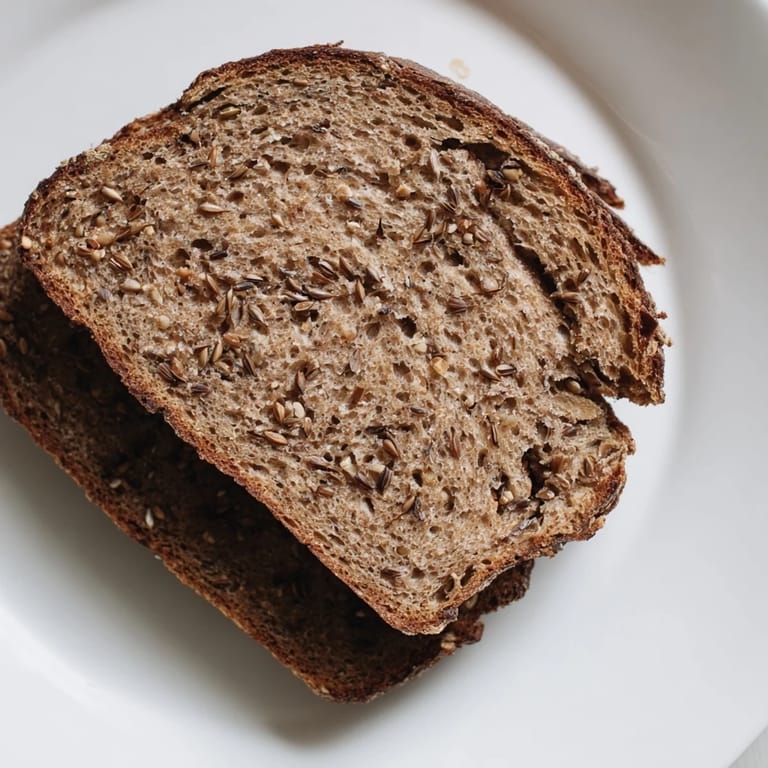
- Caraway Seeds (1 tbsp in dough, plus 1 tsp optional for topping): Toast them lightly before adding if you want the flavor to bloom more—otherwise they're fine as-is, subtle and warming.
- Fine Sea Salt (2 tsp): Don't rush the salt in; it strengthens the gluten and balances the sweetness.
Tired of Takeout? 🥡
Get 10 meals you can make faster than delivery arrives. Seriously.
One email. No spam. Unsubscribe anytime.
Instructions
- Wake Up Your Starter:
- Pour the rye starter, lukewarm water, and molasses into a large bowl and stir until the molasses dissolves and the starter wakes up. You should see it starting to relax and blend; this usually takes just a minute or two of stirring.
- Build the Dough:
- Add the rye flour, bread flour, malt powder, caraway seeds, and salt all at once, then stir with a wooden spoon until everything is combined and the dough is thick and sticky—it should cling to the spoon and resist your efforts to incorporate the last bits of flour. This is not the time for a stand mixer; your arm and a wooden spoon are your friends here.
- Let It Rise Slowly Overnight:
- Cover the bowl with a damp cloth and let it sit at room temperature for 10 to 12 hours. The dough will expand visibly, become bubbly on top, and develop a slightly sour smell—all signs that the sourdough is doing its job. Don't rush this; the long fermentation is what gives the bread its depth.
- Shape and Second Rise:
- Line a loaf pan with parchment paper or lightly grease it, then use a wet spatula to scrape the dough into the pan and smooth the top. If you want that rustic touch, sprinkle the extra caraway seeds on top now, then cover and let it rise for another 2 to 4 hours until it's nearly at the rim of the pan.
- Steam and Bake:
- Preheat the oven to 220°C (430°F) and place a pan of hot water on the bottom rack—steam is essential for developing that dark, slightly crispy crust. Bake at the high temperature for 15 minutes, then lower the heat to 190°C (375°F) and bake for another 30 minutes, until the crust is deep brown and the bottom sounds hollow when you tap it.
- Cool Completely:
- Transfer the bread to a wire rack and let it cool all the way down—this is when the crumb sets and becomes sliceable. Resist the urge to slice it warm; the interior is still steaming through and needs time to firm up.
 Pin it
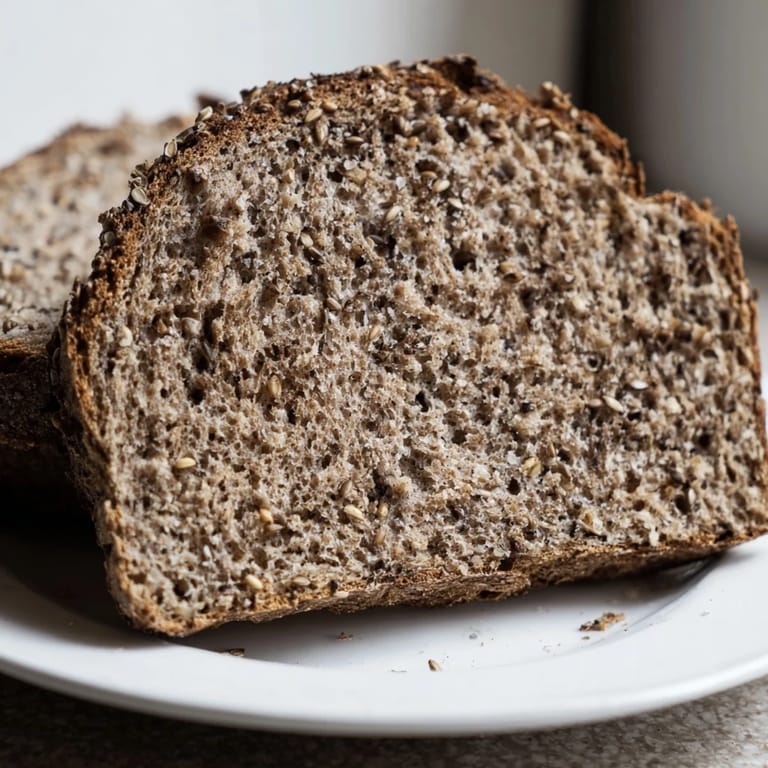
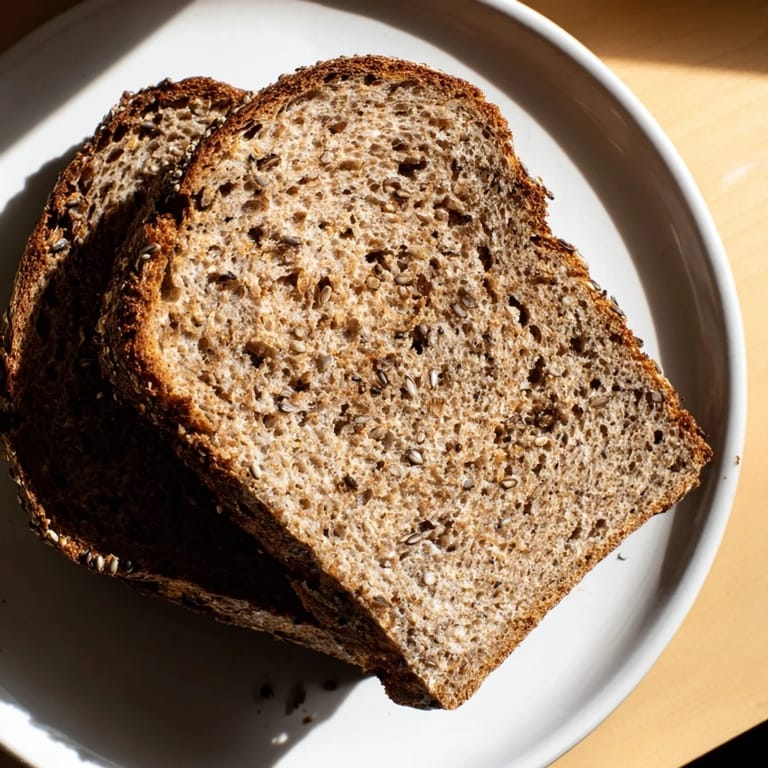
 After cooling completely, I sliced into my first loaf with almost ceremonial slowness. The knife went through cleanly, revealing a dark crumb with tiny holes where the fermentation had done its work. I spread a little salted butter on a still-warm slice and stood in my kitchen for a moment, just eating bread, and it felt like I'd finally caught up with my neighbor's secret.
Why Estonian Leib Feels Different
This bread doesn't try to be light or airy—it's unapologetically dense and dark, the way traditional rye breads have been made for centuries in Northern Europe. The rye is earthy and slightly sweet, the malt adds a toasted depth that's almost like coffee without being coffee, and the caraway gives everything a warm, slightly anise-like note that rounds out the flavor. It's the kind of bread that makes you slow down, that actually tastes like something, that holds up to strong cheeses and smoked fish without getting lost.
The Long Fermentation Secret
The 10 to 12 hour first rise isn't a quirk or an inconvenience—it's the entire point. That slow fermentation develops the sour notes, strengthens the dough structure enough to handle all that heavy rye flour, and allows the flavors to meld in a way that a quick 2-hour rise simply can't achieve. If you're tempted to speed it up with more starter or warmth, resist the urge. The magic happens in the waiting, in the cold kitchen overnight, in the bacterial and yeast activity working steadily without rush.
Serving and Storage Wisdom
Slice this bread thick—at least three-quarters of an inch—and serve it with something equally substantial: salted butter, smoked fish, aged cheese, or even just good jam if you're in a simpler mood. The bread keeps wrapped in a clean cloth for up to a week, and if anything, it tastes better by day two when the flavors have fully settled and the crumb has firmed up enough for cleaner slicing.
- Toast thick slices on day three or four and spread with butter and a thin layer of mustard; the toasting brings out the malt notes even more.
- Freeze leftover slices individually if you won't finish the loaf—they thaw quickly and stay surprisingly good.
- Pair it with things that respect its boldness: smoked salmon, rye whiskey, good cheese, or dark chocolate.
 Pin it
 This bread is worth the time it asks of you. Once you've made it, you'll understand why it's been a staple in Estonian kitchens for generations.
Recipe FAQs
- → What gives this bread its distinct aroma?
The combination of malt and caraway seeds imparts a unique, aromatic flavor profile characteristic of traditional Estonian rye bread.
- → How long should the dough rise?
The dough rises twice: first for 10–12 hours at room temperature, then 2–4 hours after shaping to develop flavor and texture.
- → Can I use rye malt substitutes?
Dark rye malt is ideal for depth of flavor, but barley malt powder can be used as an alternative to maintain sweetness and color.
- → What is the purpose of steam during baking?
Steam helps create a crisp, dark crust by keeping the dough surface moist during the initial baking phase.
- → How should the finished loaf be stored?
Keep the cooled loaf wrapped in a towel at room temperature; it stays fresh for up to a week.