 Pin it
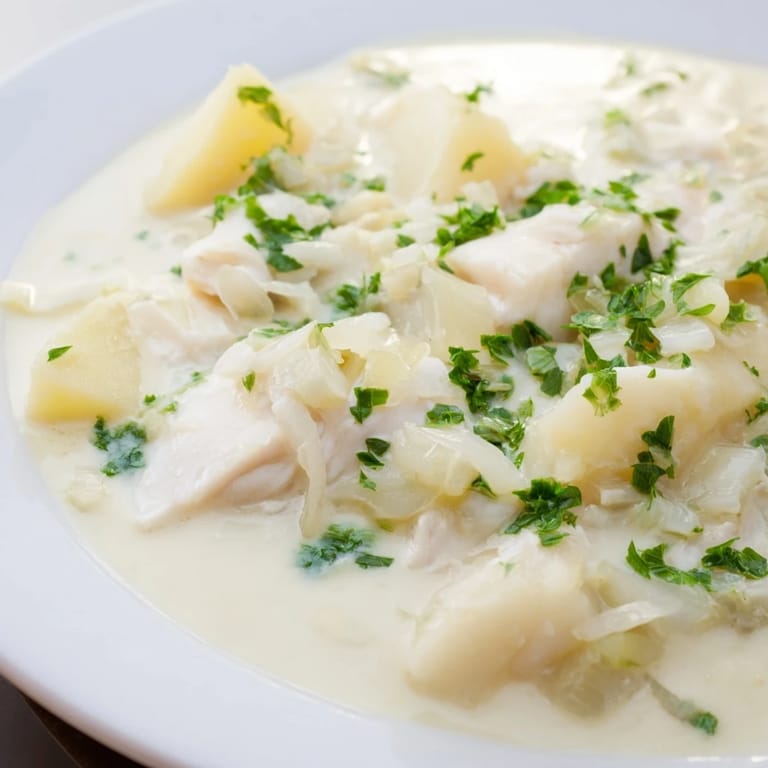
 There's something about a pot of simmering fish stew that makes a kitchen feel like home, even when you're miles from the coast. I first tasted this Icelandic version on a grey afternoon in Reykjavik, sitting at a small café where the owner ladled it straight from a copper pot into a ceramic bowl, steam rising like a gentle warning. The way the potatoes softened into the creamy broth while the fish stayed tender and flaky felt like alchemy, and I knew immediately I had to learn how to make it myself. What struck me most wasn't just the flavor—it was how simple it was, how few ingredients could create something so deeply comforting. Now, whenever I make it at home, that same warmth fills my kitchen.
I remember making this for my partner on one of those evenings when neither of us had energy for anything fancy, but we both needed something that felt special. I chopped potatoes while they opened a bottle of wine, and within forty minutes we were sitting at the table with steaming bowls, the herbs floating on top catching the light like little green islands. That's when I realized this stew isn't just food—it's a quiet act of care that doesn't require you to be a skilled cook to pull off beautifully.
Ingredients
- Cod or haddock fillets (500 g / 1 lb): Choose skinless, boneless fillets that are bright and firm; these white fish varieties are mild enough not to overpower the creamy broth, and they flake apart with the gentlest stir.
- Butter (60 g / 4 tbsp): This is the foundation of your roux base, creating the silky mouthfeel that makes the stew feel indulgent—don't skimp here.
- Whole milk (500 ml / 2 cups): Whole milk gives body without being as heavy as cream alone; this is the classic Icelandic approach.
- Heavy cream (100 ml / ⅓ cup + 1 tbsp): A smaller amount than the milk keeps things balanced; it pushes the stew into comfort food territory without tipping into richness.
- Potatoes (500 g / 1 lb): Waxy potatoes hold their shape better than floury varieties, but don't worry too much—some broken pieces actually add to the creamy texture.
- Onion (1 medium): Finely chopped, it softens into sweet notes that anchor the whole dish.
- Fresh parsley and chives (2 tbsp each): These aren't just garnish; they're the final brightness that lifts the whole bowl, so save some for the top.
- Bay leaf, salt, white pepper, nutmeg: White pepper keeps the stew visually clean, while a whisper of nutmeg adds a warmth you can't quite name—trust this step even if it seems small.
Tired of Takeout? 🥡
Get 10 meals you can make faster than delivery arrives. Seriously.
One email. No spam. Unsubscribe anytime.
Instructions
- Get your potatoes softening:
- Dice them into roughly half-inch pieces, cover with cold salted water, and let them boil gently for 12–15 minutes until a fork slides through easily. The salt in the water is doing double duty—flavoring the potatoes and helping them break down into the stew later. Drain and set them aside.
- Poach the fish gently:
- In a separate saucepan, just cover the fillets with water, add a bay leaf and a pinch of salt, and let them barely simmer for 6–8 minutes until the flesh turns opaque and flakes at the slightest touch. This gentle poaching keeps the fish tender and delicate, and that poaching liquid becomes liquid gold for your stew.
- Build the base with butter and onion:
- Melt butter in your largest pot over medium heat, add the chopped onion, and let it soften for about 5 minutes until it's sweet and translucent. Listen for the gentle sizzle—this quiet sound means everything is cooking at the right pace.
- Mash potatoes into the base:
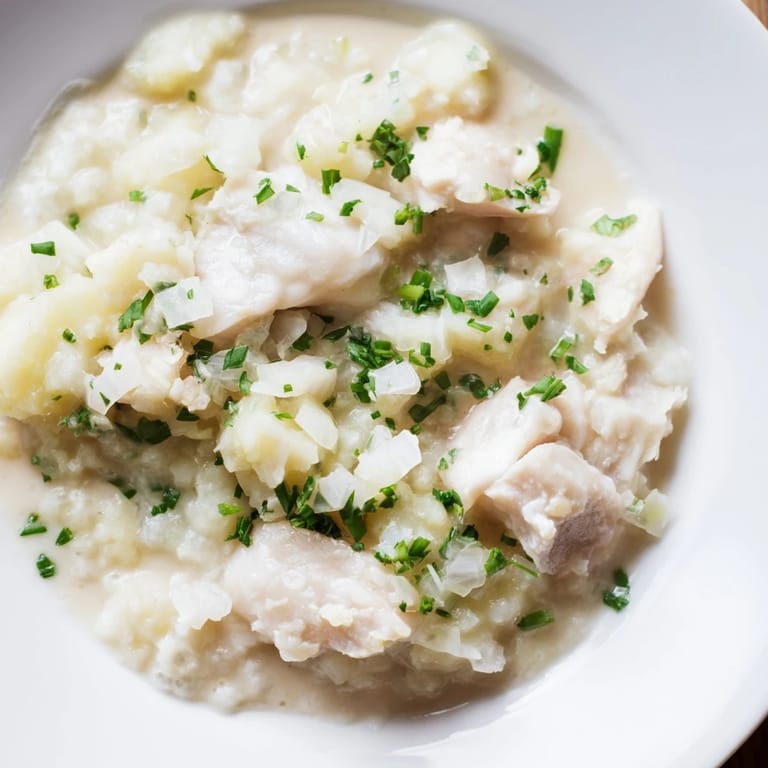
- Add the drained potatoes to the pot and gently mash them, leaving plenty of chunky pieces; you're aiming for a rough texture that will create body without becoming pureed. This is where the stew starts to feel substantial.
- Bring the fish into the fold:
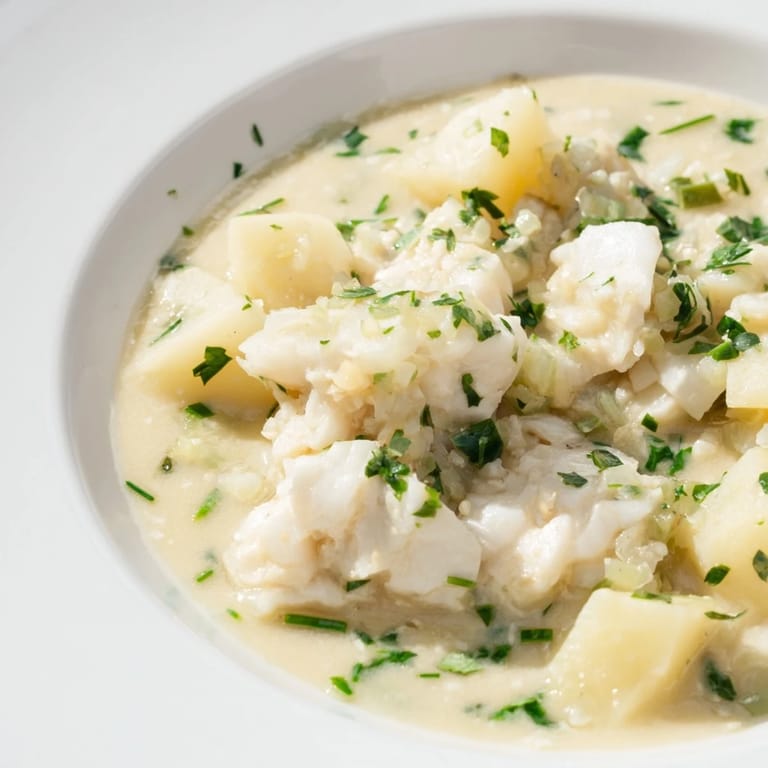
- Flake the poached fish into large, generous pieces and add them to the pot along with about 100 ml of the reserved poaching liquid. Stir gently so everything mingles but the fish stays in distinct, beautiful pieces.
- Pour in the cream and milk:
- Add the milk and heavy cream, then reduce heat to low and stir frequently for about 5 minutes, just until the stew is heated through and creamy—do not let it boil, or the dairy will separate and the texture will turn grainy. You'll notice the color shift from pale to rich golden, which is your signal you're almost there.
- Season and finish:
- Taste, then add salt and white pepper to your preference, and a pinch of nutmeg if you're feeling it—this will make you pause and wonder what that warmth is. Stir in half the parsley and chives, keeping the rest for a bright garnish.
- Serve with intention:
- Ladle into bowls, sprinkle with reserved herbs, and if you have dark rye bread, tear some off and butter it generously. Eat while it's hot, and let the warmth find its way through your whole meal.
 Pin it
 I'll never forget the first time I served this to my parents, watching them take that first spoonful and just close their eyes for a moment. My dad said it tasted like what he imagined Iceland felt—warm and somehow both simple and sophisticated all at once. That's when I understood that food isn't really about following rules perfectly; it's about creating something that makes people feel held, even if just for one meal.
Why This Stew Works as Comfort Food
There's a reason creamy stews have been made for centuries in Northern Europe—they hit something deep in us. The combination of soft potatoes, tender fish, and rich cream works on every level: it's warm, it's filling without being heavy, and it's elegant enough to feel special but casual enough to eat in your kitchen on a Tuesday. The herbs add a brightness that keeps it from feeling one-note, and because everything cooks together, every spoonful tastes like it was made with intention.
When to Make This
This is a stew for grey afternoons and unexpected guests, for nights when you want to cook something beautiful but don't have hours to spare. It's equally at home on a winter's day or a cool spring evening, and it reheats gently without falling apart, so you can even make it ahead if you're in that frame of mind. I've made it when I was trying to impress someone, and I've made it when I was just trying to get through a rough day with something good in my stomach.
Small Details That Make the Difference
The difference between a stew that tastes good and one that tastes like home is often hiding in the edges of the recipe. Using white pepper instead of black keeps the bowl visually pure and clean. Choosing whole milk over skim makes the texture feel like silk on your tongue. Fresh herbs stirred in at the end instead of cooked down from the start keep their bright, alive quality. These aren't complicated techniques—they're just small permissions you give yourself to care about how something tastes.
- If you don't have fresh chives, parsley alone is beautiful, or even a whisper of fresh dill if you have it.
- Smoked fish adds a whole different dimension—try it sometime if you want to wake the stew up without changing anything else.
- Leftovers taste even better the next day, when all the flavors have had time to know each other.
 Pin it
 This stew has taught me that sometimes the most satisfying meals are the ones that ask the least of you. Make this for someone you love, or make it for yourself on an evening when you deserve to feel cared for—and know that you're honoring a tradition that's been warming people up in a cold corner of the world for longer than anyone can remember.
Recipe FAQs
- → What type of fish is best for this dish?
Cod or haddock fillets work well due to their mild flavor and flaky texture.
- → Can I use a different type of potato?
Yes, waxy potatoes that hold shape are preferred to maintain texture after simmering.
- → How is the fish cooked for the stew?
The fish is gently poached with bay leaf until opaque, then flaked into the creamy base.
- → What herbs complement this fish and potato combination?
Fresh parsley and chives add a bright, aromatic touch to the creamy stew.
- → Is it possible to lighten the dish?
Substituting cream with only milk reduces richness and calories without losing flavor.