 Pin it
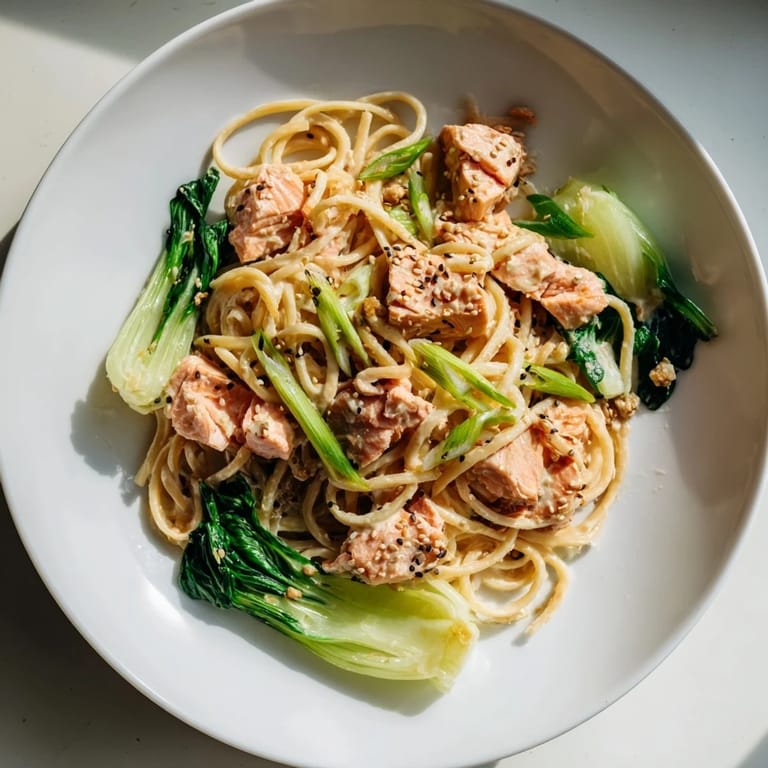
 There's something about the smell of miso hitting hot butter that stops you mid-motion in the kitchen. I discovered this dish on an ordinary Tuesday when I had salmon that needed rescuing and a craving for something that felt both comforting and a little adventurous. The combination seemed unlikely at first—Japanese umami meeting Italian pasta—but the moment that cream swirled into the sauce, I knew I'd stumbled onto something special.
I made this for my sister who claimed she didn't like salmon, and watching her go back for seconds was worth every minute in the kitchen. The bok choy adds this subtle sweetness that nobody expects, and the way the pasta catches the sauce—tender but not mushy—somehow always impresses people who think you've been cooking all day.
Ingredients
- Salmon fillets: Buy them fresh if you can and ask the fishmonger to check for bones; cutting them into bite-sized pieces means they cook through gently without falling apart.
- Linguine or spaghetti: This weight is important because thinner pasta absorbs the sauce better than thicker shapes.
- Baby bok choy: Chop it roughly because the heat will soften it fast, and uneven pieces add visual interest to the plate.
- White miso paste: Don't skip this—it's milder than red miso and dissolves cleanly into cream without graininess.
- Unsalted butter: You need control over saltiness since soy sauce and miso already bring plenty.
- Heavy cream: This is what makes the sauce cling to the pasta; don't swap it for lighter cream or you'll chase it around the plate.
- Soy sauce and mirin: The mirin adds sweetness that balances the salt, so both matter equally.
- Sesame oil: Just a teaspoon—this stuff is potent, and too much tastes like the bottle smells.
- Scallions and sesame seeds: These aren't decorative; they add brightness and texture that finish the dish right.
Tired of Takeout? 🥡
Get 10 meals you can make faster than delivery arrives. Seriously.
One email. No spam. Unsubscribe anytime.
Instructions
- Get the pasta going:
- Salt the water generously so it tastes like the sea, then cook your pasta until it's just barely tender. Reserving that starchy water is non-negotiable—it's what makes the sauce silky instead of slick.
- Toast the garlic:
- Heat butter and sesame oil together over medium heat, then add minced garlic and let it go fragrant for about a minute. You'll know it's ready when your kitchen smells undeniably good.
- Cook the salmon gently:
- Add the bite-sized pieces and give them 2 to 3 minutes per side—they should be opaque but still tender inside. This is where restraint matters; the moment it's cooked through, it's done.
- Build the sauce:
- Melt the remaining butter, then whisk in white miso, soy sauce, and mirin until everything is smooth and glossy. There shouldn't be any grainy bits of miso remaining.
- Cream and vegetables:
- Pour in the heavy cream and black pepper, then add the chopped bok choy. Let it wilt for 2 to 3 minutes—it should be tender but not mushy.
- Bring it together:
- Return the salmon to the pan, then add the drained pasta and toss everything gently so nothing breaks. Use that reserved pasta water a splash at a time until the sauce coats every strand without pooling.
- Serve immediately:
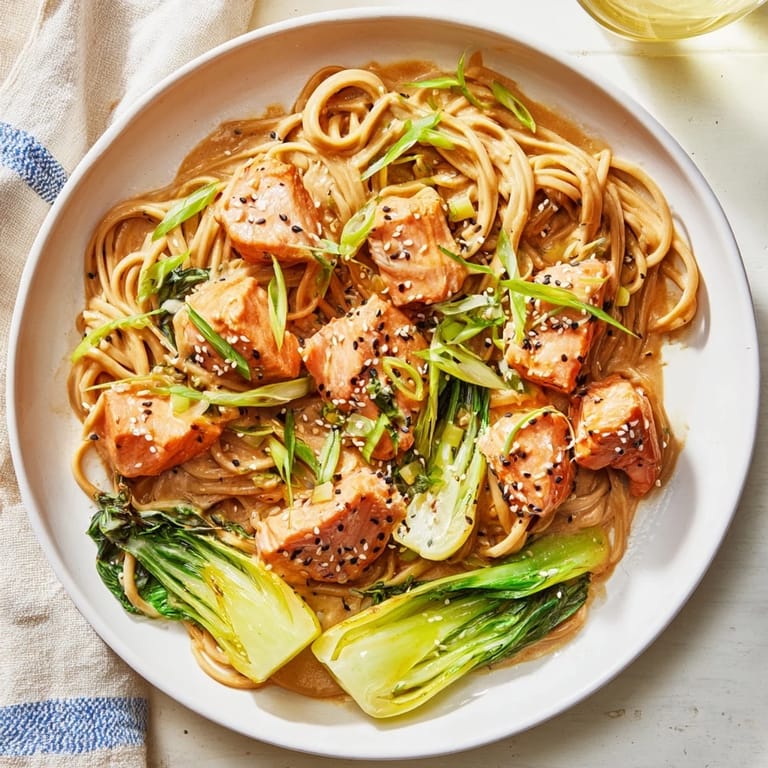
- Plate it right away with a scatter of scallions, toasted sesame seeds, and a lemon wedge on the side for people who want brightness.
 Pin it
 There was a moment when my partner tasted this and looked at me like I'd unlocked something. That's when I realized this dish does something most home cooking doesn't—it feels both simple and a little bit fancy at the same time.
The Miso Moment
Miso paste is one of those ingredients that sounds intimidating until you realize it's just fermented soybeans and salt that wants to make things taste better. In this pasta, it acts like an umami amplifier, deepening the savory notes of the salmon and cream without announcing itself. The first time I used white miso instead of red, I understood why the color matters—it stays subtle and lets the other flavors shine instead of turning everything earthen and heavy.
Timing Without Stress
The whole dish lives in a 35-minute window, which is tight but manageable if you think in parallel. Pasta goes on first because it's the longest task, and while it cooks, everything else happens in one skillet. The real secret is reading ahead—have your bok choy chopped and your salmon portioned before the pasta hits the water, and the cooking part becomes almost meditative.
When It All Comes Together
The final toss is where magic happens—that moment when pasta, salmon, and sauce become one thing instead of separate components. The reserved pasta water is your safety net; a splash or two brings everything to glossy perfection. If you're nervous about portions or timing, remember that sauce stretches and flavors deepen with every minute it sits, so erring on the side of silky is never wrong.
- If the sauce seems too thin, let it simmer for another minute before adding pasta.
- Lemon wedges are there for people who want to cut through the richness—encourage them to use them.
- Leftovers reheat gently with a splash of water or cream, though this dish is best enjoyed fresh and warm.
 Pin it
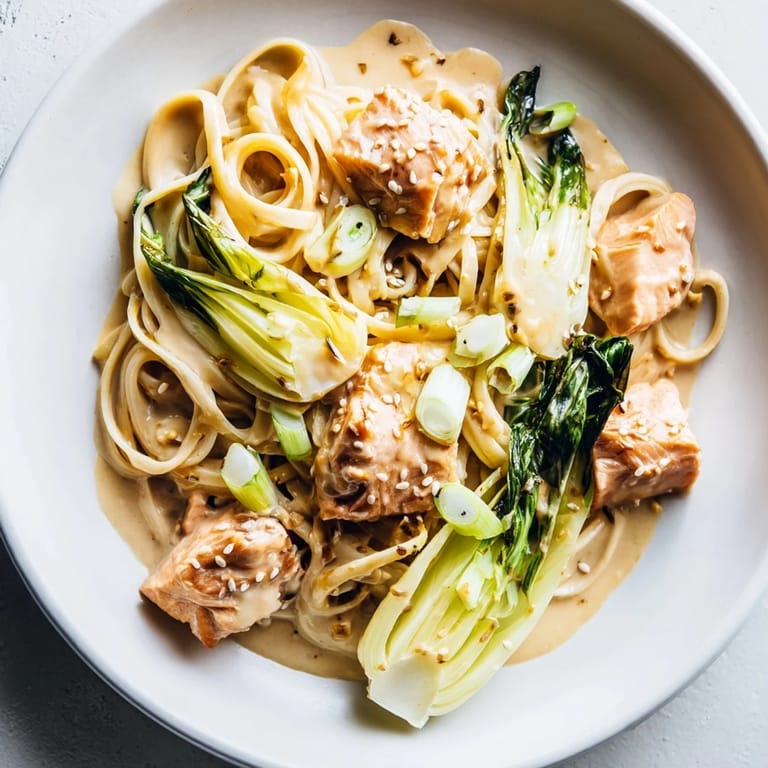
 This pasta has become my answer to the question of what to make when I want to feel like I'm cooking something special without spending hours thinking about it. That's its real gift.
Recipe FAQs
- → How do I prevent salmon from overcooking?
Cook salmon gently over medium heat, about 2–3 minutes per side, until just opaque. Remove promptly to avoid dryness.
- → Can I substitute bok choy with other greens?
Yes, spinach or kale can be used instead of bok choy, though cooking times may vary slightly to retain a tender-crisp texture.
- → What pasta works best for this dish?
Linguine or spaghetti complement the sauce well, as their shape holds the creamy mixture without overpowering delicate salmon pieces.
- → Can I make the sauce ahead of time?
It's best to prepare the sauce fresh to maintain its creamy consistency and vibrant flavors, especially after adding cream and butter.
- → How do I adjust the sauce thickness?
Use reserved pasta water to loosen the sauce gradually while tossing, achieving a silky texture that clings nicely to salmon and pasta.