 Pin it
 I'll never forget the first time I realized that the most memorable gatherings aren't about fancy dishes—they're about bringing people together with generosity and ease. My mom taught me this years ago when she'd throw together these magnificent platters for holiday parties and family dinners. She'd say, "The secret isn't in cooking; it's in giving people permission to enjoy themselves." That lesson stuck with me, and now whenever I'm hosting, I think of her arranging mountains of meats and cheeses with such care that everyone felt welcomed before they even took a bite.
I remember the first time I served a platter like this was actually a happy accident. I was expecting six people for a casual Sunday gathering but eight showed up, and I had nothing prepared. Instead of panicking, I grabbed what I had—some good meats, cheeses, whatever vegetables looked fresh—and threw it all together with confidence. People circled that platter like it was the most thoughtful thing I'd ever made. That's when I understood: abundance and authenticity trump perfection every single time.
Ingredients
- Sliced cooked ham (200 g): Choose a quality brand that doesn't taste too salty—this is your crowd-pleaser. I learned to buy from the deli counter rather than pre-packaged; it tastes fresher and you can ask them to slice it exactly how you want.
- Sliced turkey breast (200 g): The lighter option that feels wholesome and pairs beautifully with crispy crackers. Turkey has this subtle flavor that doesn't compete; it lets everything else shine.
- Sliced salami (150 g): This is your flavor anchor—get a good one because a little goes a long way. The saltiness and spice wake up your palate between bites.
- Mild cheddar, sliced (200 g): Cheddar is forgiving and crowd-friendly. I choose mild because sharp can overpower delicate flavors; you want people to taste the whole experience, not just the cheese.
- Swiss cheese, sliced (150 g): Those little holes make it look elegant without trying. Swiss has a gentle nuttiness that feels special but tastes familiar.
- Cream cheese (100 g): This is your secret ingredient for spreading on crackers and vegetables. It acts like edible glue that transforms simple pieces into something intentional.
- Carrots, sliced into sticks (2 large): The natural sweetness and bright color anchor your platter visually. I slice them thick enough to hold up to dipping but thin enough to eat easily.
- Cucumber, sliced into rounds (1): Cooling and refreshing—these remind people they're eating something nourishing, not just indulgences.
- Red bell pepper, sliced (1): The color is what makes a platter look intentional and welcoming. The sweetness of red peppers is also more refined than green.
- Cherry tomatoes (1 cup): Leave these whole if they're small; they're easiest to grab and eat. Their pop of freshness cuts through the richness beautifully.
- Assorted budget-friendly crackers (400 g): Mix shapes and textures—some crispy, some seeded, some plain. This variety keeps people coming back for more. Buying store brands saves money without sacrificing quality.
- Baguette, sliced (1): I slice this myself rather than buying pre-sliced; it stays fresher and feels more genuine. Let people know they can toast it if they want.
- Hummus (1 cup): This bridges meat-eaters and vegetarian friends. It's filling, nutritious, and adds color and texture to your platter.
- Green olives (1/2 cup): The briny, intense flavor is your palate cleanser. Don't skip these—they're what makes people pause and say, "Oh, this is nice."
- Pickles (1/2 cup): Another briny element that wakes up taste buds. These are surprisingly important to the experience.
Tired of Takeout? 🥡
Get 10 meals you can make faster than delivery arrives. Seriously.
One email. No spam. Unsubscribe anytime.
Instructions
- Start with Your Canvas:
- Lay your large platter or tray in front of you like you're about to paint. Take a breath—this should feel fun, not stressful. Position it where you have room to work comfortably, and gather everything nearby so you're not running back and forth.
- Build Your Meat Foundation:
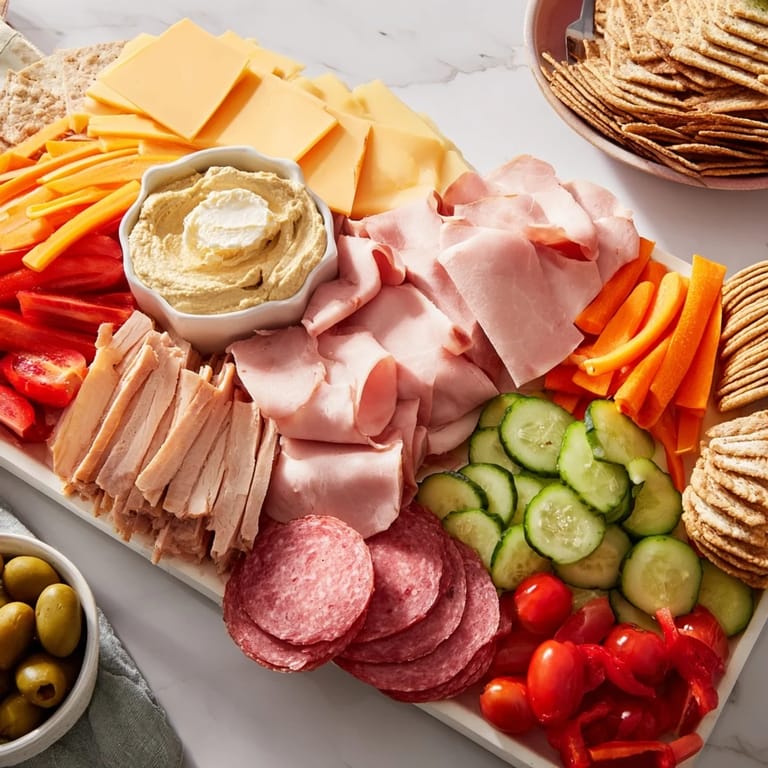
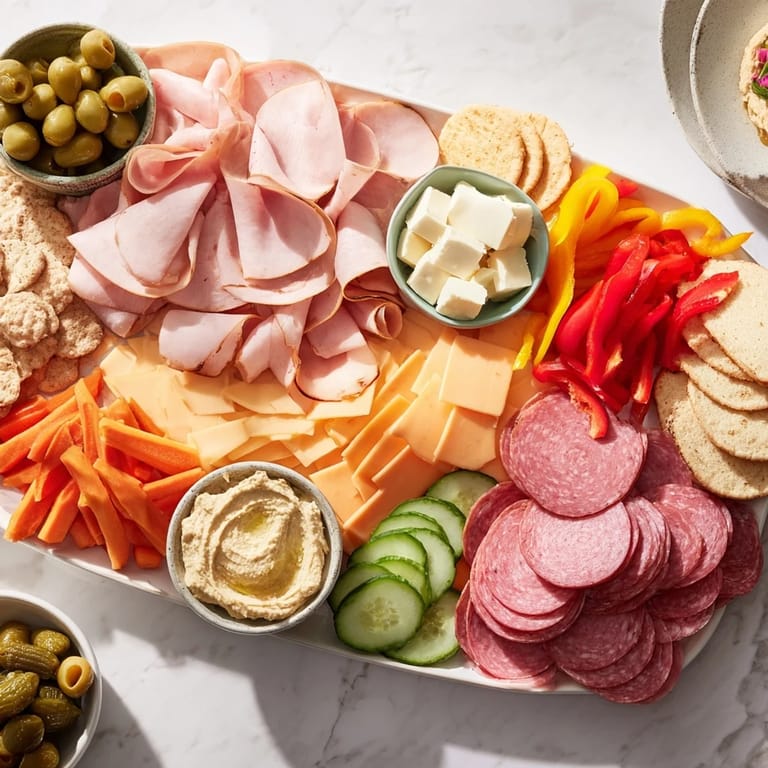
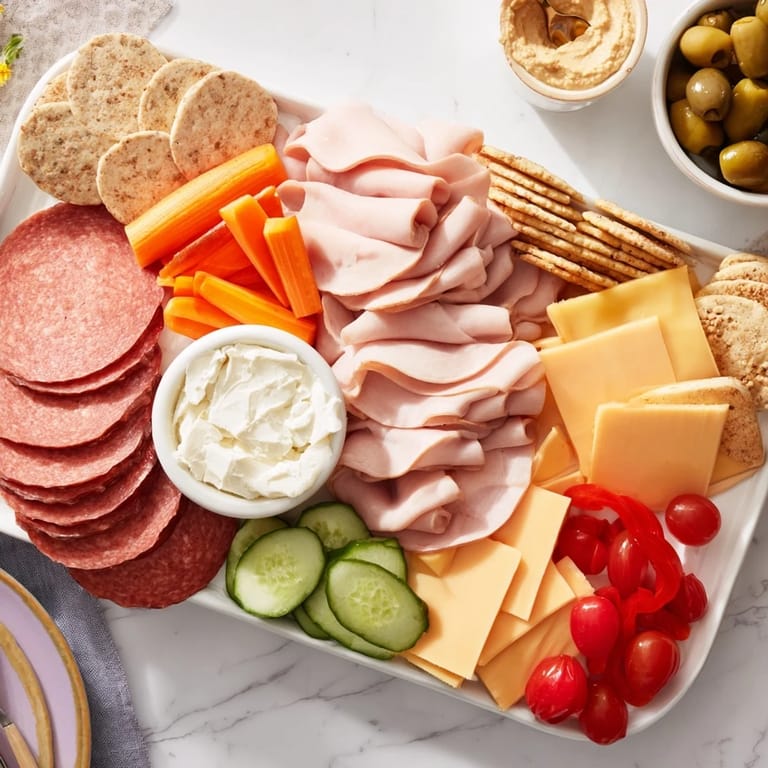
- Arrange the ham, turkey, and salami in generous piles at different corners of your platter. Don't be shy—pile them high and proud. This abundance is what makes people feel welcomed and cared for. Fold or roll them loosely so they look inviting and easy to grab.
- Fan Out the Cheese:
- Next to each meat pile, arrange your cheddar and Swiss slices slightly overlapping, like a deck of cards fanned out. This isn't just pretty; it actually makes them easier to pick up. Leave small gaps so the platter shows through—those gaps actually make everything look more intentional.
- Create Vegetable Heaps:
- Group your vegetables together by type rather than mixing them—all the carrots in one place, cucumbers in another, peppers here, tomatoes there. Larger groups of the same color look more generous than a scattered mix. This also helps people who might be avoiding certain vegetables navigate easily.
- Tuck in Your Dips and Extras:
- Pour your cream cheese, hummus, olives, and pickles into small bowls and place them strategically around the platter, filling in gaps. These aren't afterthoughts; they're the elements that make simple items taste elevated. Position them where they won't tip over but are still easily accessible from every angle.
- Stack Your Crackers and Bread:
- Arrange crackers and baguette slices in high-volume stacks around and between the other items. I like to fan some crackers in one area and stack others nearby—this variety gives people options. Make sure stacks are reachable from multiple sides so no one has to reach across others.
- Do a Final Check and Serve:
- Step back and look at your work. Does every section feel generous? Can someone reach something good from any angle? Are there pops of color and interesting textures throughout? If it looks abundant and inviting to you, it will to your guests. Serve immediately while everything is fresh, and don't be shy about replenishing as people eat.
 Pin it
 There was a moment during a family dinner when my teenage cousin—who usually sneaks away from gatherings—found himself standing at the platter talking to my grandmother about his week. No one was forcing conversation; the platter just gave them a reason to linger together. That's when I realized these platters aren't just about feeding people; they're about creating the conditions for connection. Food becomes the excuse, but togetherness becomes the real nourishment.
The Art of Smart Assembly
Building a platter is less about recipes and more about understanding balance and flow. I think of it like conducting an orchestra—you need different instruments playing together, each with their moment but all contributing to something greater. The salty salami needs the mild cheese next to it. The creamy hummus needs the crisp carrot stick. The rich meats need the bright tomatoes. When you start thinking about pairings and complementary flavors rather than just "putting stuff on a board," suddenly you're creating an experience that feels intentional and delicious. This is how simple becomes special.
Making It Work for Your Guests
One of my proudest realizations is that this platter format means fewer people feel left out. Your vegetarian friend? They have their cheeses, vegetables, hummus, and crackers. Your meat-loving uncle? Piles of exactly what he wants. Your health-conscious sister? Plenty of fresh vegetables. Your friend with a big appetite? Everything is accessible and portion-free. I've learned that good hosting isn't about being a chef; it's about paying attention to who's coming and making sure everyone feels seen at your table.
Why This Approach to Entertaining Works
I stopped overthinking gatherings when I realized that the most relaxed hosts make the most relaxed guests. When you're stressed about complicated recipes, people feel it. When you're proud of something simple and beautifully presented, people feel that too. This platter approach gives you the best of both worlds—it looks like you put thought and care into it (which you did), but it takes only 20 minutes and zero actual cooking skill. That combination of ease and elegance is what makes people want to come back to your home. It's not about the food being fancy; it's about the welcome being genuine.
- Keep a small notebook of what people reached for most—this teaches you about your guests' real preferences beyond what they say.
- Don't stress about using every item perfectly; platters are about abundance, not precise portions.
- Remember that people eat with their eyes first, so arrange with confidence and generosity—it matters more than you think.
 Pin it
 Every time I serve a platter like this, I remember why simple cooking is actually the hardest kind—it requires confidence to say, "This is enough; this is good." I hope you experience the same ease and joy I found in learning to feed people this way.
Recipe FAQs
- → What meats are included in this spread?
Sliced cooked ham, turkey breast, and salami are arranged in generous piles around the platter.
- → Which cheeses complement this platter?
Mild cheddar, Swiss cheese, and cream cheese for spreading are included to balance the meat and vegetable flavors.
- → How are the vegetables prepared?
Carrots are sliced into sticks, cucumber into rounds, and red bell pepper is sliced; cherry tomatoes are added whole for freshness.
- → What accompaniments enhance the platter?
Assorted crackers, baguette slices, along with hummus, green olives, and pickles add texture and variety.
- → Is this spread suitable for vegetarians?
Yes, omit the meats and add more cheese, roasted vegetables, or plant-based deli slices for a vegetarian-friendly option.
- → How long does preparation take?
The entire spread can be arranged in around 20 minutes, with no cooking required.