 Pin it
 The kitchen smelled like a street market in Shanghai, though I was nowhere near China. I had just opened the jar of five-spice powder, and that heady blend of star anise and cinnamon transported me instantly. My partner walked in, raised an eyebrow at the whole duck sitting on the counter, and asked if I was sure about this. I was not sure at all, but Valentines Day felt like the right time to try something bold.
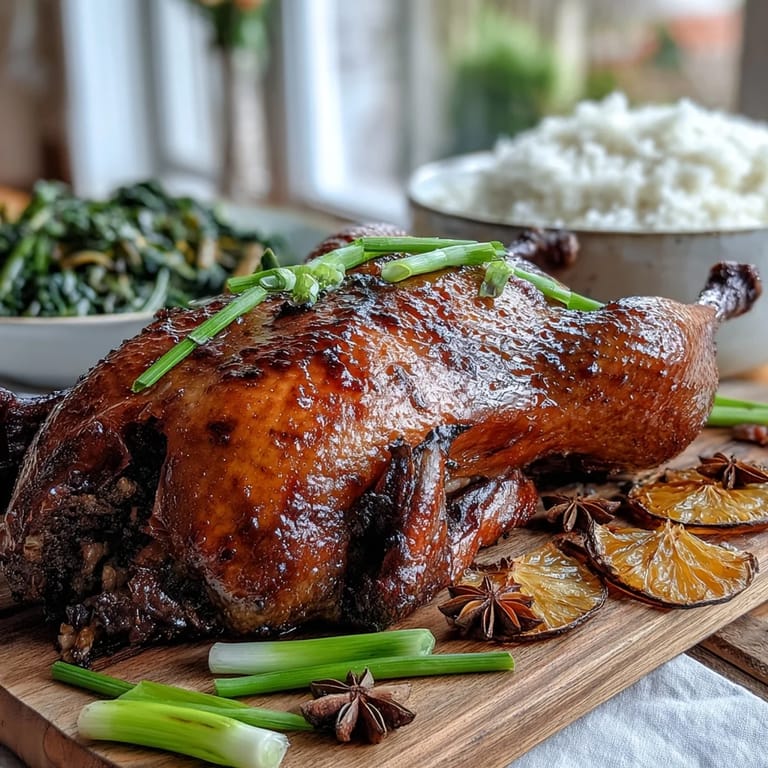
I served this duck on a cold February evening with candles flickering and jasmine rice steaming in a bowl. My partner, who usually claims not to care much about food presentation, actually gasped when I brought the platter to the table. We ate slowly, pulling apart the crispy skin and dipping it in the pan juices, talking about nothing important and everything at once. It became our Valentine tradition after that, the one meal we never skip.
Ingredients
- Whole duck: Look for one around 1.5 to 2 kg, and make sure its completely dry before you start or the skin will steam instead of crisp.
- Chinese five-spice powder: This blend of star anise, cloves, cinnamon, Sichuan pepper, and fennel is the soul of the dish, so buy a fresh jar if yours has been sitting in the cupboard for years.
- Sea salt: Coarse salt helps draw out moisture from the skin, which is key to getting that shatteringly crisp finish.
- Light soy sauce: Adds savory depth without making the marinade too dark, and if you need gluten-free, tamari works beautifully.
- Dark soy sauce: This gives the duck that gorgeous deep color and a hint of sweetness, just make sure to use gluten-free if needed.
- Honey: It caramelizes in the oven and balances the savory spices, though maple syrup is a worthy substitute if you prefer.
- Shaoxing wine: A Chinese cooking wine that adds complexity, but dry sherry is a fine stand-in if you cant find it.
- Garlic: Mince it finely so it blends into the marinade and perfumes the meat from the inside out.
- Fresh ginger: Grate it on the fine side of a box grater to release all those spicy, floral oils.
- Orange: The zest and juice bring brightness that cuts through the richness, and the quartered fruit inside the cavity steams the duck from within.
- Spring onions: They add a mild oniony sweetness and help aromatics fill the cavity.
- Star anise pods: Tucking these inside the duck infuses the meat with that signature licorice note.
Tired of Takeout? 🥡
Get 10 meals you can make faster than delivery arrives. Seriously.
One email. No spam. Unsubscribe anytime.
Instructions
- Mix the marinade:
- In a small bowl, whisk together the five-spice powder, salt, both soy sauces, honey, Shaoxing wine, minced garlic, grated ginger, orange zest, and juice until it forms a fragrant, slightly sticky paste. The smell alone will make you hungry.
- Prep the duck:
- Set the cleaned, dried duck on a rack in your roasting pan, then take a fork and prick the skin all over, being careful not to stab into the meat itself. This lets the fat render out during roasting, which is how you get that crackling skin.
- Season and stuff:
- Rub the marinade all over the outside and inside the cavity, getting into every crevice. Stuff the cavity with the quartered orange, chopped spring onions, and star anise pods so the duck cooks from the inside out with all those aromatics.
- Marinate:
- Let the duck sit uncovered in the refrigerator for at least an hour, though overnight is even better if you have the time. The air drying helps the skin crisp up beautifully.
- Preheat and roast:
- Heat your oven to 180°C (350°F), then slide the duck in breast-side up and let it roast for an hour, basting with the pan juices every 30 minutes. The kitchen will start to smell absolutely incredible.
- Crisp the skin:
- Crank the heat up to 220°C (425°F) and roast for another 20 to 30 minutes until the skin turns a deep golden brown and crackles when you tap it. Watch it closely so it doesnt burn.
- Rest and carve:
- Pull the duck out and let it rest for 10 minutes before carving, which gives the juices time to settle back into the meat. Serve it on a warm platter with the glossy pan juices drizzled over the top.
 Pin it
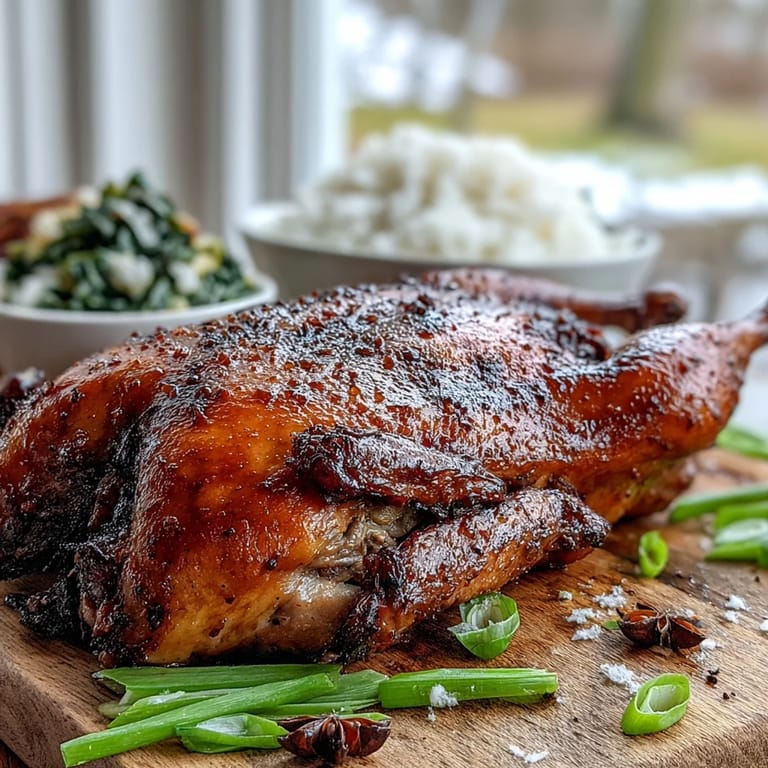
 The best part of this dish is not just eating it, but watching someone take their first bite. My friend came over once and I served her a plate with crispy skin, tender meat, and a drizzle of those sticky pan juices. She closed her eyes, chewed slowly, and then asked if she could have this for her birthday instead of cake. That is when I knew this recipe was a keeper.
How to Get the Crispiest Skin
The secret is all about moisture control and heat. After you prick the skin, leaving the duck uncovered in the fridge overnight lets the surface dry out completely, which means it will crisp instead of steam. When you roast, the initial lower temperature renders the fat slowly, then the blast of high heat at the end puffs and browns the skin to perfection. If you see any spots that are not crisping evenly, you can carefully blot them with a paper towel halfway through the high-heat phase.
Pairing and Serving Ideas
This duck loves company that can stand up to its bold flavors without competing. I always serve it with steamed jasmine rice to soak up the juices, and stir-fried greens like bok choy or gai lan add a fresh, slightly bitter contrast. For drinks, a light Pinot Noir has enough body to match the richness, or go traditional with chilled jasmine tea, which cleanses the palate beautifully between bites. Leftovers, if you are lucky enough to have any, make outrageously good sandwiches on crusty bread with a smear of hoisin and fresh cucumber.
Make-Ahead and Storage Tips
You can marinate the duck up to 24 hours in advance, which actually deepens the flavor and makes the day-of cooking much easier. Once roasted, the duck will keep in the fridge for up to three days, though the skin will soften as it sits. To revive leftovers, I reheat slices in a hot oven or even a dry skillet to bring back some of that crackle.
- Wrap leftover duck tightly in foil to prevent it from drying out in the fridge
- For longer storage, shred the meat and freeze it in portions for fried rice or noodle soups
- Save the rendered duck fat in a jar, it is liquid gold for roasting potatoes or frying eggs
 Pin it
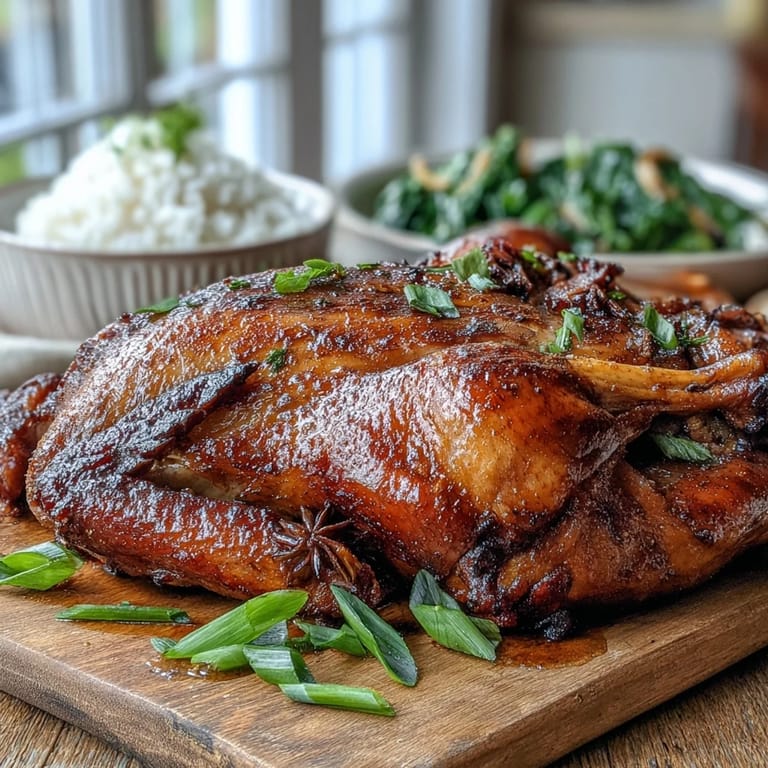
 This duck has a way of turning an ordinary evening into something you will remember, whether you are celebrating a special occasion or just want to feel a little fancy on a weeknight. The smell, the sizzle, the first crack of that crispy skin, it all adds up to something more than dinner.
Recipe FAQs
- → How do I get the duck skin extra crispy?
Leave the marinated duck uncovered in the refrigerator overnight before roasting. This dries out the skin, which helps it crisp up beautifully during the high-heat finish.
- → Can I use a different sweetener instead of honey?
Yes, maple syrup works wonderfully as a substitute for honey and adds a slightly different flavor profile to the marinade.
- → What should I do with the duck fat that renders during cooking?
Save the rendered duck fat! It's excellent for roasting potatoes or adding rich flavor to other dishes. Store it in an airtight container in the refrigerator.
- → Is this dish suitable for gluten-free diets?
Yes, as long as you use gluten-free soy sauce. Regular soy sauce contains wheat, so check labels carefully or choose certified gluten-free varieties.
- → What wine pairs best with five-spice roast duck?
A light Pinot Noir complements the rich duck meat and aromatic spices beautifully. Alternatively, serve with chilled jasmine tea for an authentic Chinese pairing.
- → How should I store and use leftovers?
Store leftover duck in an airtight container in the refrigerator for up to 3 days. The meat makes excellent sandwiches, wraps, or can be added to fried rice.