 Pin it
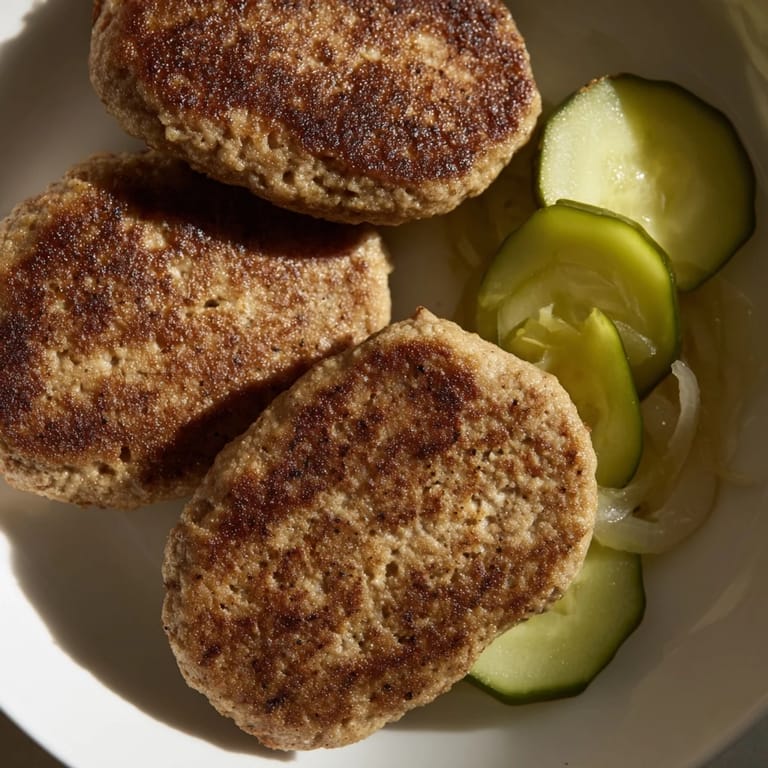
 My first batch of frikadeller came together on a grey Copenhagen afternoon when my neighbor stopped by with a recipe scribbled on the back of a grocery list. She mentioned that her grandmother made them every Thursday, and that the trick was keeping your hands wet and your mixture loose. I was skeptical about adding milk to ground pork, but the moment I tasted that first golden-brown patty with a crispy edge and impossibly tender center, I understood why this simple dish has fed Danish families for generations.
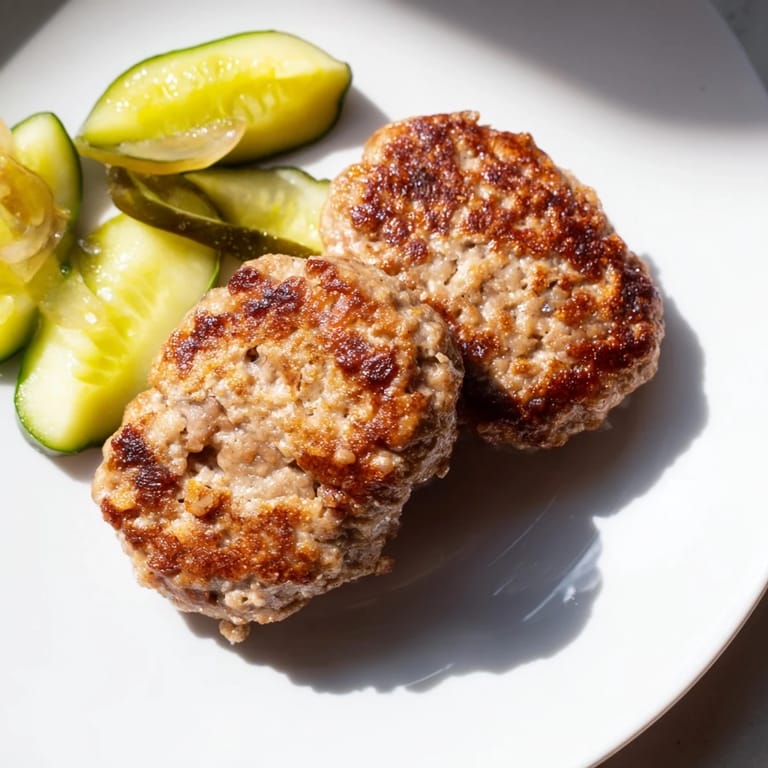
I made these for my partner on a Tuesday when neither of us had energy for anything complicated, and we ended up sitting at the kitchen counter eating them straight from the pan with our fingers, laughing at how we were making a mess. The pickles cut through the richness in exactly the right way, and suddenly we were planning to make them again the following week.
Ingredients
- Ground pork: Use a blend of pork and veal if you can find it, as the veal adds delicate flavor and keeps the meatballs tender even if they cook a minute longer than intended.
- Grated onion: A microplane grater releases all the onion's moisture into the mixture, creating flavor you can taste but never feel as a chunk.
- Egg: This acts as the binder, but just one is enough—too many and the texture becomes dense.
- Whole milk: It sounds strange, but the milk softens the breadcrumbs from within, creating that signature pillowy texture.
- Breadcrumbs: Fresh breadcrumbs work better than panko here, dissolving almost completely into the meat.
- Salt, pepper, and allspice: The allspice is what makes these taste authentically Danish—warm and slightly sweet, like a whisper of clove.
- Butter and neutral oil: The combination gives you a golden crust without burning; butter alone would brown too fast.
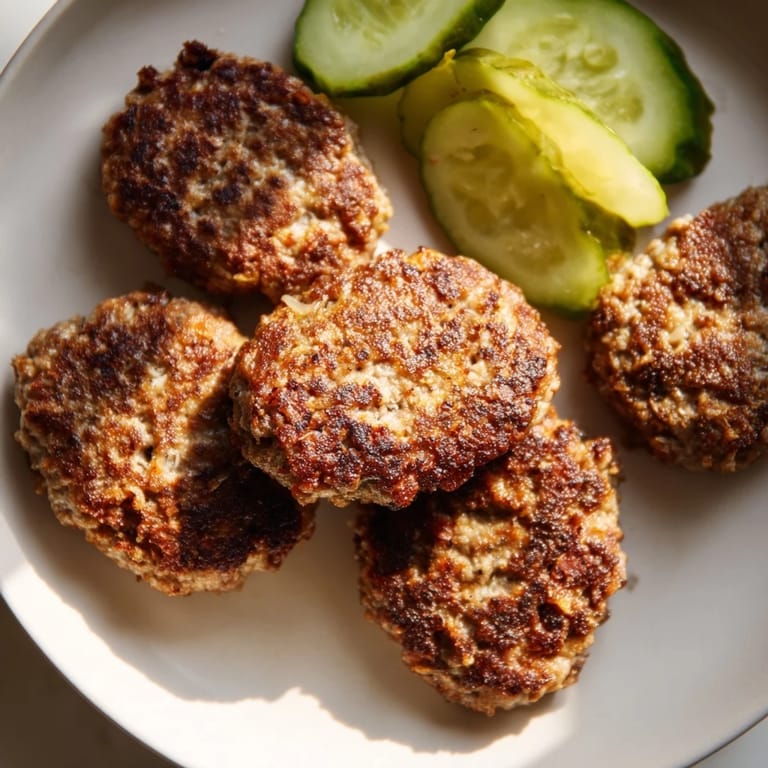
- Danish pickles: Tart and crisp, they're essential for cutting through the richness—don't skip them.
Tired of Takeout? 🥡
Get 10 meals you can make faster than delivery arrives. Seriously.
One email. No spam. Unsubscribe anytime.
Instructions
- Build your mixture:
- Combine the pork, grated onion, egg, milk, breadcrumbs, salt, pepper, and allspice in a large bowl, then mix with your hands until everything is evenly distributed and the texture is slightly sticky. You're looking for something that holds together but doesn't feel dense or overworked.
- Let it rest:
- Give the mixture 10 minutes to sit while the breadcrumbs soak up all that milk—this is when the magic happens and your meatballs become tender rather than tight.
- Shape with wet hands:
- Wet your hands with cold water and shape the mixture into oval or round patties about the size of a golf ball, making 12 to 14 pieces. The wet hands keep the mixture from sticking and create a smoother surface.
- Heat your pan:
- Warm a large skillet over medium heat with the butter and oil together, letting them foam slightly before you add the meatballs. The pan should be hot enough that they sizzle on contact but not so hot they brown faster than they cook through.
- Fry until golden:
- Working in batches so you don't crowd the pan, lay the meatballs in the skillet and flatten them slightly with a spatula into thick patties. Fry for 4 to 5 minutes per side until the outside is deep golden brown and the inside is cooked through—the flattening helps them cook evenly.
- Rest on paper towels:
- Transfer the finished frikadeller to a plate lined with paper towels to drain any excess fat, which keeps them crispy on the outside while staying tender inside.
 Pin it
 These became tradition in my house after that first Tuesday, and now I find myself making them whenever I need something that feels both celebratory and comforting. There's something about serving food that someone else's grandmother perfected that makes you feel connected to generations of people you'll never meet.
The Danish Way of Serving
In Denmark, frikadeller are rarely served alone—they're part of a small moment at the table where everything complements everything else. The pickles are sharp and bright, the rye bread is dense and earthy, and the meatballs themselves are rich and tender, so each element makes the others taste better. If you add boiled potatoes or a creamy potato salad, you're honoring the tradition, but even a simple plate with just the frikadeller and pickles tells you everything you need to know about this kind of cooking.
The Texture Secret
Most meatballs are made to be round and sturdy, but frikadeller gain their character from being gently flattened in the pan. This creates a surface area that crisps beautifully while the interior stays moist and tender, almost custardy in the best way. The milk in the mixture is what allows this—it keeps the meat from tightening up as it cooks, so you end up with something that's crispy outside but yielding inside.
Variations Worth Trying
Once you've made these the traditional way, you'll start to see how flexible they really are. Some families add grated apple for sweetness, others fold in fresh parsley or dill for brightness, and a few swear by mixing in a spoonful of ground ginger. The structure is sturdy enough to handle these kinds of experiments, and each addition feels like you're writing your own small variation into an old recipe.
- Substitute half the pork with ground veal for a lighter, more delicate flavor that still holds its shape.
- Stir in finely chopped fresh dill or parsley after the mixture rests to add an herbal note.
- Serve with rye bread and strong mustard if you want to lean into the Scandinavian side of things.
 Pin it
 These meatballs are proof that simplicity, when done with care, becomes something deeply satisfying. Make them this week and taste why they've lasted this long.
Recipe FAQs
- → What type of meat is used for these meatballs?
Ground pork is primarily used, though a mix with veal can create a lighter texture.
- → How should the meatballs be cooked for best results?
Pan-fry in butter and oil over medium heat until golden brown and cooked through, about 4–5 minutes per side.
- → What ingredients add traditional Danish flavor?
Ground allspice and finely grated onion contribute to the authentic Danish taste.
- → What are common serving suggestions?
Serve with tangy pickles, rye bread, or boiled potatoes to complement the meatballs.
- → Can the texture be modified?
Yes, substituting half the pork with ground veal will result in a lighter texture.