 Pin it
 I discovered egg flight toast on a lazy Sunday morning when I had three eggs left and absolutely no idea what to do with them. Instead of making the same scrambled eggs I'd had all week, I thought: what if I cooked each one differently and put them all on the same slice of toast? The result was this beautiful, chaotic tasting plate where every bite felt like a tiny adventure. Now whenever I have time, I make this instead of the usual routine.
My friend Sarah watched me make this once and got genuinely mad that she'd been eating the same boring omelet for years when this existed. Now she texts me photos of her egg flights from different countries, which I did not expect to become our thing.
Ingredients
- 1 large slice sourdough or country-style bread: Thick, sturdy bread is your foundation here because you're loading it with three different preparations and they need something that won't collapse.
- 1 large egg, scrambled: Use a cold skillet and slow, gentle heat—rushing this turns it into rubbery scramble instead of creamy curds.
- 1 large egg, soft-boiled: Six and a half minutes is the magic number for that jammy, runny yolk that feels luxurious.
- 1 large egg, fried: This one stays in the skillet just long enough for the whites to set while the yolk stays liquid gold in the middle.
- 1 tbsp unsalted butter: Divided between the scrambled and fried eggs, unsalted lets you control the salt yourself.
- 1 tsp olive oil: Mixed with butter for the fried egg, it prevents sticking and adds a subtle richness.
- Salt and freshly ground black pepper, to taste: Season each preparation separately because they cook at different times and need their own moment to shine.
- Chopped fresh chives, chili flakes, microgreens (optional): These garnishes turn a good breakfast into something you want to photograph.
Tired of Takeout? 🥡
Get 10 meals you can make faster than delivery arrives. Seriously.
One email. No spam. Unsubscribe anytime.
Instructions
- Toast your bread until it's golden and crisp:
- Preheat your oven to 180°C (350°F) and toast the bread slice on a baking sheet for 5–7 minutes. You want it firm enough to hold up under the weight of three different eggs without getting soggy, so don't skip this step.
- Get your soft-boiled egg ready:
- Bring a small pot of water to a boil, gently lower in one egg, and set a timer for 6 minutes and 30 seconds—this is the sweet spot for a runny yolk. Once time's up, transfer it straight to ice water, then peel it carefully under cool running water and halve it.
- Make the scrambled eggs creamy and gentle:
- Heat half a tablespoon of butter in a nonstick skillet over medium-low heat until it's foaming. Whisk your egg with a pinch of salt and pepper, pour it in, and stir very gently with a spatula, waiting for curds to form instead of constantly mixing—this is what makes it creamy instead of broken.
- Fry the last egg until the white sets and yolk stays runny:
- Wipe out your skillet, add the remaining butter and olive oil over medium heat, crack in your third egg, and let it cook undisturbed for 2–3 minutes. You'll know it's ready when the whites are opaque but the yolk jiggles when you nudge the pan.
- Assemble your flight of flavors:
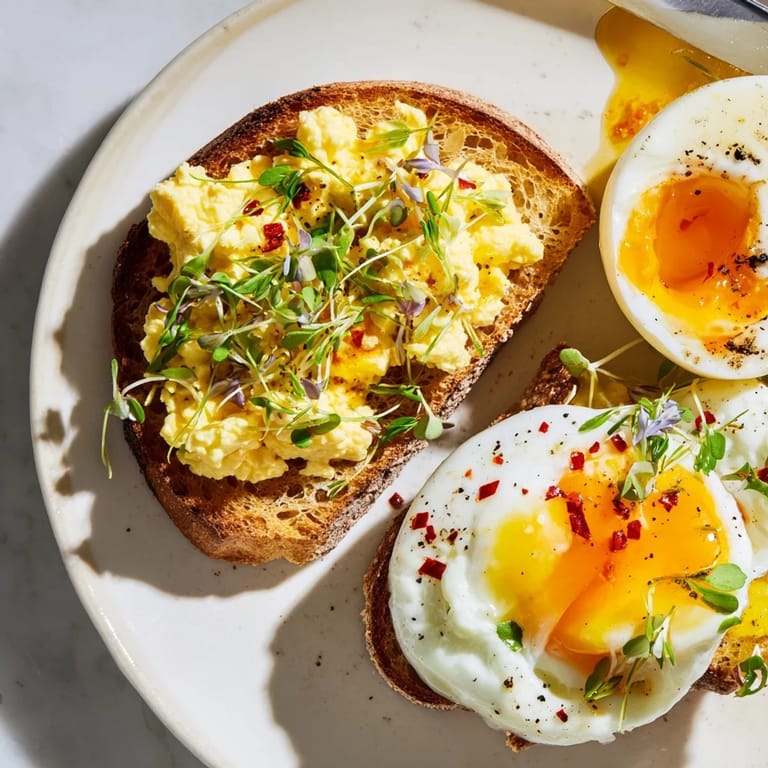
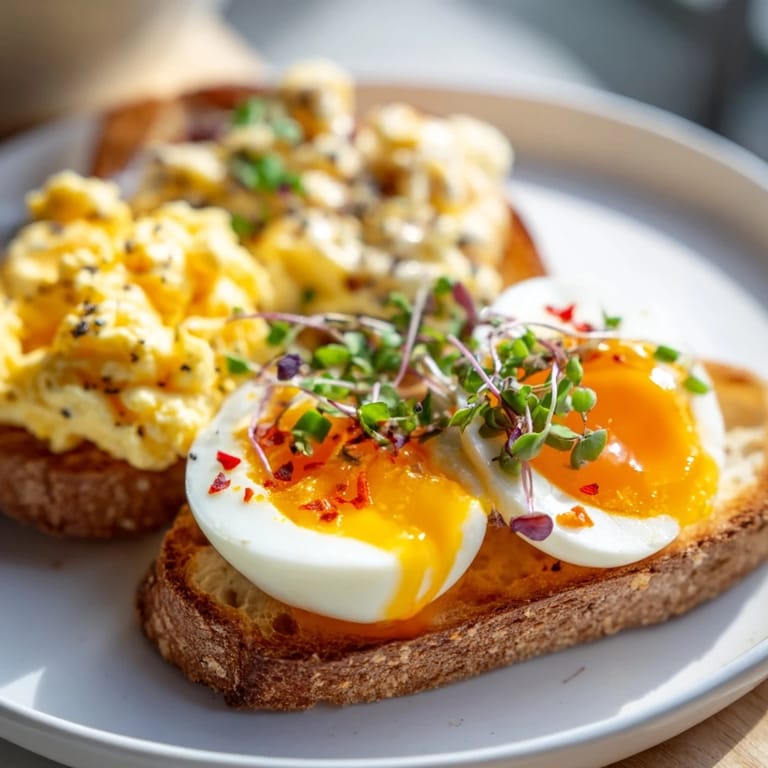
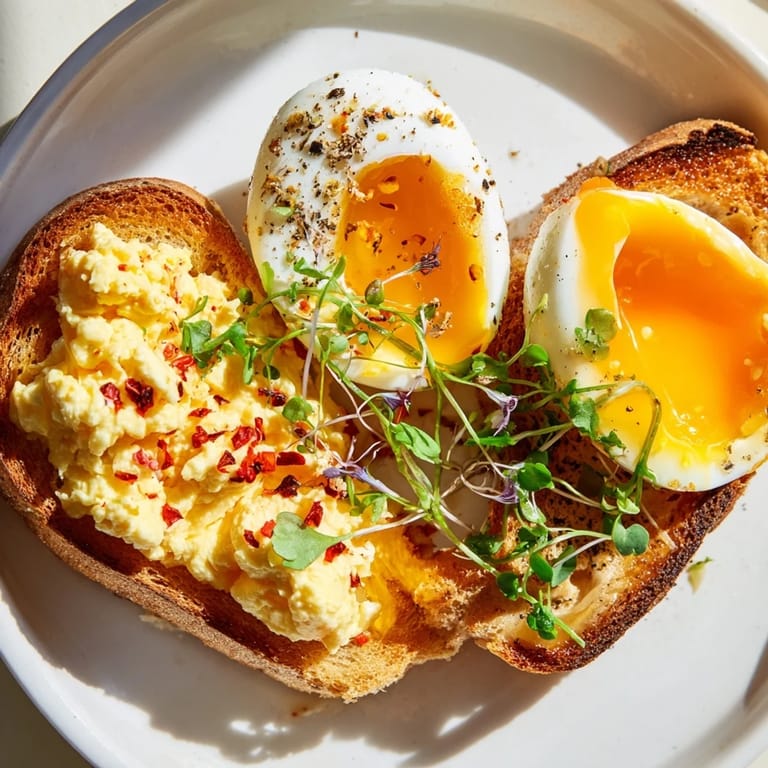
- Place your golden toast on a plate and divide it mentally into thirds. Spread the creamy scrambled egg on one third, arrange the soft-boiled egg halves on the second, and slide the fried egg onto the last section.
- Add your finishing touches:
- If you're using them, sprinkle chives, chili flakes, and microgreens over the whole thing. Serve immediately while everything is still warm.
 Pin it
 The first time I got the yolk timing right on the soft-boiled egg, I cut into it at the table and watched the yolk run across the toast like it was the most satisfying thing that had happened all week. It genuinely felt like a small kitchen victory.
Why This Became My Favorite Breakfast
There's something about having three different egg textures on one plate that just works psychologically. You're not bored, your palate keeps shifting, and somehow it feels more special than any single-method egg could ever be. Plus, you get to use three different cooking techniques in one meal, which feels productive without actually being complicated.
The Art of Timing
The real skill here isn't any one technique—it's getting everything to finish at roughly the same moment. Start the soft-boiled egg first since it takes the longest, toast your bread while that's going, then scramble and fry in quick succession. Once you've done this a couple of times, the rhythm becomes automatic and feels almost meditative.
Ways to Make It Your Own
This recipe is a foundation, not a rulebook. I've had versions with avocado sliced underneath, smoked salmon tucked between the eggs, and fresh spinach that was sautéed for just 30 seconds. The only rule is that your base—the three eggs and the toast—should stay consistent so you can actually taste what's different and what's the same.
- Try adding avocado slices, smoked salmon, or quickly sautéed spinach for extra nutrition and flavor contrast.
- Experiment with different bread types, from gluten-free options to brioche if you want something richer.
- Swap any egg style for variety: poached eggs, a folded omelette, or even soft-scrambled eggs in a different butter situation all work beautifully.
 Pin it
 This toast works because it reminds you that breakfast doesn't have to be complicated to feel like something worth making. It's quick, it's satisfying, and every single element has a reason to be there.
Recipe FAQs
- → What types of eggs are used in the dish?
Three different styles—scrambled, soft-boiled, and fried—each prepared to highlight unique textures and flavors.
- → How do you achieve the perfect soft-boiled egg?
Gently boil the egg for about 6½ minutes, then cool it in ice water to stop cooking before peeling and halving.
- → Can I substitute the bread type?
Yes, sourdough or country-style bread works best, but alternatives like gluten-free bread can be used to suit dietary needs.
- → What garnishes complement the toast?
Chopped fresh chives, chili flakes, and microgreens add freshness, subtle heat, and visual appeal.
- → How do you keep the fried egg yolk runny?
Cook the egg over medium heat just until the whites set, typically 2–3 minutes, ensuring the yolk remains soft.