 Pin it
 My flatmate once brought home a swede the size of a bowling ball and neither of us knew what to do with it. We stared at it for days until I remembered the gochujang paste gathering dust in the back of my cupboard. What started as a pantry challenge turned into one of those accidental weeknight wins that actually tastes like effort. The sweetness of roasted swede against that fiery, sticky Korean chili paste just works in a way I never expected.
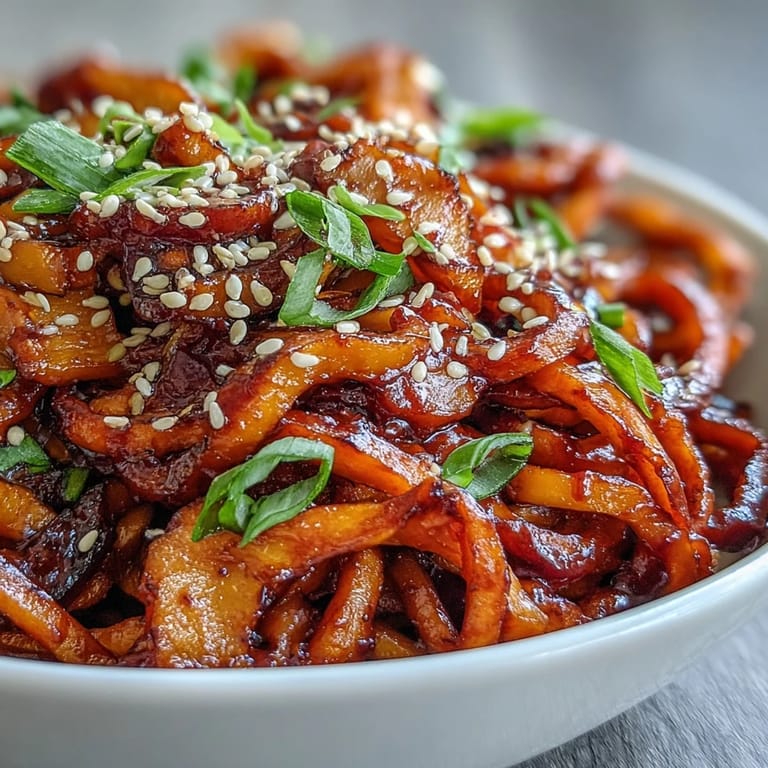
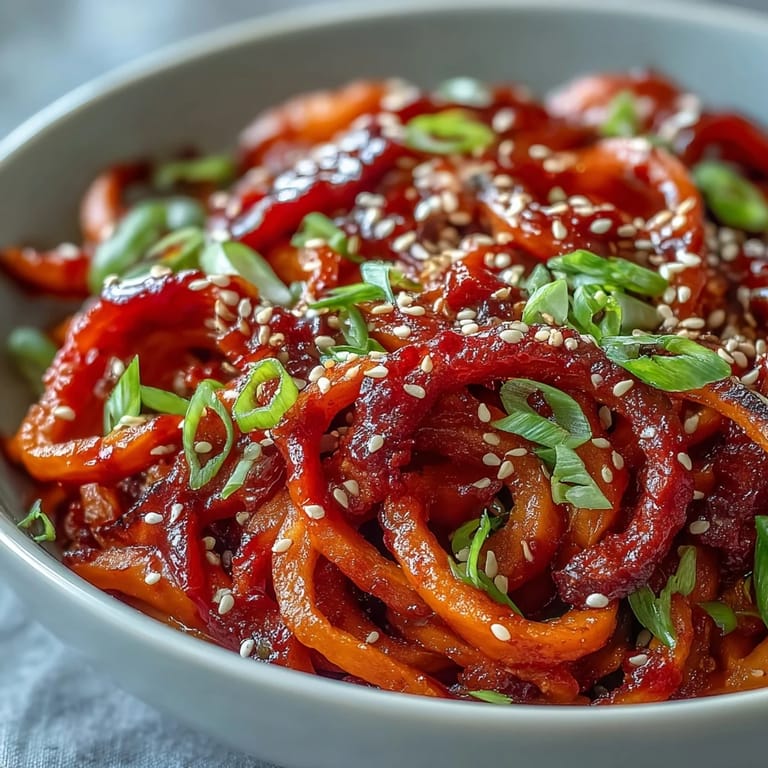
I made this for a small dinner party once and everyone assumed Id ordered takeout. The roasted swede ribbons looked so glossy and restaurant-like, and the smell of sesame and gochujang filled the kitchen in the best way. One friend went back for seconds before anyone else had even finished their first plate, which is always the highest compliment.
Ingredients
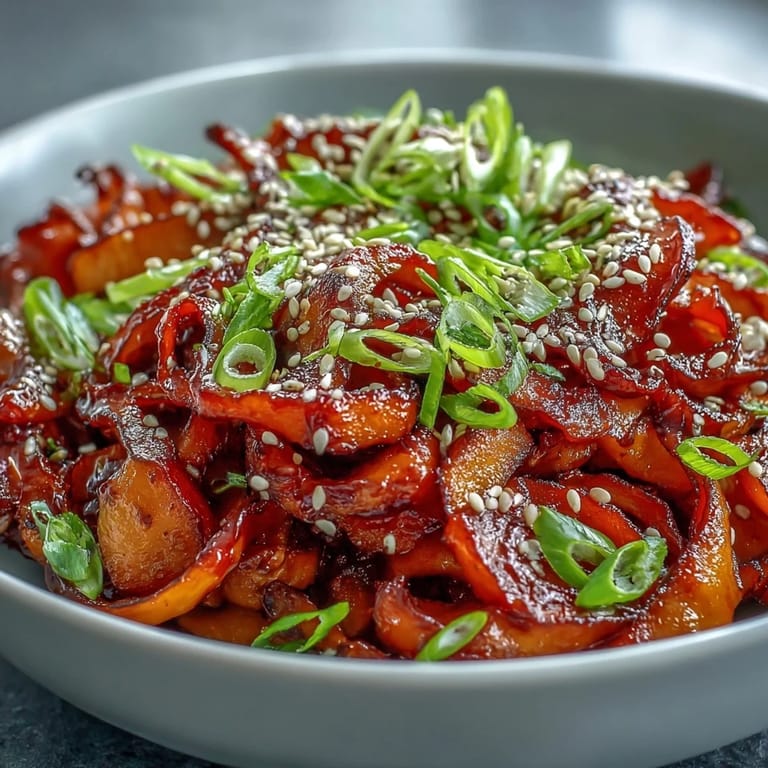
- Swede (rutabaga): Roasting brings out its natural sweetness and slight nuttiness, and thin ribbons catch the dressing beautifully without turning mushy.
- Rice noodles: They stay soft and slippery, providing a neutral base that lets the gochujang shine without competing for attention.
- Gochujang: This Korean chili paste is the heart of the dish, offering deep umami, gentle heat, and a touch of fermented funk that makes everything taste layered.
- Maple syrup: It balances the heat and saltiness, rounding out the dressing so it tastes complex rather than one-note.
- Toasted sesame oil: A little goes a long way, adding that warm, nutty aroma that makes the whole bowl smell irresistible.
- Garlic and ginger: Freshly grated, they add brightness and a slight bite that cuts through the richness of the dressing.
- Spring onions: Their mild sharpness and crisp texture add freshness and a little crunch to every forkful.
- Sesame seeds: Toasted seeds bring a subtle crunch and visual appeal, plus they taste faintly sweet and nutty when you bite into them.
Tired of Takeout? 🥡
Get 10 meals you can make faster than delivery arrives. Seriously.
One email. No spam. Unsubscribe anytime.
Instructions
- Get the oven ready:
- Preheat your oven to 220°C (425°F) so its properly hot when the swede goes in. This high heat is what gives the ribbons those caramelized edges.
- Prep and roast the swede:
- Toss your swede ribbons with vegetable oil, salt, and pepper, then spread them out on a baking sheet in a single layer. Roast for 25 to 30 minutes, flipping them halfway through, until theyre golden and tender with slightly crispy edges.
- Cook the noodles:
- While the swede roasts, cook your rice noodles according to the package directions, then drain and rinse them under cold water to stop them sticking together. Set them aside until youre ready to toss everything.
- Make the gochujang dressing:
- In a bowl, whisk together the gochujang, soy sauce, maple syrup, rice vinegar, sesame oil, garlic, ginger, chili flakes, and water until smooth. Taste it and adjust the water if you want it a bit thinner or more pourable.
- Bring it all together:
- In a large mixing bowl, combine the roasted swede, cooked noodles, spring onions, carrot, and bean sprouts if using. Pour the dressing over everything and toss gently but thoroughly until every ribbon and noodle is coated.
- Serve it up:
- Divide the noodles among bowls and top with toasted sesame seeds and fresh cilantro. Serve immediately while the swede is still warm and the dressing is glossy.
 Pin it
 This dish became my go-to when I wanted something that felt special but didnt require a trip to three different shops. Its the kind of meal that makes you feel like youve got your life together, even if youre eating it straight from the bowl on the sofa. The leftovers, if there are any, taste even better the next day once the flavors have had time to meld.
Choosing Your Swede
Pick a swede thats firm and heavy for its size, without soft spots or cracks. Smaller ones tend to be sweeter and less woody, though a big one works fine if you peel it generously. Use a vegetable peeler or mandoline to get those thin ribbons, but watch your fingers because swede is dense and can put up a fight.
Making It Your Own
If you want more protein, pan-fried tofu or a handful of edamame fits right in without changing the vibe. Swap the carrot for thinly sliced red pepper or add some steamed broccoli if thats what you have. The gochujang dressing is forgiving and clings to just about any vegetable you throw at it, so feel free to improvise based on whats in your fridge.
Storing and Reheating
Store leftovers in an airtight container in the fridge for up to three days. The noodles will absorb some of the dressing as they sit, so you might want to loosen things up with a splash of water or a drizzle of sesame oil when reheating. Eat it cold straight from the fridge or warm it gently in a pan over low heat, tossing frequently so nothing sticks.
- Add a squeeze of lime juice before serving to brighten up day-old noodles.
- If the dressing thickens too much, whisk in a teaspoon of warm water at a time until it loosens.
- Keep extra sesame seeds and spring onions on hand to freshen up leftovers just before eating.
 Pin it
 This recipe proved to me that you dont need fancy ingredients to make something memorable, just a willingness to roast a root vegetable and trust a good sauce. I hope it becomes one of those easy favorites you turn to when you want comfort with a bit of a kick.
Recipe FAQs
- → Can I substitute swede with another vegetable?
Yes, you can use sweet potato, butternut squash, or turnips. Adjust roasting time as needed based on thickness and vegetable density.
- → How spicy is this dish?
The heat level is moderate from gochujang. You can reduce the paste amount for milder flavor or add chili flakes for extra kick.
- → Can I make this ahead of time?
The components can be prepped separately and stored for up to 3 days. Toss together just before serving for best texture and freshness.
- → What can I use instead of gochujang?
Try sriracha mixed with miso paste, or sambal oelek with a touch of sugar. The flavor profile will differ but still be delicious.
- → Is this dish gluten-free?
Use tamari instead of soy sauce and check your gochujang label. Many brands contain wheat, but gluten-free versions are available.
- → How do I cut swede into ribbons?
Use a vegetable peeler for wide ribbons or a mandoline for uniform julienne strips. A sharp knife works too for hand-cut matchsticks.