 Pin it
 My first schnitzel came from a small gasthaus in Munich, where I watched the cook pound meat with such decisive confidence that I thought she might break the counter. The sound was unmistakable—that rhythmic thwack that transforms an ordinary cutlet into something impossibly thin and tender. I've chased that same golden crispness ever since, and I finally understand: it's not about technique alone, it's about respecting the simplicity of the dish itself.
I made this for my partner on a rainy Thursday, paired with store-bought cucumber salad and cold beer, and somehow it felt like we'd traveled back to a Bavarian beer hall. The kitchen filled with that distinctive nutty aroma of butter hitting hot oil, and within minutes we were both tearing into golden cutlets like we hadn't eaten in days. That's when I realized schnitzel isn't fancy—it's honest food that arrives on your plate still crackling.
Ingredients
- Pork chops or chicken breasts (150 g each): Choose evenly sized pieces so they cook at the same rate; pounding them thin ensures they stay tender and cook through before the breading burns.
- All-purpose flour (100 g): This creates the base layer that helps the egg mixture adhere, so don't skip or skimp on this step.
- Eggs and milk: The mixture acts as your glue; the milk loosens the eggs just enough to create an even coating without thick clumps.
- Fine dry breadcrumbs (150 g): These are finer than panko and create that delicate, crispy crust that distinguishes a true schnitzel from a breaded cutlet.
- Vegetable oil or clarified butter (120 ml): Clarified butter (Butterschmalz) is traditional and adds authentic flavor, but neutral oil works if that's what you have on hand.
- Salt and fresh black pepper: Season generously—the meat needs enough salt to shine through all those layers.
- Lemon wedges and parsley: These aren't garnish; they're essential for cutting through the richness and brightening each bite.
Tired of Takeout? 🥡
Get 10 meals you can make faster than delivery arrives. Seriously.
One email. No spam. Unsubscribe anytime.
Instructions
- Pound the meat to paper-thin:
- Place cutlets between plastic wrap and pound with steady, even strokes until about 1/4 inch thick. You'll feel the meat relax and spread—that's exactly what you want. If you pound unevenly, thicker sections will be tough when thinner ones are golden.
- Season boldly before breading:
- Salt and pepper both sides generously now, not after frying. This is your only chance to season the meat itself, and these flavors are crucial.
- Set up your breading station:
- Arrange three shallow plates in a line: flour, beaten eggs mixed with milk, breadcrumbs. Having everything ready means you work quickly and keep your hands from becoming a crusty mess.
- Bread with intention:
- Coat each cutlet in flour, tap off excess, dip into egg, then press gently into breadcrumbs. The gentle pressure helps the coating adhere without compacting it—compact breadcrumbs fry into a thick, heavy shell rather than a crispy one.
- Get your oil properly hot:
- Heat oil or clarified butter until a tiny piece of bread sizzles immediately when dropped in. This ensures the outside crisps before the meat cooks through, which is the whole point.
- Fry without moving them around:
- Once a cutlet hits the pan, leave it alone for 2–3 minutes. Constant fidgeting disrupts the crust formation. You'll know it's ready to flip when the edges turn golden and the meat releases easily from the pan.
- Drain briefly on paper towels:
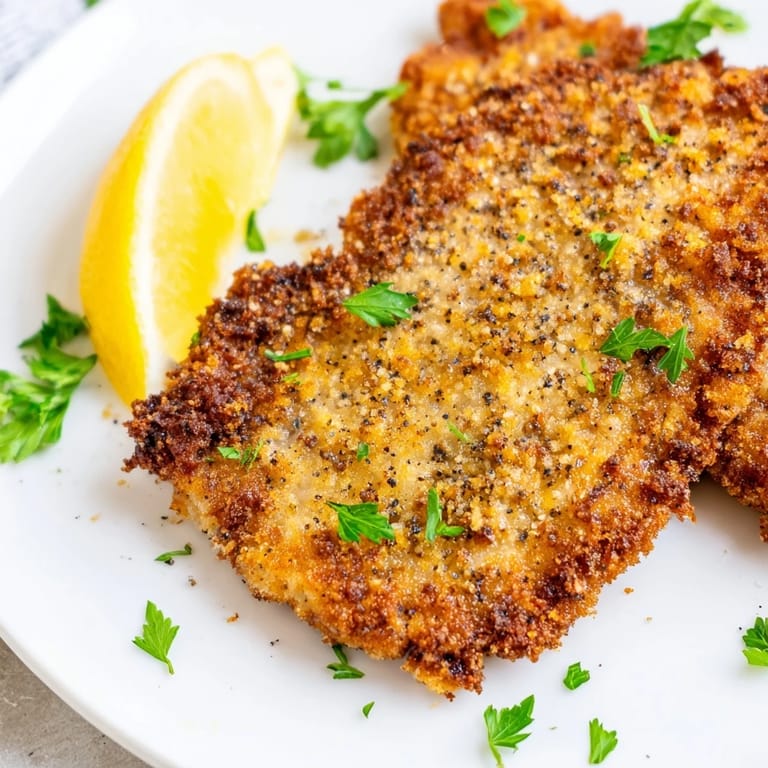
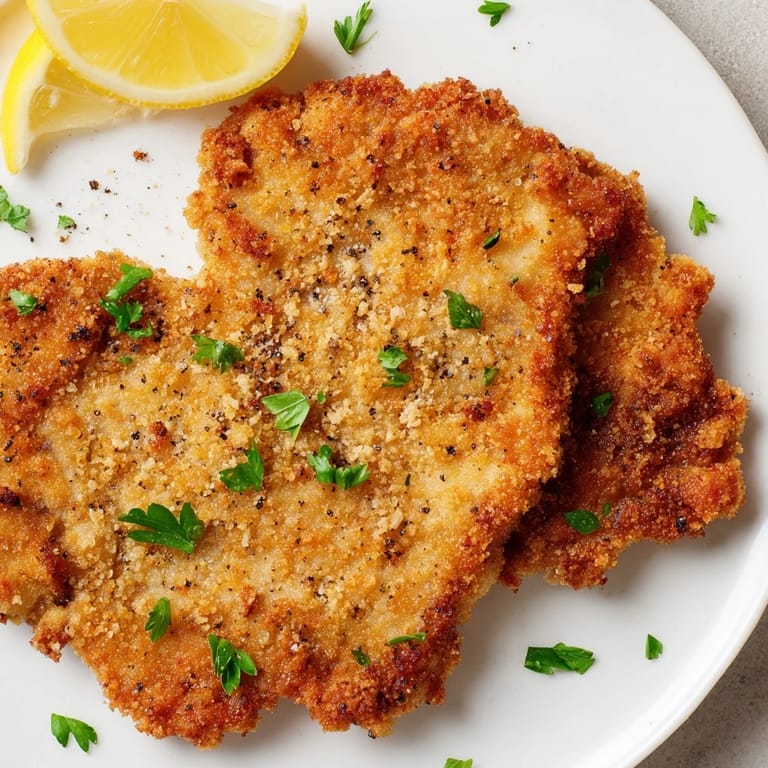
- This removes excess oil without cooling the schnitzel so much that it loses its crispness. Serve immediately while everything is still crackling.
 Pin it
 I once served this to my aunt, a woman who claims restaurants have ruined home cooking, and she asked for seconds before finishing her first piece. That's when I understood: schnitzel isn't about impressing anyone. It's about delivering something warm, crispy, and genuinely delicious with zero pretense.
The Pounding Ritual
Most people rush through pounding, but this step deserves your attention. It's not just about thinning the meat—it's about breaking down muscle fibers so the finished schnitzel becomes tender rather than chewy. Work with steady, even strokes, rotating the meat occasionally so it flattens uniformly. You'll know you're done when the meat looks almost translucent at the edges and springs back only slightly when you press it.
Why Clarified Butter Matters
Butterschmalz (clarified butter) is traditional because milk solids burn away, leaving pure fat that can handle high heat without smoking and adds a subtle, nutty flavor oil can't replicate. If you're making this for the first time and only have vegetable oil, use it without hesitation—the schnitzel will be perfectly delicious. But once you've tasted it with clarified butter, you understand why Germans stick with it.
Side Dishes and Serving
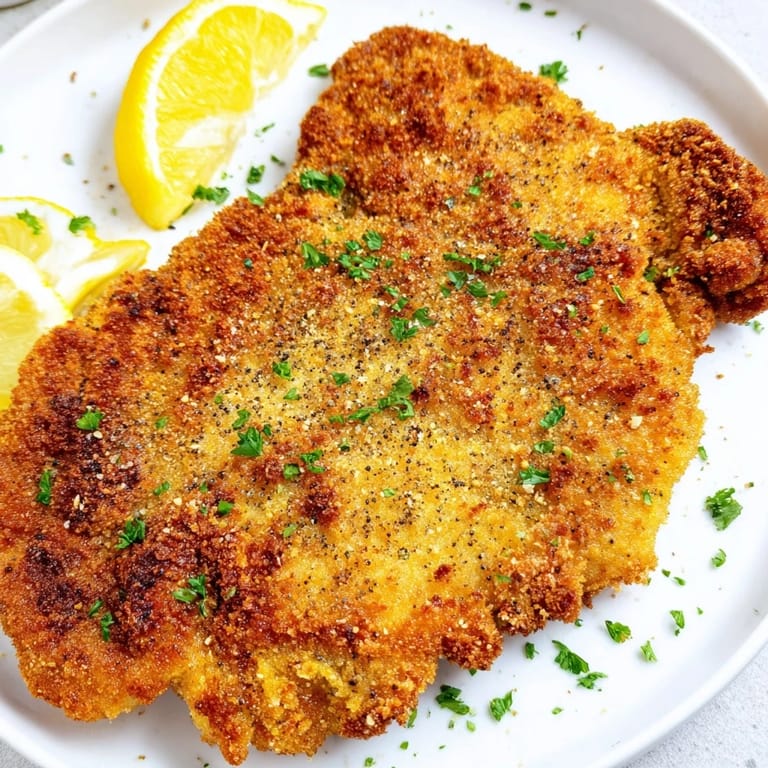
Schnitzel is wonderfully versatile alongside its traditional partners. The acidity of potato salad and cucumber salad provides balance, while a cold beer or crisp Riesling cuts through the richness beautifully. Some nights I serve it with just lemon and fresh arugula; other times, fries feel right.
- Squeeze lemon over the schnitzel just before eating—the acid is essential, not optional.
- Serve immediately; schnitzel loses its magic as it cools and the crust softens.
- Leftover schnitzel is rare in my kitchen, but it makes an excellent sandwich the next day with a little mayo and mustard.
 Pin it
 This is the kind of meal that tastes like care without requiring it—honest food that never tries to be more than what it is. Once you've made it a few times, it becomes automatic, and that's when you'll find yourself making it on ordinary evenings just because everyone at the table smiles the same way.
Recipe FAQs
- → What meat works best for schnitzel cutlets?
Pork chops or chicken breasts pounded thin provide the ideal tender base for schnitzel with crispy coating.
- → How should the coating be applied for best crispiness?
Dredge meat in flour, dip in egg-milk mixture, then coat gently but evenly with fine dry breadcrumbs without pressing too hard.
- → What cooking fat is recommended?
Vegetable oil or clarified butter (Butterschmalz) both yield a nice golden crust and rich flavor when frying schnitzel.
- → How can I serve schnitzel traditionally?
Serve hot with lemon wedges, fresh parsley, and sides like potato salad, cucumber salad, or fries for an authentic touch.
- → Can I substitute veal for pork or chicken?
Yes, veal can be used to create an authentic Wiener Schnitzel with delicate flavor and texture.