 Pin it
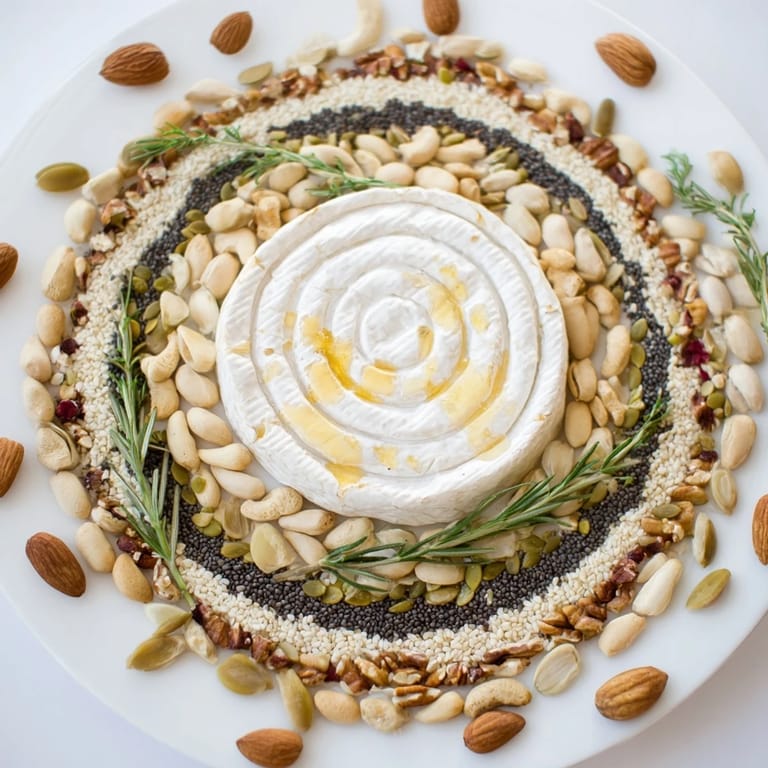
 I discovered The Labyrinth at a gallery opening where a designer friend had arranged nuts and seeds into an actual spiral on a marble board—it was so striking that guests kept photographing it before eating. That night, I realized the most memorable appetizers aren't just delicious, they're experiences, little puzzles that draw people in. I've been recreating that magical moment ever since, though my sketches are admittedly less artistic. There's something about turning simple ingredients into a journey that makes people linger, talk, and actually taste each component instead of mindlessly grazing.
Last spring, I made this for a dinner party where everyone was scrolling through their phones, and within seconds of seeing the labyrinth, all the devices disappeared. We ended up playing this silly game where people took turns navigating the path with their eyes closed, laughing at the chaos. That's when I understood—food that invites play creates connection.
Ingredients
- Raw almonds: 40 g – their pale color anchors the design while their subtle sweetness prevents the board from tasting too savory.
- Roasted cashews: 40 g – I learned the hard way that raw cashews fade visually, so roasted ones keep their buttery richness and visual pop.
- Pistachios: 40 g (shelled) – that natural green is irreplaceable; always buy them shelled because shelling them while trying to arrange a board is maddening.
- Pecan halves: 40 g – their deeper brown creates beautiful contrast with lighter nuts and adds an almost luxurious earthiness.
- Hazelnuts: 40 g – these little guys hold their shape beautifully in lines and add a nutty depth that brings everything together.
- Pumpkin seeds: 30 g (pepitas) – the green shells are a crucial color note, and their slight mineral taste balances the cheese perfectly.
- Sunflower seeds: 30 g – smaller and tidier than pumpkin seeds, they're easier to arrange in tight patterns and add visual texture.
- Black sesame seeds: 20 g – these create striking dark lines in your design; they're more dramatic than you'd expect.
- White sesame seeds: 20 g – scatter these for contrast and a delicate nuttiness that echoes across the whole board.
- Flaxseeds: 20 g – their tiny size makes them perfect for filling gaps and their earthy flavor adds depth.
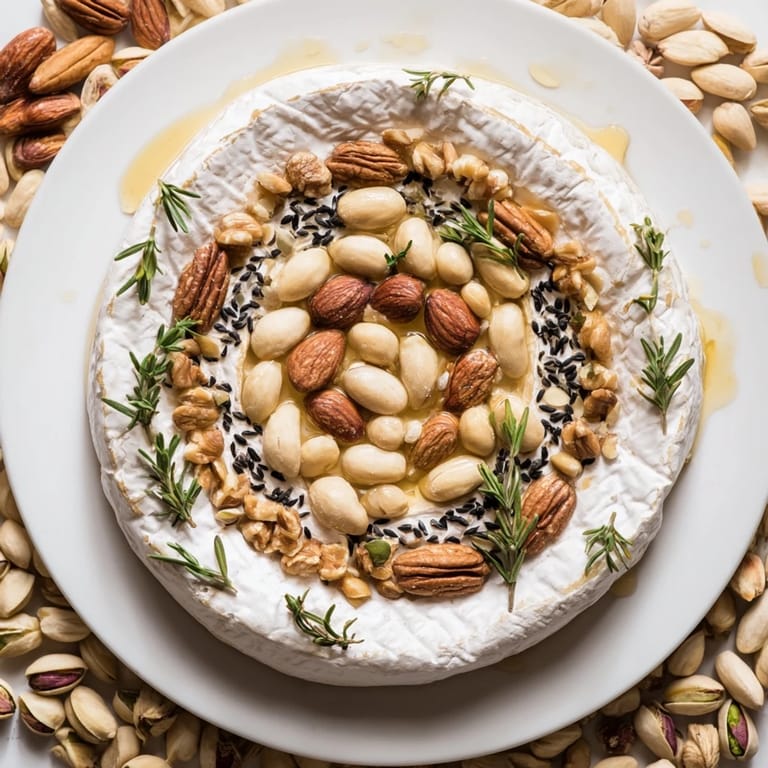
- Soft-ripened cheese wheel: 180 g (Brie, Camembert, or vegan alternative) – this is your prize, so choose one you genuinely love; the creamier the center, the more dramatic the moment when guests reach it.
- Dried cranberries or cherries: 2 tbsp (optional) – these pops of color are less about flavor and more about breaking up monotony in any leftover spaces.
- Fresh herbs: 2 tbsp thyme or rosemary – these signal that the cheese is special and add a whisper of garden freshness.
- Honey or agave: 1 tbsp (optional) – just a light drizzle transforms the cheese from good to gilded.
Tired of Takeout? 🥡
Get 10 meals you can make faster than delivery arrives. Seriously.
One email. No spam. Unsubscribe anytime.
Instructions
- Prepare your canvas:
- Clear your board completely and give it a gentle wipe so you're starting with a clean stage. If you're nervous about arranging freehand, use a pencil to sketch your labyrinth lightly—a gentle spiral or winding path leading inward works beautifully.
- Start the outer ring:
- Begin placing your nuts and seeds in single lines along your path, alternating between types to create rhythm and color variation. Think of it like you're painting with ingredients—raw almonds, then roasted cashews, then pistachios.
- Build the spiral:
- Continue layering different nuts and seeds as you spiral inward, switching types every few inches so your eye naturally follows the path. This is where you're allowed to be a little precious about it; this part takes patience but creates magic.
- Create the finale:
- As you spiral closer to the center, transition to smaller seeds that feel more delicate—sesame and flaxseeds work beautifully here. This creates a visual narrowing that draws focus to your prize cheese.
- Crown the cheese:
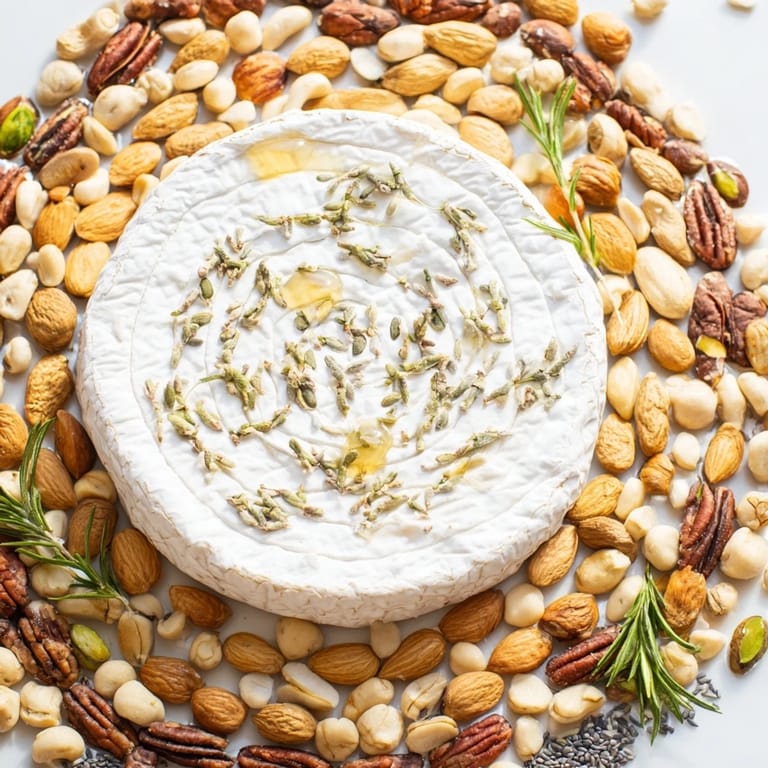
- Place your cheese wheel dead center and stand back to admire the moment. Drizzle honey around the rim if using it, scatter a pinch of fresh herbs on top, and let the cheesy centerpiece be genuinely gorgeous.
- Fill the gaps:
- Distribute any leftover nuts, seeds, or dried cranberries in remaining empty spaces so the board feels intentionally abundant, not sparse.
 Pin it
 I once served this at my sister's birthday and her six-year-old spent twenty minutes tracing the path with one finger, completely mesmerized—at the end, when she reached the cheese, she declared it was the best treasure hunt ever. That's when I realized The Labyrinth works across every generation because it appeals to something primal about journeys and discovery.
The Art of Arrangement
The key to making this look effortless is understanding that contrast is your best friend. Light next to dark, small seeds next to large nuts, matte textures beside glossy ones—these choices guide the eye naturally. I've learned that planning your color progression before you start prevents awkward moments where you have three types of brown lined up consecutively. Work in sections if that helps, building small spirals outward until they meet in the middle, rather than trying to plan the entire board at once.
Pairing and Serving Moments
This board has become my secret weapon for transitions—serve it as guests arrive so they're occupied and happy before dinner, or bring it out as cocktail hour winds down to extend conversation. A crisp Sauvignon Blanc or sparkling cider beside the board elevates the whole experience, and small forks or cocktail picks make the labyrinth concept feel intentional rather than chaotic. I've discovered that when you hand someone a fork and gesture toward the cheese with a knowing smile, they immediately understand they're meant to follow the path—no explanation needed.
Customization Without Losing the Magic
The beauty of this recipe is that it adapts to what's in your pantry and what your guests can eat. Swapping almonds for macadamia nuts, using different seeds, or switching to a vegan cheese changes the flavor profile but not the visual impact or the invitation to play. I've learned that allergies and dietary preferences are actually opportunities to get creative—a board built entirely from seeds and nuts works just as beautifully as a traditional mixed one, and sometimes even more so because the texture is more cohesive.
- Add crackers around the outer edge for guests who want them, keeping the pure artistry of the inner labyrinth intact.
- If you're short on time, buy a pre-mixed nut blend and work with what you have—imperfection often looks intentional.
- Taste as you arrange; if something feels like it doesn't belong, trust your instinct and swap it out.
 Pin it
 The Labyrinth turns an appetizer into a moment—a small rebellion against the idea that food is just fuel. Make it with intention and watch what happens.
Recipe FAQs
- → What nuts and seeds are best for this platter?
Use a mix of raw almonds, roasted cashews, pistachios, pecans, hazelnuts, pumpkin seeds, sunflower seeds, black and white sesame seeds, and flaxseeds for a variety of textures and colors.
- → How can I make this platter vegan-friendly?
Substitute the soft-ripened cheese with a plant-based alternative and ensure all nuts and seeds are gluten-free if needed.
- → What’s the best way to arrange the nuts and seeds?
Arrange them in single-file lines forming a winding labyrinth pattern on a large serving platter, alternating types for visual contrast.
- → Can I prepare this in advance?
Yes, you can arrange the nuts and seeds and cover the platter, but add fresh herbs and honey drizzle just before serving to maintain freshness.
- → What are good accompaniments for this platter?
Serve with small forks or picks, crackers for crunch, and pair with light white wine or sparkling cider for a balanced tasting experience.