 Pin it
 My grandmother pulled a wooden crate of dried cod from her pantry one November, and I watched her fill the kitchen sink with water. "Six days," she said matter-of-factly, as if transforming a board-like fish into something edible was the most natural thing in the world. That patience—that quiet faith that time and cold water could resurrect something ancient—taught me more about Norwegian cooking than any recipe could. When Christmas finally arrived and that mild, flaky lutefisk emerged from the oven, I understood why families had made this dish for generations. It wasn't just food; it was a bridge to something timeless.
I made this for a friend visiting from Oslo, and the moment she tasted it, her eyes closed. She didn't say anything at first—just sat there with her fork suspended over the plate—and I realized this wasn't nostalgia for her, it was home. The creamy mustard sauce, the soft give of the fish, the way a piece of crispbread could soak it all up. We talked for hours after that meal, and somehow the lutefisk had opened a door neither of us expected.
Ingredients
- Dried cod (lutefisk): Buy the best quality you can find—your fishmonger or Scandinavian specialty shop will have authentic lutefisk, and the difference matters.
- Cold water for soaking: Use filtered or bottled water if your tap water is heavily chlorinated; it can interfere with the soaking process.
- Coarse salt: This brief salt treatment after soaking firms the fish slightly and seasons it at the cellular level.
- Unsalted butter: You control the salt, so unsalted is essential for balance.
- All-purpose flour: Keep gluten-free flour on hand if you need to accommodate guests; it works beautifully in this sauce.
- Whole milk: Don't use skim; the fat carries the flavor and creates that luxurious mouthfeel.
- Dijon and whole-grain mustard: Together they create depth—one smooth, one with texture—that a single mustard can't achieve.
- Boiled potatoes: Waxy varieties hold their shape better and won't fall apart when you spoon sauce over them.
- Crispbread or flatbread: This isn't garnish; it's a tool for soaking up every bit of sauce on your plate.
Tired of Takeout? 🥡
Get 10 meals you can make faster than delivery arrives. Seriously.
One email. No spam. Unsubscribe anytime.
Instructions
- Start the long sleep:
- Rinse your dried cod under cold running water—it'll look rough and smell intensely fishy, which is exactly right. Submerge it in a large container, cover it completely with cold water, and place it in the back of your refrigerator where it won't be disturbed. Every morning and evening for six days, drain the old water and refresh it with cold water; you're slowly drawing out the saltiness and rehydrating the fish at the same time.
- Prepare before baking:
- After six days, your fish will feel tender and slightly gelatinous—a good sign. Drain it thoroughly, sprinkle coarse salt over the pieces, and let them sit for thirty minutes while you preheat your oven to 200°C. This resting period helps season the fish deeper and allows excess moisture to escape.
- Bake gently:
- Rinse off the salt with fresh cold water and pat the fish dry with paper towels. Arrange pieces in a baking dish, cover tightly with foil to trap steam, and bake for twenty-five to thirty minutes. You're looking for the flesh to turn opaque and separate easily from any remaining bones—it should taste mild and slightly sweet, never fishy.
- Build the sauce:
- While the fish rests in the oven, melt butter in a saucepan and whisk in flour for one minute—this roux should smell toasted and nutty, not brown. Slowly pour in milk while whisking constantly, breaking up any lumps that form, and simmer until the sauce thickens enough to coat the back of a spoon.
- Season with intention:
- Stir in both mustards, a touch of sugar to balance the sharpness, and salt and white pepper to taste. The mustard should be assertive but not overwhelming—it's there to complement the delicate fish, not to shout over it. Taste as you go; mustard intensity varies by brand.
- Come together on the plate:
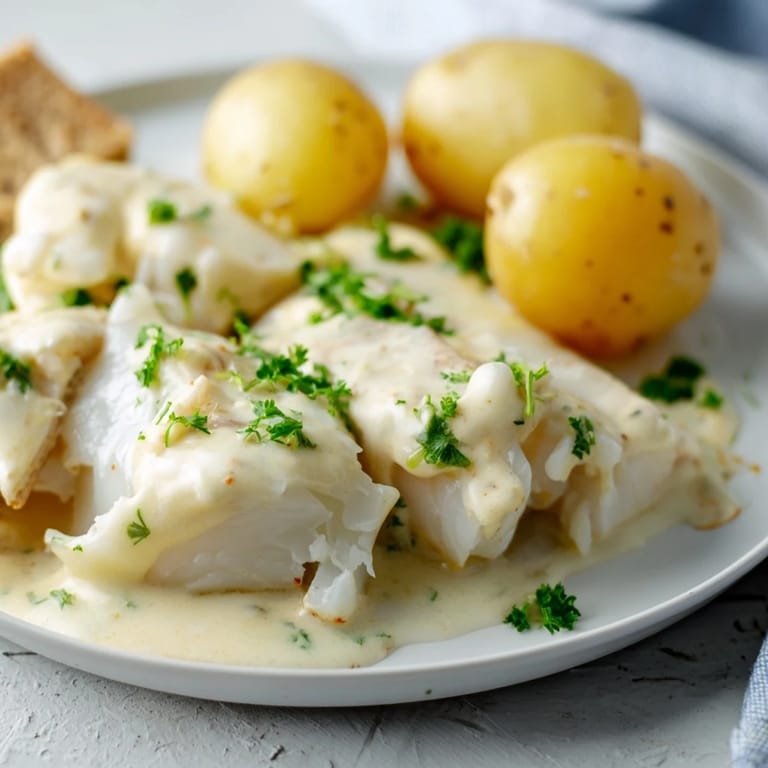
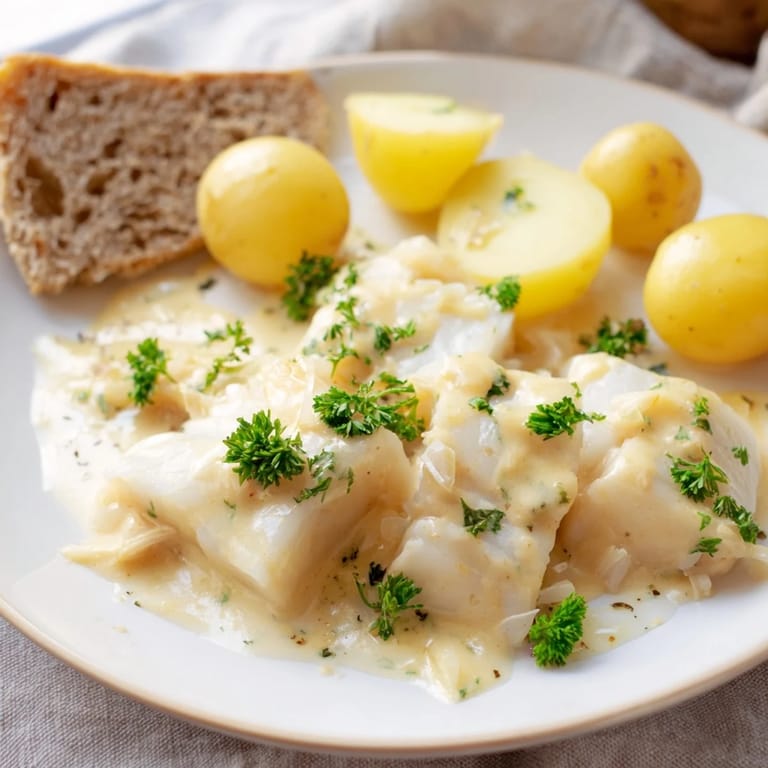
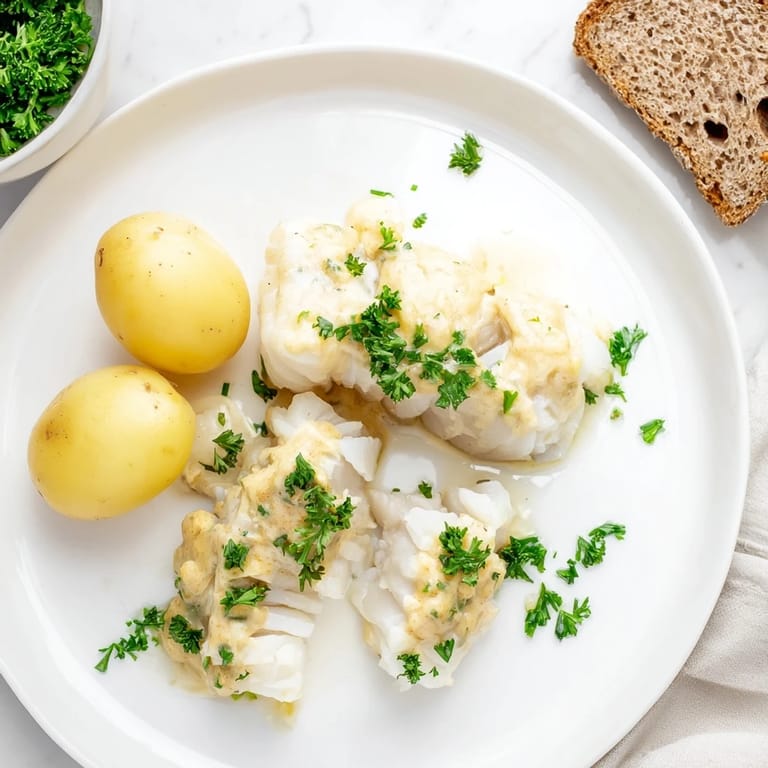
- Plate each serving of hot lutefisk alongside boiled potatoes and a slice of crispbread. Spoon that creamy mustard sauce generously over everything, and if you have fresh parsley, scatter a little across the top.
 Pin it
 My cousin used to joke that lutefisk was the ultimate test of family loyalty—you ate it because you loved the people serving it. But after my first real meal of it, I got it. This isn't a dish built on pretense or tradition for tradition's sake. It's humble, nourishing, and quietly generous. It asks you to slow down and pay attention.
The Soaking Ritual
The six-day soak is where the real cooking happens, and it's worth treating it with care. Your refrigerator becomes a laboratory of transformation—each daily water change is a small conversation with the fish, gradually coaxing it back to life. I've found that setting phone reminders helps if you have a busy schedule; the consistency matters more than precision. One year I stretched it to seven days by accident, and the fish became even more tender, so don't panic if life gets in the way. The process is forgiving as long as you're changing the water regularly and keeping everything cold.
The Sauce That Changes Everything
A creamy mustard sauce might sound like an afterthought, but it's the reason this dish works. The mellow richness of the béchamel plays beautifully against the sharp, complex mustard, creating something neither ingredient could do alone. I've experimented with adding a whisper of white wine, a hint of lemon zest, or even a small spoonful of capers, and while they're interesting, they can overshadow the fish. Stick with the mustard—it knows what it's doing.
Making It Your Own
Traditionalists might serve lutefisk with nothing but butter and salt, and there's wisdom in that simplicity. But I've also had it with crispy bacon bits scattered on top, a handful of fresh dill stirred into the sauce, or even a small spoonful of sour cream alongside. The fish is blank enough to support whatever your table needs.
- Try warming the crispbread slightly in the oven so it stays crisp rather than softening immediately on the hot plate.
- Fresh parsley matters more than you'd think—the brightness cuts through the richness and wakes up your palate.
- Pair this with a cold beer or, if you're feeling Norwegian, a small glass of aquavit chilled in the freezer.
 Pin it
 There's something profound about a dish that asks you to wait, to trust time and cold water and patience. Lutefisk teaches you that some meals are worth the ceremony.
Recipe FAQs
- → How long should the dried cod be soaked?
The cod requires 5 to 6 days of soaking in cold water, with daily water changes to properly rehydrate and soften the fish.
- → What is the best way to ensure the fish flakes easily?
Baking the soaked fish covered with foil at 200°C for 25–30 minutes helps retain moisture and achieves a delicate, flaky texture.
- → Can gluten-free flour be used in the mustard sauce?
Yes, substituting all-purpose flour with a gluten-free alternative works well without compromising the sauce's texture.
- → What side dishes traditionally accompany this dish?
Boiled potatoes and crispbread or flatbread are customary accompaniments, complementing the fish and mustard sauce perfectly.
- → How is the mustard sauce prepared to avoid lumps?
Whisking the flour with melted butter briefly before gradually adding milk and stirring continuously helps achieve a smooth, lump-free mustard sauce.