 Pin it
 There's something about the sizzle and steam of meatballs hitting a hot pan that makes you feel like you're cooking something special, even on a regular Tuesday night. I first stumbled into making teriyaki meatballs when I had friends coming over and wanted something that felt restaurant-quality but wouldn't keep me trapped in the kitchen all evening. The combination of juicy beef, that glossy sweet-savory sauce, and the cool crunch of fresh cucumber became my go-to comfort meal. What surprised me most was how quickly it came together once I realized oven-baking the meatballs meant I could multitask without constantly fussing over them. Now it's the dish people ask me to make, and honestly, I never get tired of it.
I remember bringing this to a dinner party where someone had just moved back to the city, and watching their face light up when they tasted it made me realize food really does carry moments worth sharing. Everyone asked for seconds, and the conversation just flowed around that table in a way that made the whole night feel effortless. That's when I knew this recipe deserved a permanent spot in my regular rotation.
Ingredients
- Ground beef or chicken (500 g): I prefer beef for its richness, but chicken works beautifully if you want something lighter—just don't overdo the mixing or they'll turn dense.
- Egg (1 large): This binds everything together without making the meatballs heavy, so resist the urge to add more.
- Panko breadcrumbs (40 g): They keep things tender in a way regular breadcrumbs can't, and they're worth seeking out if you don't have them.
- Garlic and ginger (2 cloves garlic, 1 Tbsp ginger): Fresh is non-negotiable here—bottled versions lose their punch and change the whole flavor profile.
- Spring onions (2, finely chopped): They add a quiet brightness that balances all the savory elements perfectly.
- Soy sauce (2 Tbsp) and sesame oil (1 Tbsp): These two create the backbone of flavor in the meatballs themselves, so quality matters more than you'd think.
- Salt and black pepper (1/2 tsp and 1/4 tsp): Season conservatively here since the sauce adds more salt later.
- Soy sauce (120 ml), mirin (60 ml), and water (60 ml): The sauce trio—mirin adds sweetness and body that sugar alone can't match, and water keeps it balanced.
- Brown sugar and honey (2 Tbsp and 1 Tbsp): Together they create a deeper, more complex sweetness than using one or the other.
- Rice vinegar (1 Tbsp): This brightens everything at the last moment, cutting through richness so nothing feels heavy.
- Cornstarch slurry (2 tsp cornstarch plus 2 tsp water): This is what makes the sauce glossy and gives the meatballs something to cling to.
- Jasmine or sushi rice (240 g uncooked): Jasmine rice has a subtle fragrance that complements the sauce without competing with it.
- Cucumber (1 medium), sliced thin: The cool freshness is essential—it prevents the whole dish from feeling too heavy and syrupy.
- Toasted sesame seeds (2 Tbsp) and spring onion garnish: These finishes add texture and a second wave of flavor that makes every bite interesting.
Tired of Takeout? 🥡
Get 10 meals you can make faster than delivery arrives. Seriously.
One email. No spam. Unsubscribe anytime.
Instructions
- Start your rice first:
- Get the rice cooking according to package directions and leave it undisturbed—this way it'll be perfectly ready when everything else comes together. If you're nervous about timing, a rice cooker takes all the guesswork out of it.
- Prepare your workspace:
- Preheat your oven to 200°C (400°F) and line a baking sheet with parchment paper while you gather your ingredients. This small step prevents scrambling later and means your meatballs can go straight from bowl to oven.
- Mix the meatball mixture gently:
- Combine the ground meat, egg, breadcrumbs, minced garlic, ginger, spring onions, soy sauce, sesame oil, salt, and pepper in a large bowl, but here's the trick—mix only until everything just comes together. Overworking the mixture is what turns meatballs tough and dense, so stop as soon as you can't see any dry spots.
- Shape and arrange:
- Wet your hands slightly to prevent sticking, then gently roll the mixture into 20–24 small meatballs and space them out on your prepared baking sheet. They don't need to be perfect—slight imperfections actually help them cook more evenly.
- Bake until golden:
- Slide them into the oven for 15–18 minutes, checking around the 15-minute mark—you want them cooked through with a light golden exterior, but still tender inside. The parchment paper means zero cleanup on this part, which I deeply appreciate.
- Build your teriyaki sauce:
- While the meatballs bake, combine soy sauce, mirin, water, brown sugar, honey, and rice vinegar in a small saucepan over medium heat. Stir occasionally until the sugar dissolves completely and the mixture starts to simmer gently—you'll see little bubbles breaking the surface.
- Thicken with the cornstarch slurry:
- Once the sauce is simmering, give your cornstarch slurry a quick stir to recombine it, then pour it slowly into the sauce while stirring constantly. Simmer for just 1–2 minutes more until the sauce becomes glossy and thickened enough to coat a spoon, then take it off heat before it becomes too thick.
- Coat the meatballs:
- Transfer your baked meatballs to the saucepan and gently toss them until every piece is coated in that beautiful glossy sauce. Work gently so they don't break apart, but make sure each one gets its shine.
- Assemble your bowls:
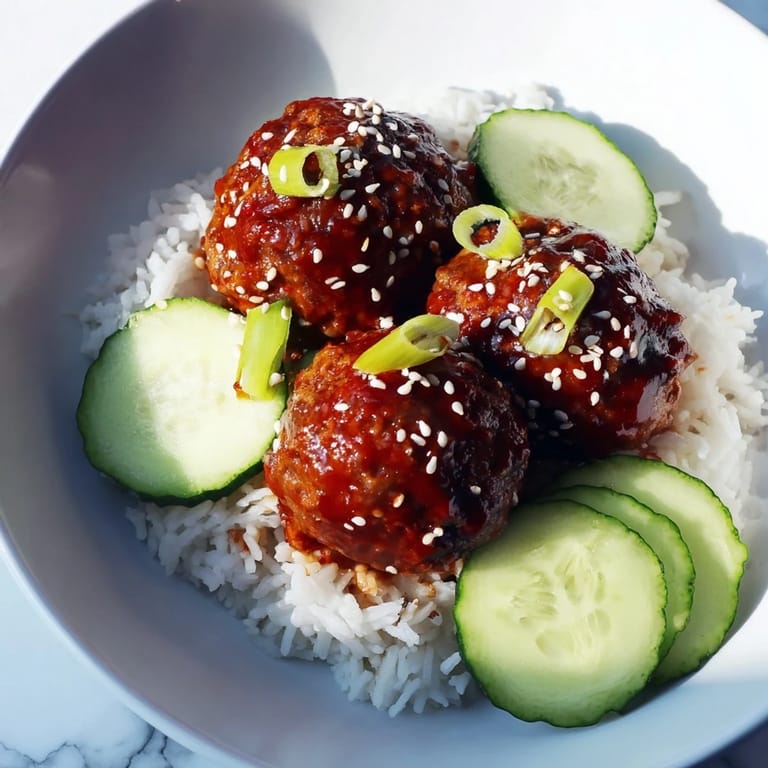
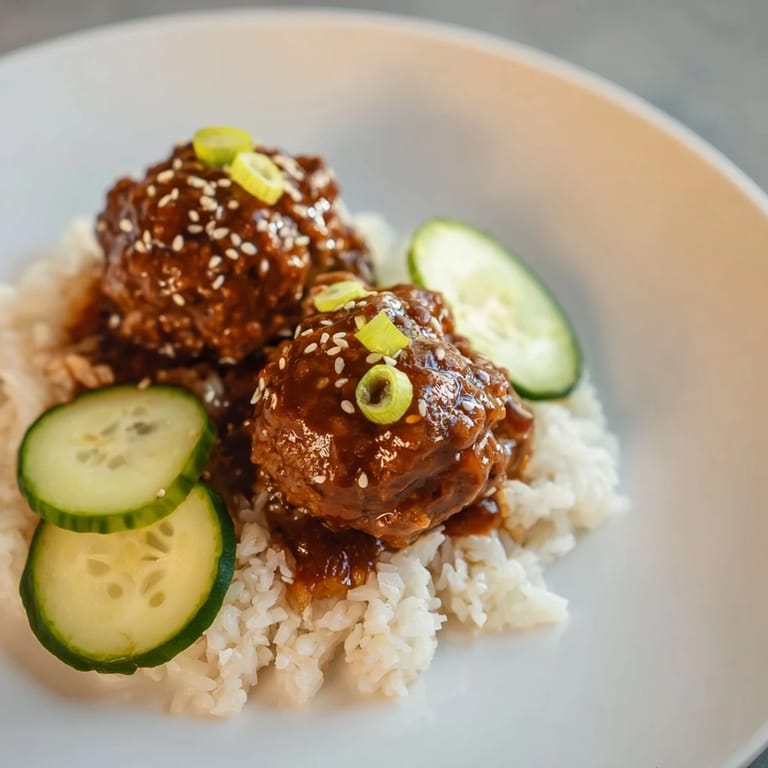
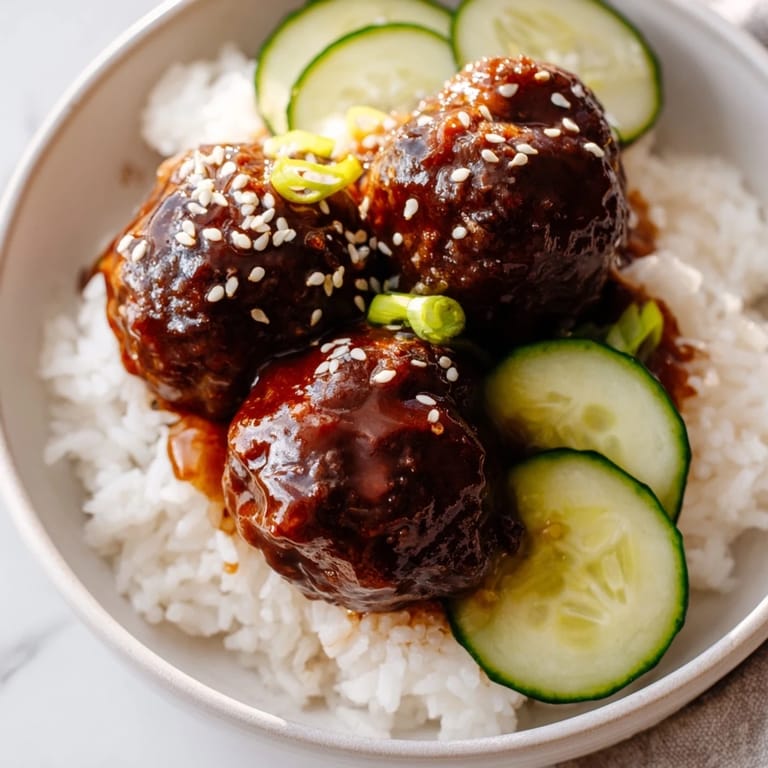
- Divide the warm rice among four bowls, creating a small nest in the center of each. Top with the glazed meatballs, scattered cucumber slices, a generous pinch of toasted sesame seeds, and the remaining sliced spring onions for color and freshness.
- Serve immediately:
- This dish tastes best eaten right away while the rice is still steaming and the meatballs are at their most tender. The contrast between warm and cool is part of what makes it so satisfying.
 Pin it
 There was an evening when my partner came home from a long day, and I had these bowls waiting with the table already set and a candle burning. We barely talked through dinner because we were too busy eating, and afterward they just said, 'This is exactly what I needed tonight.' That's when I realized this recipe had become more than just food—it was something I could offer that felt both thoughtful and genuine.
Why This Sauce Is Worth Your Attention
The teriyaki sauce is honestly the star of this show, and understanding how it works will change how you approach Japanese-inspired cooking forever. The mirin brings a subtle sweetness and body that regular sugar can't achieve, while the rice vinegar cuts through all that richness at the last second with brightness. When you watch the cornstarch slurry transform a thin liquid into something glossy and cling-worthy, you'll understand why this particular combination of ingredients matters—it's not just about flavor, it's about how everything comes together visually and texturally on the spoon.
Customizing Without Losing the Magic
The beauty of this recipe is how forgiving it is once you understand the core structure. Swap ground turkey or pork for the beef and you'll get a different flavor experience but the same satisfying result—I've made it with turkey when I wanted something lighter and honestly couldn't tell a huge difference in how happy the dish made me. You can layer in steamed broccoli, edamame, or even pickled ginger without disrupting the balance, as long as you're thinking about how each addition contributes a different note. The key is respecting the rice-meatball-sauce-fresh vegetable framework that makes this work so well.
Making It Work For Your Kitchen
One afternoon I realized I could make an entire batch of meatballs and freeze them uncooked, then bake them straight from the freezer with just a few extra minutes in the oven. This turned what I thought was a weeknight-only meal into something I could pull together from my freezer on nights when cooking felt impossible. The sauce comes together so quickly that having those meatballs ready was genuinely life-changing for my busy schedule.
- For a gluten-free version, use tamari instead of regular soy sauce and seek out gluten-free panko breadcrumbs—both swap in seamlessly without changing the flavor.
- If you're cooking for one or two people, this recipe halves perfectly, and leftover meatballs actually taste even better the next day when the flavors have melded together.
- A rice cooker removes all the guesswork from rice and frees up a burner, so if you find yourself making this regularly, it's worth considering.
 Pin it
 This recipe has become my answer to 'what should we cook tonight' because it delivers something that tastes like you spent hours in the kitchen, when really you've barely spent 45 minutes. Make it once and it'll probably become one of those dishes you find yourself returning to again and again.
Recipe FAQs
- → Can I use different meats for the meatballs?
Yes, ground turkey or pork can be substituted for beef or chicken while maintaining the dish’s flavor and texture.
- → How do I make the teriyaki sauce thick and glossy?
Stirring in a cornstarch and water slurry while simmering the sauce thickens it and gives a shiny finish ideal for coating the meatballs.
- → What rice is best to serve with this dish?
Jasmine or sushi rice works well due to their fragrant and slightly sticky qualities that complement the flavorful meatballs.
- → Can this dish be made gluten-free?
Yes, using tamari instead of soy sauce and gluten-free breadcrumbs makes it suitable for gluten-free diets.
- → What garnishes enhance the bowl's flavor?
Thinly sliced cucumber, toasted sesame seeds, and sliced spring onions add freshness, nuttiness, and crunch to each serving.
- → Is it better to bake or pan-fry the meatballs?
Baking ensures even cooking and a tender texture without added oil, while pan-frying can add extra crispness on the outside.