 Pin it
 I discovered this umami bomb board during a spirited evening at a tiny Tokyo izakaya, where the chef arranged pickled vegetables and mushrooms with such artistic precision that I nearly forgot to eat. Years later, I recreated that memory in my own kitchen, realizing that the magic wasn't just in the ingredients but in how they told a story of deep, complex flavors dancing together on one beautiful canvas.
I remember preparing this board for my sister's surprise birthday dinner, watching her face light up as she picked through the mushroom fans and discovered the black garlic nestled beneath. In that moment, I understood that food arranged with intention becomes more than sustenance, it becomes a gift.
Ingredients
- Shiitake mushrooms: The backbone of umami depth, these meaty beauties release their savory essence when sautéed and deserve the gentle heat to bring out their natural richness.
- King oyster mushrooms: Their firm texture holds up beautifully to cooking and creates those elegant overlapping fan shapes that make the board sing visually.
- Enoki mushrooms: Delicate and tender, a quick blanch keeps them pristine and adds a whisper-soft texture that contrasts with heartier elements.
- Sesame oil: Use it sparingly, as its nutty intensity transforms simple mushrooms into something profound and aromatic.
- Soy sauce or tamari: The umami glue that binds everything together, so don't skimp on quality here.
- Mirin: A touch of natural sweetness that balances the savory notes and adds subtle depth, though you can skip it if you prefer purely savory.
- Roasted seaweed snacks: Paper-thin sheets of oceanic umami that add both visual drama and that satisfying salty-sweet crunch your guests will crave.
- Seasoned seaweed salad: Soft and yielding, this adds umami layers and a silky texture variation across the board.
- Nori strips: Cut fresh just before serving to maintain their satisfying snap and prevent them from softening.
- Pickled daikon radish: The bright, tangy counterpoint that keeps the board from feeling heavy, and their crunch reminds you that contrast is everything.
- Pickled ginger: A small amount goes a long way, offering sharp clarity between bites and aiding digestion as it has for centuries.
- Edamame: Steamed and cooled, they provide tender pops of protein and a clean, grassy sweetness that rounds out the umami storm.
- Black garlic: Fermented until sweet and molasses-like, it adds complexity without the harsh bite of raw garlic, a subtle sophistication.
- Fermented black beans: These funky little treasures are pure umami in miniature, tossed gently through the board for guests who seek bold flavors.
- Roasted cashews or peanuts: The creamy crunch that nobody realizes they needed until they bite into one and everything suddenly makes sense.
- Fried shallots: Crispy, sweet, and aromatic, they're the final textural anchor that makes every element feel intentional.
- Fresh coriander and chives: Green brightness that wakes up tired palates and proves that herbs aren't just garnish, they're flavor architects.
- Red chili: Optional, but a few thin slices add heat that sneaks up pleasantly and makes people reach for the ponzu.
- Ponzu and spicy sesame dressing: These are your flavor amplifiers, sitting ready to transform each bite into something personal and memorable.
Tired of Takeout? 🥡
Get 10 meals you can make faster than delivery arrives. Seriously.
One email. No spam. Unsubscribe anytime.
Instructions
- Sauté the shiitake and king oyster mushrooms:
- Heat your sesame oil until it shimmers gently, then add the sliced mushrooms in a single layer if you can manage it. Let them kiss the hot pan without stirring for a full minute, listening for that quiet sizzle. After four to five minutes, when their edges have turned golden and released their moisture, add your soy sauce and mirin. Toss them gently for just one more minute, then pull them off the heat and let them cool while you prepare everything else, their aroma filling your kitchen like a quiet promise.
- Blanch the enoki mushrooms:
- Bring a small pot of water to a rolling boil and drop in your delicate enoki mushrooms for just thirty seconds, watching them soften and relax. Drain them immediately and spread them on a clean kitchen towel to cool, being gentle with their tender strands so they don't tangle together.
- Build your artistic foundation:
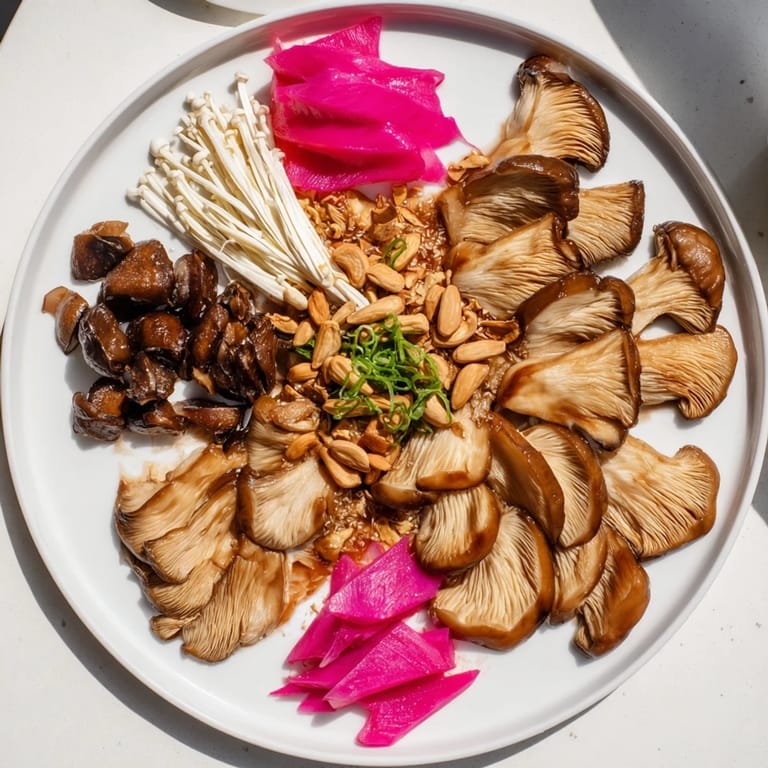
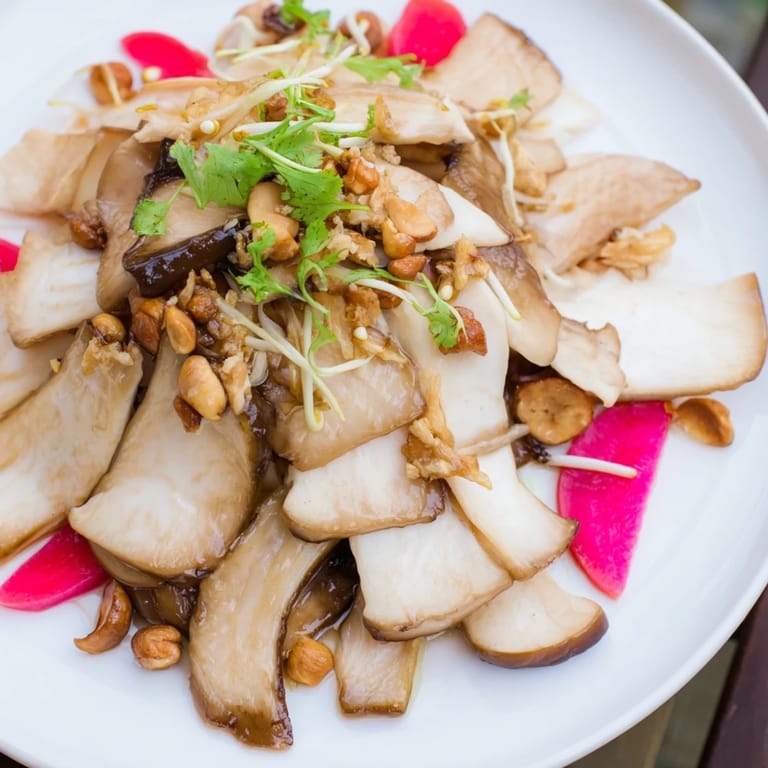
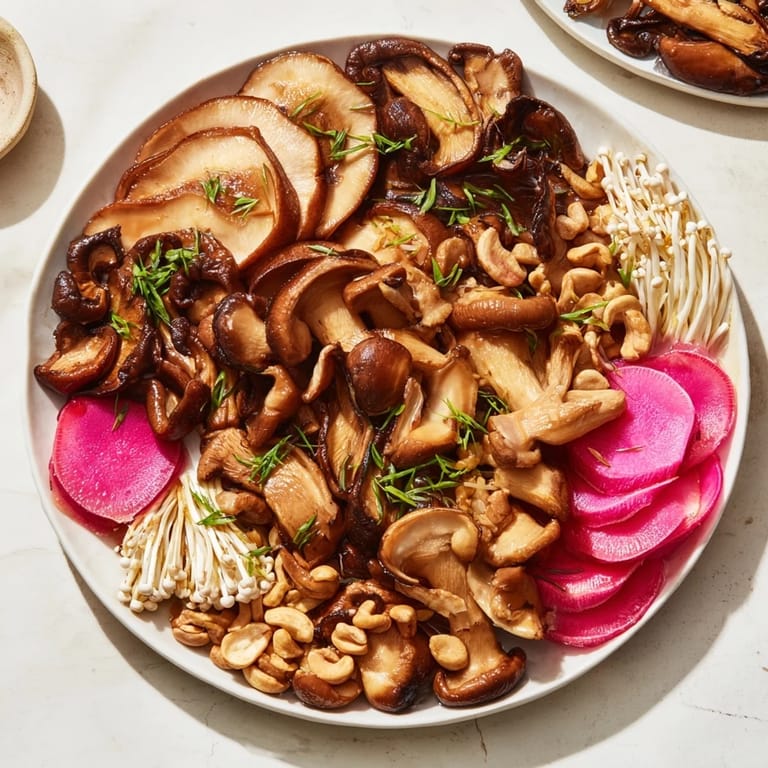
- On your largest board or platter, arrange the cooled mushrooms in overlapping fan patterns, letting each slice lean slightly against its neighbor like a carefully composed still life. Take your time here, as the visual appeal is half the magic.
- Create additional fans with seaweed:
- Use the roasted seaweed snacks and nori strips to build additional fan formations, weaving them through and around the mushrooms to create rhythm and visual interest, like you're conducting an edible orchestra.
- Fill the spaces with umami treasures:
- Nestle small piles of pickled daikon, pickled ginger, steamed edamame, black garlic cloves, and fermented black beans into the remaining gaps. Think of it as placing jewels, each ingredient earning its spot through flavor and appearance.
- Crown it all with texture and color:
- Scatter your roasted nuts and fried shallots across the board like golden confetti, letting some cluster together and others rest as individual accents. Tear or sprinkle the coriander leaves and chives, then add a few ruby slices of red chili if you're feeling bold, creating a sense of organized abundance.
- Anchor the board with dipping sauces:
- Pour your ponzu and spicy sesame dressing into small, beautiful bowls and nestle them into the board itself, making them feel like part of the composition rather than an afterthought.
- Present and invite exploration:
- Set the board in the center of your gathering space immediately before serving, then encourage your guests to build their own flavor combinations, dipping and pairing as their instincts guide them, making each person's experience uniquely their own.
 Pin it
 I'll never forget watching my grandmother, who grew up in Kyoto, examine this board with quiet approval. She picked up a piece of black garlic, nodded slowly, and said simply, 'This is how flavor should be, with respect for each ingredient.' That moment taught me that cooking isn't about showing off, it's about honoring what you're serving.
The Art of Arrangement
This board is as much about visual storytelling as it is about flavor. When you arrange ingredients with intention, you're telling your guests that you've thought about their experience, that you've considered not just what they'll taste but how they'll feel discovering each element. The overlapping fan formations aren't just pretty, they create natural curves that guide the eye and hand toward exploration. Leave some breathing room between clusters so the board feels generous rather than cluttered, and remember that negative space is as important as the food itself.
Timing and Preparation
The beauty of this board is its flexibility with your schedule. You can prepare individual components up to four hours in advance, keeping them in separate containers in the refrigerator, then assemble everything just before your guests arrive. This approach removes the stress of last-minute cooking and guarantees that every element is at its intended temperature and texture when it matters most. The mushrooms actually benefit from sitting for a bit, as their flavors develop and meld slightly with the soy and mirin.
Customization and Personal Touches
While this recipe provides a complete umami experience, the true joy comes from making it your own. Perhaps you have access to specialty mushrooms like maitake or oyster varieties, use them without hesitation. Maybe you prefer the intensity of raw garlic to black garlic, or you'd like to add grilled tofu or marinated tempeh for extra protein. The framework here is solid enough to hold your creativity without falling apart. Some people add thinly shaved vegetables like cucumber or radish for extra freshness, others steep their dipping sauces with additional aromatics like star anise or lemongrass. The most important thing is that this board reflects your taste and your generosity toward those who gather around it.
- Consider adding marinated tempeh or grilled tofu slices if your guests crave additional protein without losing the vegetarian essence.
- Fresh or pickled plum can add another layer of umami complexity if you can source it from Asian markets or online retailers.
- Don't hesitate to substitute mushroom varieties based on what looks beautiful and fresh at your market on any given day.
 Pin it
 This board has a way of bringing people together in a way that normal platters don't, transforming dinner into an experience of discovery and conversation. Serve it with chilled sake or green tea, and watch as your kitchen becomes a place where simple ingredients become the backdrop for something far more meaningful.
Recipe FAQs
- → What mushrooms work best for this board?
Shiitake, king oyster, and enoki mushrooms provide a rich variety of textures and earthy flavors that complement the umami profile.
- → How should the mushrooms be prepared?
Sauté shiitake and king oyster mushrooms in sesame oil with soy sauce and mirin for a golden, flavorful finish; blanch enoki briefly to keep them tender.
- → Can this board be made vegan?
Yes, ensure all sauces and pickled ingredients are plant-based, and add grilled tofu or marinated tempeh for extra protein if desired.
- → What dipping sauces complement the flavors?
Ponzu sauce and spicy sesame dressing add bright and spicy notes that enhance the earthy and oceanic elements on the board.
- → How to create the fan arrangement on the board?
Arrange mushrooms and seaweed in overlapping fan shapes to create an elegant, layered presentation that highlights the variety of textures and colors.
- → What can be paired with this board?
Chilled sake or green tea pairs beautifully, balancing the bold umami flavors and cleansing the palate between bites.