 Pin it
 I still remember the first time I arranged a platter like this at a dinner party—I was nervous about trying something so visually ambitious, but the moment guests arrived and saw that explosion of colors, their faces lit up. It wasn't just food; it was an invitation to slow down, to pick and choose, to enjoy the abundance of fresh, whole ingredients. That night, I learned that the best meals are the ones that celebrate simplicity and beauty in equal measure.
I made this platter for a potluck last spring, and what struck me most was watching people graze on it throughout the afternoon. Someone's young daughter kept coming back for more cucumber and carrots, another friend discovered she actually loves beets through the beetroot hummus, and a picky eater filled half his plate with just berries and snap peas. It became this beautiful, unplanned moment where food brought us all together without any fuss.
Ingredients
- Rainbow carrots, sliced (1 cup): These aren't just pretty—they taste slightly different from orange ones, a bit earthier and sweeter. The variety of colors makes the platter sing.
- Baby cucumbers, sliced or quartered (1 cup): Baby cucumbers are more tender and have fewer seeds than full-size ones. I learned to slice them at an angle to catch the light and make them look almost translucent.
- Cherry tomatoes, assorted colors (1 cup): Mix red, yellow, and even purple tomatoes if you can find them. They should still feel slightly warm from the sun if you're using fresh-picked ones.
- Radishes, thinly sliced (1 cup): Radishes add a crisp bite that balances the sweetness of fruits. Slice them thin so they're delicate and pretty.
- Baby bell peppers, sliced (1 cup): These are sweeter than full-size peppers and eating them raw brings out their candy-like flavor. I always save the prettiest ones whole or in large pieces.
- Snap peas (1 cup): Leave these whole whenever possible—there's something satisfying about eating them straight from the platter with just a pinch of salt.
- Seedless grapes, mixed colors (1 cup): Grapes add a burst of natural sweetness and bridge the gap between vegetables and fruits beautifully.
- Strawberries, halved (1 cup): Choose berries that are still fragrant and slightly firm. Halving them makes them easier to dip.
- Pineapple chunks (1 cup): Fresh pineapple has an almost tropical brightness that wakes up your palate between savory dips and vegetables.
- Kiwi, peeled and sliced (1 cup): Kiwi stays bright green and doesn't brown, which means it looks perfect hours after you've arranged it.
- Classic hummus (1 cup): This is your anchor dip—reliable, creamy, and everyone recognizes it.
- Beetroot hummus (1 cup): The earthiness of beets transforms hummus into something unexpected and beautiful. It's a conversation starter.
- Guacamole (1 cup): Guacamole is richness balanced with fresh lime juice. Make it as close to serving time as you can to keep it vibrant.
- Cashew tzatziki (1 cup): This creamy dip mimics the cooling effect of traditional tzatziki. Soaked cashews create a luxurious, velvety texture.
- Pomegranate seeds (1/4 cup): These jewel-like seeds add pops of color and sweet-tart flavor. They also look magical scattered across the platter.
- Fresh herbs—mint, basil, parsley (1/4 cup): Herbs aren't just garnish; they add freshness and fragrance to the whole experience.
- Edible flowers (optional): If you can find pansies, violas, or nasturtiums, they elevate this from a platter to edible art.
- Gluten-free crackers or pita chips (1 cup): These give people something to anchor their dips and create textural contrast.
Tired of Takeout? 🥡
Get 10 meals you can make faster than delivery arrives. Seriously.
One email. No spam. Unsubscribe anytime.
Instructions
- Prep like you mean it:
- Wash and thoroughly dry all vegetables and fruits—moisture is the enemy of both crispness and visual appeal. Pat everything dry with clean kitchen towels. As you slice, arrange each type into its own small bowl or pile on your cutting board. This step feels meditative; you're creating order before you create beauty.
- Choose your canvas:
- Select a large platter or wooden board that's going to hold all this abundance. I prefer something with some depth so things don't roll off, and ideally something in a neutral color so the vibrant produce becomes the star.
- Place the dips with intention:
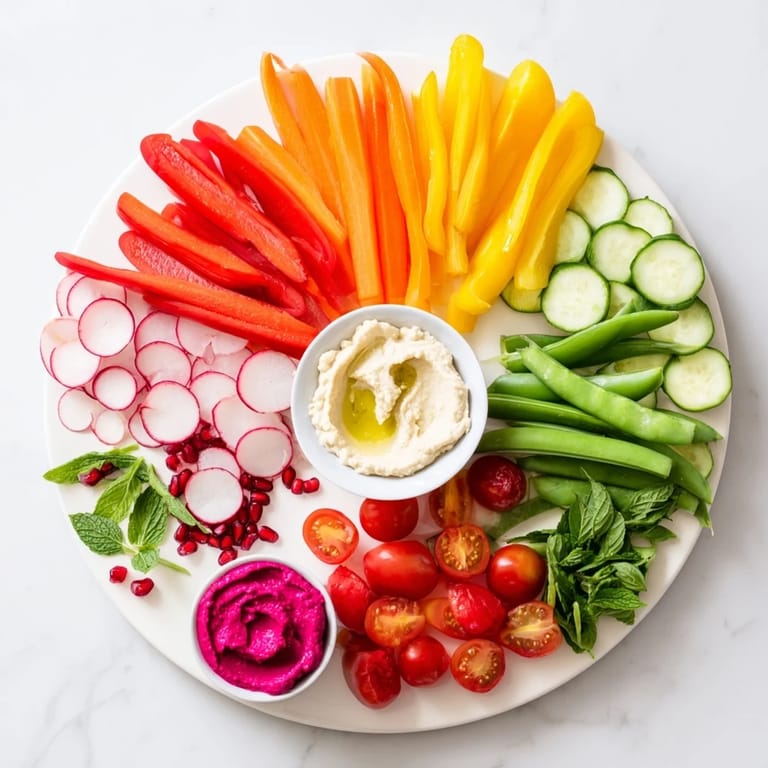
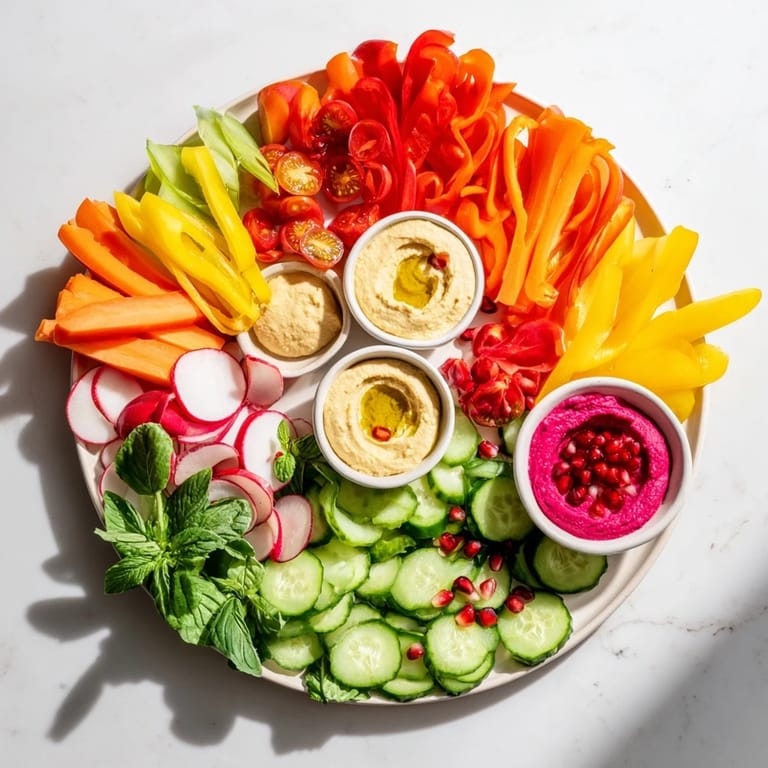
- Put your small bowls of dips at different compass points on the platter—one near the top, one at the bottom, one on each side. This creates natural pathways for guests to move around the platter and ensures everyone can reach dip without causing a pile-up.
- Build color-blocked sections:
- Start grouping vegetables and fruits by color, creating little neighborhoods of reds, yellows, greens, and purples. The key is contrast—place cooler tones next to warm ones. Radishes next to grapes. Carrots next to cucumbers. This isn't random; it's intentional visual storytelling.
- Fill the gaps with grace:
- Use pomegranate seeds, fresh herbs, edible flowers, and crackers to fill any empty spaces. These finishing touches aren't filler; they're what make the platter feel complete and abundant. Scatter herbs so they look windblown, not arranged in rows.
- Serve with confidence:
- If you're serving right away, do it immediately while everything is at peak crispness. If not, cover loosely with plastic wrap and refrigerate. When you pull it out, everything should look just as fresh as the moment you finished it.
 Pin it
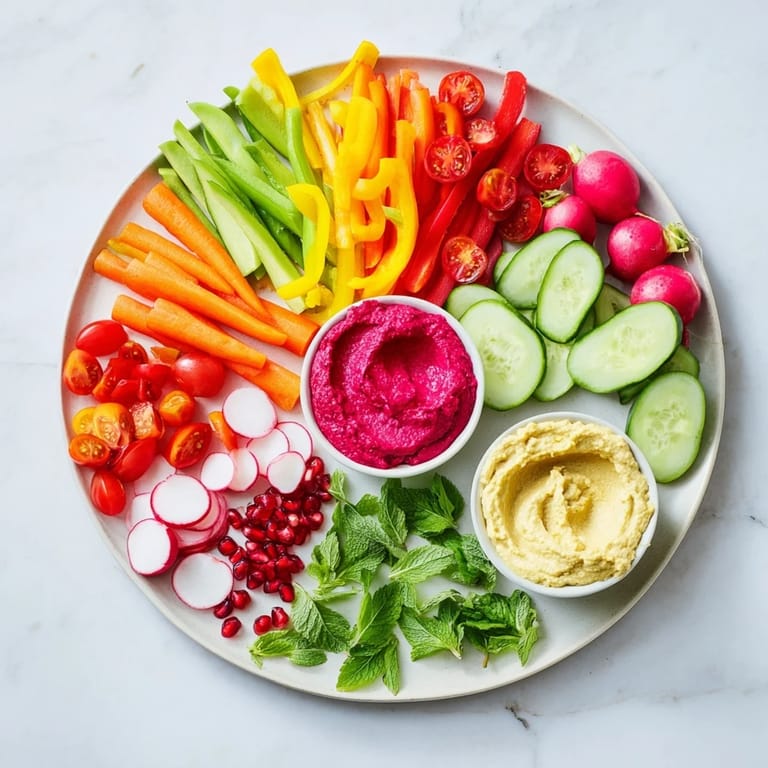
 What moves me most about this platter is that it requires no special cooking skills, no stress, and no apologies. It celebrates ingredients exactly as nature made them, which feels like a gift in a world where we're often told that food has to be complicated to be impressive. My friends still text me asking how I 'made' this—and I love telling them that the recipe isn't mine; it's the farmers' market's.
Arranging Like an Artist
The secret to a platter that stops people in their tracks is thinking about it like you're painting rather than just organizing. Colors should flow and complement each other. Texture matters too—the smooth creaminess of a dip next to the crisp geometry of carrot sticks, the delicate translucence of thinly sliced radishes next to the jewel-like opacity of grapes. Step back frequently and look at the whole platter from above, adjusting until it feels balanced. Your eyes should be drawn to naturally interesting points, not confused by too much same-colored produce in one spot.
Building Flavor Layers
Each dip plays a different role. The classic hummus is your safe anchor—familiar and grounding. The beetroot hummus brings earthiness and subtle sweetness. Guacamole offers richness and freshness together. And the cashew tzatziki brings cooling creaminess. The vegetables and fruits are your flavor vehicles, each one tasting slightly different when paired with a different dip. Encourage people to try combinations they wouldn't normally make—a strawberry with hummus, a snap pea with guacamole. The discovery is part of the joy.
Making It Your Own
This platter is infinitely adaptable. Follow the seasonal rhythm of your local farmers market instead of forcing strawberries in January if they taste like nothing. I've made winter versions with roasted root vegetables, spring versions heavy on young greens and peas, and summer versions where stone fruits take center stage. The structure stays the same; only the ingredients change. Add roasted chickpeas for crunch, marinated olives for brine-forward flavor, or fresh herbs as little flavor bombs. Serve it with a chilled white wine, sparkling water with lemon, or even a crisp rosé if you're feeling celebratory.
- Always double-check labels on crackers, dips, and any pre-made components if you or your guests have allergies—ingredients vary by brand and sometimes hide surprise allergens.
- If you need to make this nut-free, swap the cashew tzatziki for something else entirely—a coconut-based dip or a sunflower seed spread work beautifully.
- A light drizzle of good olive oil and a whisper of sea salt over the vegetables just before serving takes this from simple to restaurant-quality in thirty seconds.
 Pin it
 Every time I make this platter, I'm reminded that feeding people doesn't require complexity or stress. Sometimes the most generous thing you can offer is permission to simply enjoy fresh, whole, beautiful food without any fuss. That's what this platter is about.
Recipe FAQs
- → What fresh vegetables are included in the platter?
The platter features rainbow carrots, baby cucumbers, cherry tomatoes in assorted colors, radishes, baby bell peppers, and snap peas.
- → Which fruits complement the vegetable sections?
Fruits include seedless mixed-color grapes, halved strawberries, pineapple chunks, and peeled sliced kiwi.
- → What plant-based dips are served alongside the platter?
Classic hummus, beetroot hummus, guacamole, and cashew tzatziki offer creamy and flavorful options for dipping.
- → How can the platter be visually enhanced?
Color-blocked arrangements with contrasting hues, plus garnishes like pomegranate seeds, fresh herbs, and edible flowers, create an appealing presentation.
- → Are there any allergy considerations to keep in mind?
Cashew tzatziki contains nuts; hummus includes sesame (tahini). Gluten-free crackers or pita chips should be verified for gluten. Adjust ingredients accordingly.
- → Can seasonal variations be used for this platter?
Yes, fresh vegetables and fruits can be swapped seasonally to maintain freshness and variety.