 Pin it
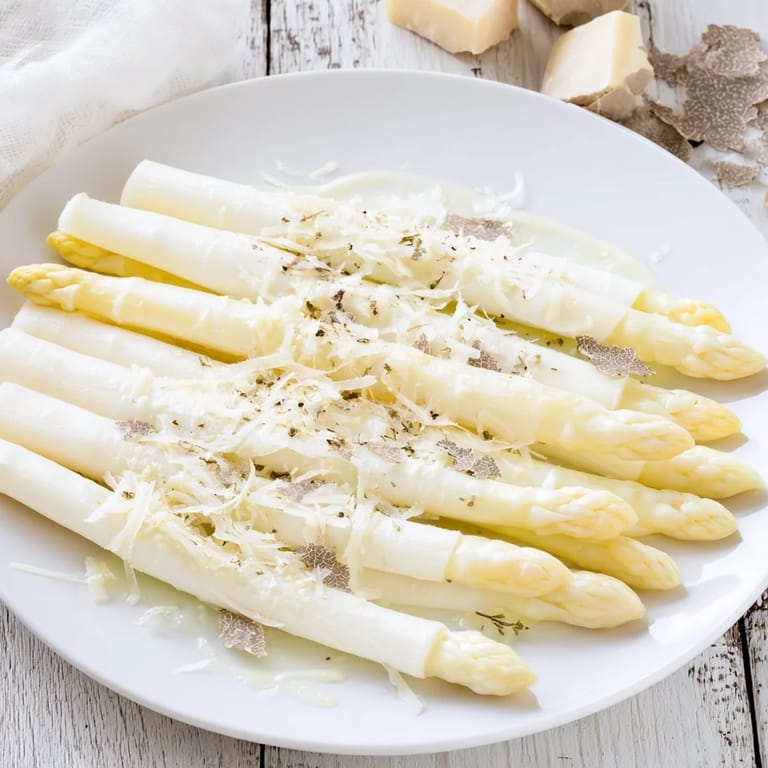
 I discovered this dish during a spring visit to a Michelin-starred restaurant in Lyon, where the chef presented white asparagus with such quiet confidence that I knew I had to recreate it at home. The pale stalks gleamed under restaurant lighting, draped with silken cheese and whisper-thin truffle, and I spent the entire meal mentally noting textures and flavors. Months later, standing in my own kitchen with fresh asparagus from the market, I realized this wasn't about replicating perfection—it was about understanding why simplicity, when done carefully, becomes unforgettable. The dish taught me that restraint and ingredient quality can speak louder than complexity. Now it's become my go-to when I want to impress without fussing.
I made this for my partner one evening when we were celebrating something small—just a quiet dinner at home—and watching their face light up at the first bite reminded me why cooking matters. There was something about the combination of creamy burrata melting slightly against the warm asparagus, the earthy whisper of truffle, and the clean brightness of lemon that felt like I'd given them something real. That night, this dish stopped being a restaurant memory and became ours.
Ingredients
- White asparagus (500 g): The star here—seek out thick, firm spears from a farmers market or specialty grocer if you can, as they'll have better flavor and texture than thin ones. Peel them gently to remove the fibrous outer layer, which makes all the difference.
- Burrata or buffalo mozzarella (75 g): The creaminess is essential, so make sure yours is fresh and properly drained. If you can't find burrata, fresh mozzarella works beautifully too.
- Aged Comté cheese (75 g): Slice it thin on a mandoline or with a vegetable peeler for those delicate curls that catch the light. Gruyère is a solid substitute if you need one.
- Parmigiano-Reggiano (50 g): Buy a wedge and grate it yourself—pre-grated versions lose their brightness. The umami punch here balances everything else on the plate.
- Fresh black truffle (15 g) or truffle paste (1-2 tbsp): If fresh truffle is out of reach or budget, a high-quality paste gives you the earthiness without breaking the bank. A few shavings go a long way.
- Extra-virgin olive oil (2 tbsp): This isn't the place to use cooking oil—your best bottle matters here since it's not being heated.
- Fresh lemon juice (1 tbsp): Always squeeze fresh; bottled will taste sharp and thin by comparison.
- Flaky sea salt and white pepper: Sea salt adds texture and brightness; white pepper keeps the presentation clean and doesn't leave black specks.
- Microgreens or chervil (optional): A tiny garnish that adds color and a whisper of peppery freshness.
Tired of Takeout? 🥡
Get 10 meals you can make faster than delivery arrives. Seriously.
One email. No spam. Unsubscribe anytime.
Instructions
- Prepare the asparagus:
- Bring a pot of generously salted water to a gentle simmer and add the trimmed, peeled asparagus spears. Watch for the moment they turn bright green and just yield to a fork—usually 8 to 10 minutes depending on thickness. The second they're done, plunge them into an ice bath to stop the cooking and lock in that color and subtle snap.
- Arrange on the plate:
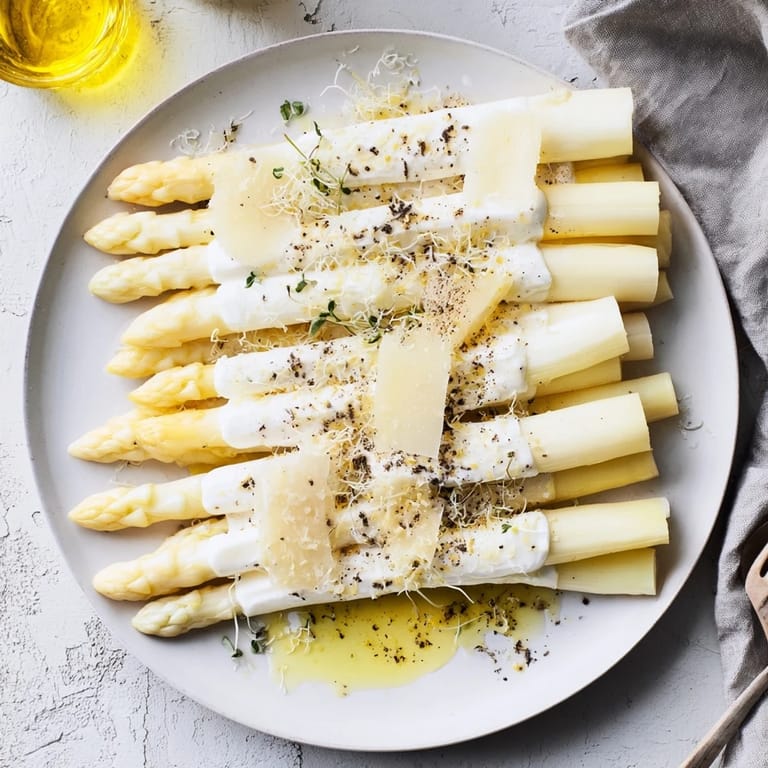
- Slice each cooled spear lengthwise down the middle and lay them out on chilled plates with a bit of space between them, as if you're placing them on a canvas. The ritual of this step—taking time to arrange rather than just pile—is where the elegance begins.
- Layer the cheeses:
- Tear the burrata into tender, irregular pieces and scatter them over the asparagus, then add your thin Comté curls and a light snowfall of grated Parmigiano-Reggiano. Each layer adds a different flavor and texture, so go slowly and let each one breathe.
- Add the truffle:
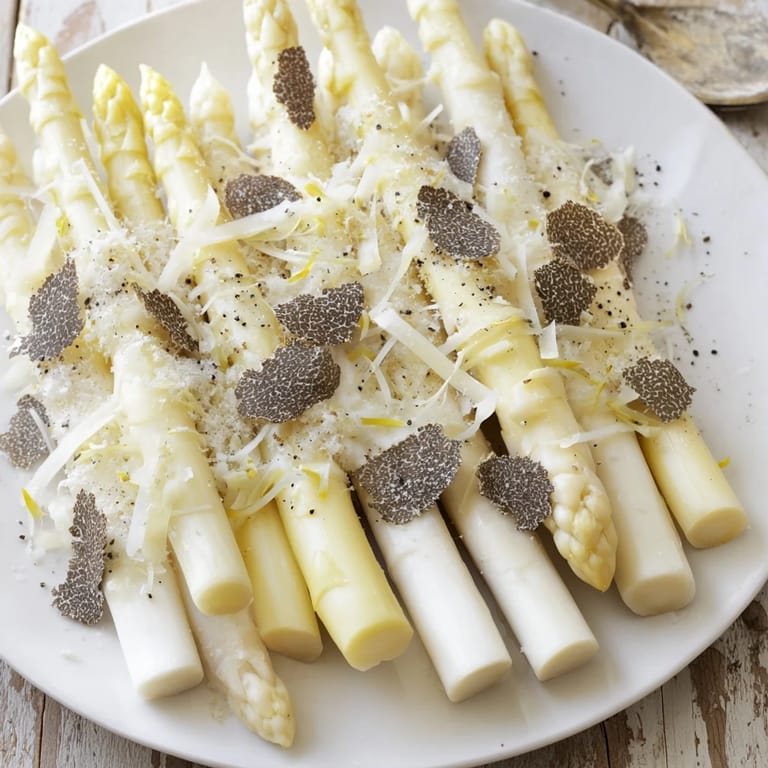
- If using fresh truffle, use a truffle slicer or sharp vegetable peeler to create those delicate, almost transparent stripes that look like artwork. If using paste, drizzle it in thin lines using a small spoon or squeeze bottle for control and precision.
- Dress and serve:
- Whisk together the olive oil, lemon juice, salt, and white pepper, then drizzle it over the entire dish in a gentle, even motion. Finish with a small handful of microgreens if you like, and serve immediately while the plates are still cool and the cheese is at its most luxurious.
 Pin it
 I learned the importance of this dish one rainy Wednesday when I made it for a friend who was going through something difficult, and she told me later that the care in every small detail—the cold plate, the gentle arrangement, the way nothing felt rushed—had meant more than the flavor itself. Food isn't always about taste; sometimes it's about the attention you've paid.
The Art of White Asparagus
White asparagus grows underground, shielded from sunlight, which gives it its pale color and subtle, almost sweet flavor compared to its green cousin. It's more delicate, both in taste and texture, which is why this dish celebrates it so simply. When you can find it fresh—usually in spring—it's worth the search.
Why This Deserves a Good Plate
I used to serve this on whatever plate I grabbed from the cupboard, until someone pointed out that a cold plate actually preserves the temperature and texture of the cheese and asparagus for those precious minutes while you're eating. Now I keep my favorite plates in the freezer before service, and it genuinely changes the experience. Small gestures like this transform a dish from nice to memorable.
Wine, Cheese, and Timing
This dish sings alongside a crisp white wine—Sancerre if you're feeling French, or a Grüner Veltliner if you want something with a bit more minerality. The acidity cuts through the richness of the cheese and keeps your palate bright. Some nights I serve this as a first course before something heartier, other nights it becomes a light lunch with fresh bread and nothing else.
- If you can't find Comté, Gruyère or even a mild goat cheese will work beautifully and shift the flavor in interesting ways.
- A few drops of truffle oil whisked into the dressing adds depth without needing expensive fresh truffles.
- This dish is best served immediately, so have everything prepped and your plates chilled before you start cooking the asparagus.
 Pin it
 This dish reminds me that not every meal needs to be complicated to feel special. Sometimes it's the simplicity, the cold plate, the careful slicing, and the quiet confidence that you know what you're doing that makes someone feel cared for.
Recipe FAQs
- → How should I cook the white asparagus for best texture?
Simmer the peeled asparagus in salted water for 8–10 minutes until tender but still firm, then cool rapidly in an ice bath to preserve texture and color.
- → Can I substitute the cheeses used?
Yes, mild goat cheese or Gruyère can replace Comté, while burrata can be swapped with buffalo mozzarella without losing creamy texture.
- → What is the best way to incorporate the black truffle?
Use a truffle slicer or sharp peeler to shave thin stripes of fresh truffle, or drizzle high-quality truffle paste evenly over the dish for an aromatic finish.
- → What kind of dressing complements the flavors?
A simple dressing of extra-virgin olive oil, fresh lemon juice, flaky sea salt, and white pepper balances the richness and adds brightness.
- → Are there recommended garnishes to enhance the dish?
Microgreens or fresh chervil add a subtle herbal note and a touch of color, enhancing the presentation and flavor harmony.