 Pin it
 I discovered the magic of the Keto Power Plate on a lazy Sunday afternoon when I was hosting friends who were all on different diets. Instead of cooking multiple meals, I raided my charcuterie board collection and arranged everything with intention—premium meats, aged cheeses, and vibrant vegetables—and something clicked. Everyone gathered around, filling their plates with exactly what they needed, and the conversation flowed as naturally as the wine. That's when I realized this wasn't just a meal; it was an edible invitation to slow down and enjoy real food together.
I'll never forget the first time my sister—who'd just started her keto journey—saw this platter come to the table. Her eyes lit up like I'd just served her a five-course meal, even though all I'd done was arrange beautiful ingredients thoughtfully. She made her plate three times that evening, each combination different from the last, and that's when I understood: presentation matters, especially when you're eating for wellness rather than indulgence.
Ingredients
- Sliced roast beef (120 g): Choose high-quality, thinly sliced beef—it's the foundation that gives your platter substance and richness. The thin slices fold beautifully and create elegant layers when arranged properly.
- Smoked turkey (120 g): This brings a lighter, subtly smoky element that balances the richness of the beef and adds textural variety to your arrangement.
- Prosciutto (120 g): The delicate, salty prince of this platter—use the best you can find because its flavor speaks for itself when it's high quality.
- Salami, sliced (100 g): Choose a quality European salami with good marbling; it adds both color contrast and a satisfying, savory punch.
- Aged cheddar, cubed (100 g): The familiar friend that everyone loves—aged cheddar has sharper, deeper flavors than younger versions and holds its shape beautifully on the board.
- Gruyère, sliced (100 g): This is the cheese that elevates everything around it; its nutty complexity makes people stop and say 'what is that cheese?'
- Manchego, sliced (100 g): A Spanish beauty with subtle caramel notes that adds sophistication and visual warmth with its golden hue.
- Cherry tomatoes, halved (1 cup): These bright jewels provide fresh sweetness and juicy pops of color—choose vine-ripened for maximum flavor.
- Cucumber, sliced (1 cup): The refreshing counterpoint that cleanses the palate between bites of rich meats and cheese.
- Radishes, sliced (1 cup): I learned to love these crispy, peppery additions because they add crunch and keep things from feeling too heavy.
- Baby bell peppers, sliced (1 cup): Sweet and colorful—these are nature's confetti and they make your platter sing visually.
- Celery sticks (1 cup): The crisp, clean foundation vegetable that tastes better when you serve it fresh and cold alongside rich proteins.
- Green olives (1/4 cup): Briny little flavor bombs that punctuate the platter and add an unexpected savory depth.
- Black olives (1/4 cup): Darker, earthier counterpart that creates visual balance and adds another layer of complexity.
- Fresh parsley, chopped (2 tbsp): This final garnish isn't just decoration—it adds a fresh, herbaceous whisper that ties everything together.
- Extra virgin olive oil (2 tbsp): Quality matters here; a robust, peppery oil brings the vegetables to life in a way that regular oil simply cannot.
- Freshly ground black pepper, to taste: Always, always grind it fresh right before serving—pre-ground pepper tastes like disappointment by comparison.
Tired of Takeout? 🥡
Get 10 meals you can make faster than delivery arrives. Seriously.
One email. No spam. Unsubscribe anytime.
Instructions
- Gather and prepare your canvas:
- Start with your largest, most beautiful serving platter—this is going to be a work of art. Make sure everything is chilled before you begin; cold ingredients not only taste better but stay fresher longer throughout the meal.
- Arrange the meats with intention:
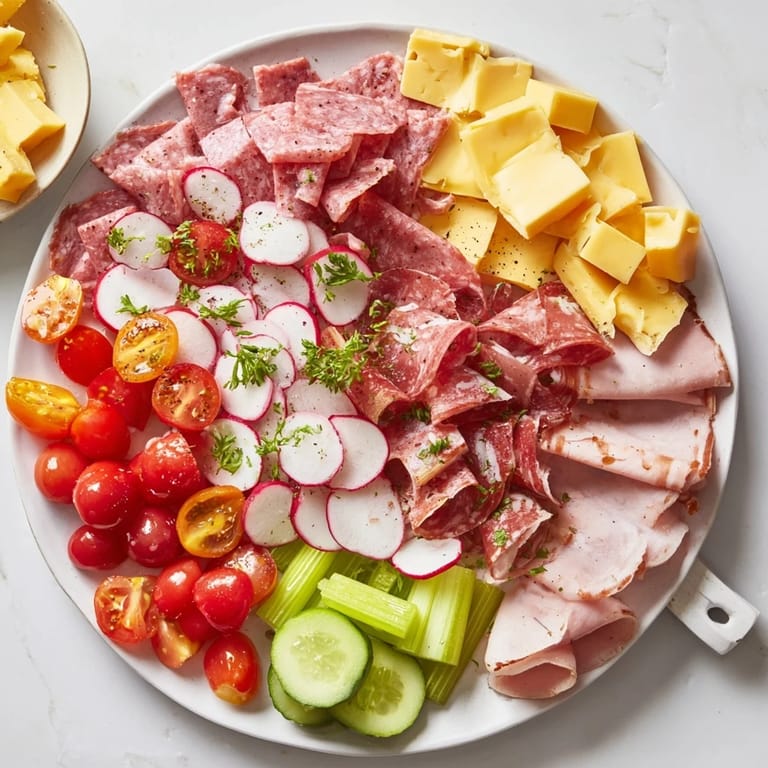
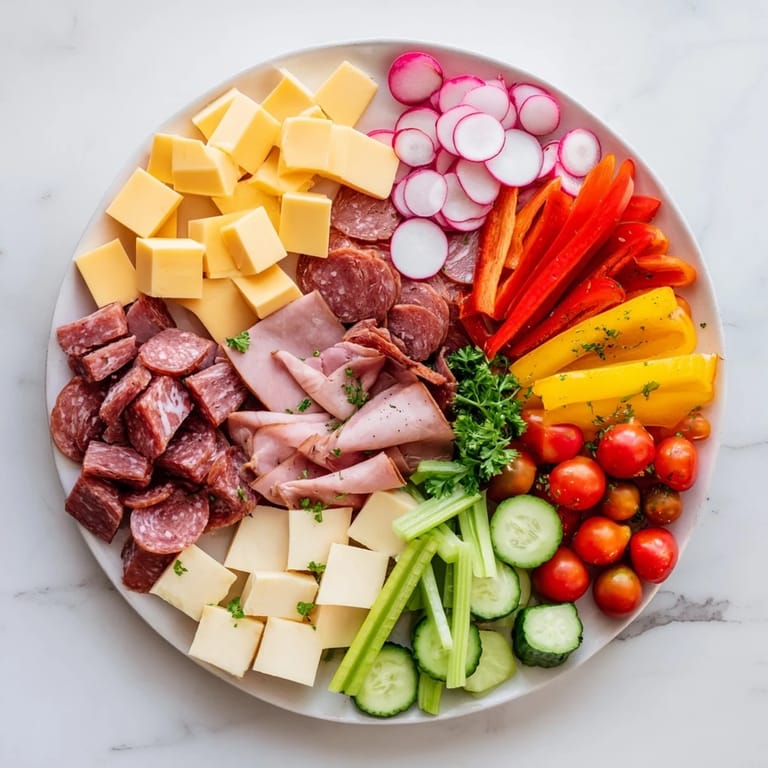
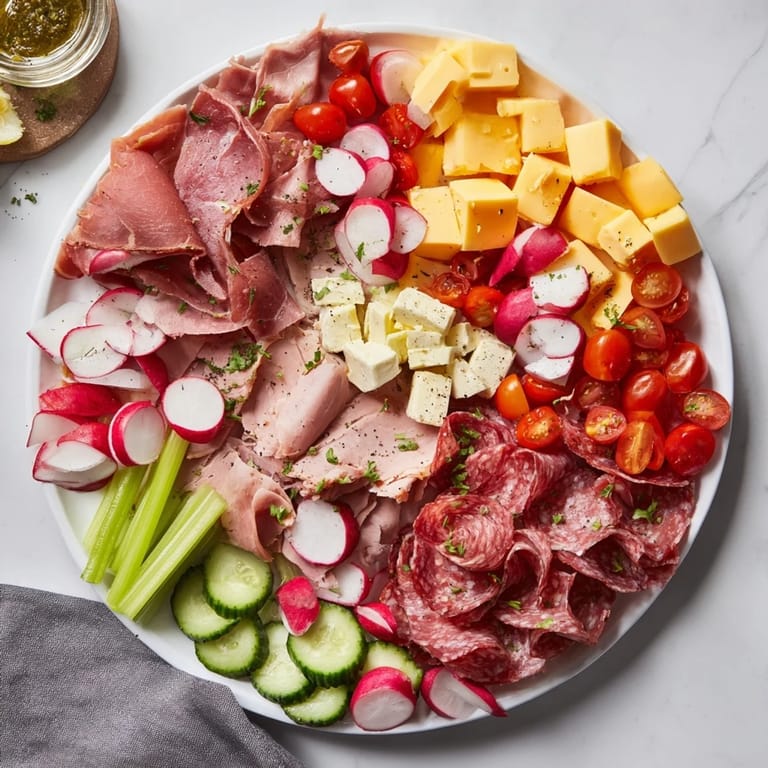
- Begin by creating dense, organized clusters of each meat type. Don't just lay them flat—fold and drape the slices so they catch the light and create texture and dimension. Group roast beef together, then smoked turkey, then prosciutto, then salami. This organization helps guests know exactly where to find what they love.
- Build the cheese architecture:
- Place your cheese groupings beside the meats, alternating shapes and colors as you go. The cubed cheddar's bright orange plays beautifully against the pale Gruyère, which contrasts with the golden Manchego. Leave some breathing room between each cheese variety so their individual characters shine.
- Fill the spaces with vegetable beauty:
- Now cluster your vegetables into their own neighborhoods—all the tomatoes together, the cucumbers in their own section, radishes creating a pink-red stripe, bell peppers adding their rainbow. This intentional clustering creates visual rhythm and makes it easy for guests to select what they want.
- Scatter the olives like jewels:
- Distribute both green and black olives throughout the platter, using them as visual anchors and flavor surprise elements. They fill awkward gaps and add sophisticated pops of color.
- Finish with oil and pepper:
- Drizzle the vegetables lightly with your best olive oil—just enough to make them glisten. Grind fresh black pepper generously over everything. This final step makes the whole platter look alive and inviting.
- Garnish and serve:
- Scatter the chopped fresh parsley across the entire platter. Bring it to the table immediately while everything is at its peak of freshness and beauty.
 Pin it
 There was a moment at a dinner party when my most skeptical friend—the one who always orders the same thing everywhere—tried this platter and made a small sound of genuine delight while reaching for a second helping. He spent the rest of the evening building different combinations, and I watched him discover flavors he'd been missing his whole life. That's when I understood: good food arranged with care isn't just sustenance. It's an act of generosity.
The Art of the Beautiful Platter
Creating a visually stunning platter is actually a learnable skill, not an innate talent. The secret is thinking in clusters rather than scattering. Group similar items together, then let them touch their neighbors in ways that create color contrast and visual excitement. Odd numbers work better than even—three of something catches the eye better than four. Leave some negative space; a crowded platter looks chaotic, while a thoughtfully arranged one looks generous and intentional. Your eye should be able to move around the platter and always find something new to discover.
Quality Matters More Than Quantity
I learned this lesson when I tried to stretch my platter budget by buying cheaper cuts and more of everything. The result was a sad, overwhelming mess that nobody really wanted. The magic happens when you buy less but buy better—premium meats that taste like something, cheeses with actual character, vegetables at peak ripeness. Your guests will take smaller portions, savor them more, and leave the table feeling genuinely satisfied rather than overstuffed. A well-made platter is about quality of experience, not quantity of options.
Timing and Temperature: The Secrets That Matter
The best time to build your platter is about 30 minutes before guests arrive—early enough that everything is ready, but late enough that nothing has started to dry out or look tired under the lights. Keep everything refrigerated until the absolute last minute, then bring it straight to the table while everything is still crisp and cold and glistening. Room temperature meats taste dull; cold meats taste alive. I learned this the hard way after leaving a beautiful board out too long and watching guests push it around their plates rather than eagerly filling them.
- Chill your serving platter for 15 minutes before building if you have the time—this keeps ingredients fresher and extends the life of your beautiful creation
- If you must assemble in advance, cover loosely with plastic wrap and store everything in the coldest part of your refrigerator
- Bring the platter to the table no more than 45 minutes before your guests will start eating—after that, things begin to lose their appeal
 Pin it
 A Keto Power Plate is more than a meal—it's an edible conversation starter that tells your guests you value their preferences and their company. Build it with care, serve it with confidence, and watch it disappear.
Recipe FAQs
- → What meats are featured in the keto power plate?
The platter includes sliced roast beef, smoked turkey, prosciutto, and salami, offering a variety of flavors and textures.
- → Which cheeses are included in this dish?
Aged cheddar, Gruyère, and Manchego cheeses are featured, providing rich and savory notes.
- → What vegetables complement the meats and cheeses?
Fresh non-starchy vegetables such as cherry tomatoes, cucumbers, radishes, baby bell peppers, and celery add crunch and freshness.
- → How is the platter seasoned for added flavor?
Green and black olives add bursts of flavor, while a drizzle of extra virgin olive oil and freshly ground black pepper enhance the overall taste.
- → Can the meat and cheese selections be substituted?
Yes, you can swap in other preferred meats like roast chicken or cheeses such as Emmental to customize the platter.